
The Gap Between DIY and Industrial Grade Challenges with the A3 Roll DTF Printer T-shirt Printing Machine for The Scalable Business Owner
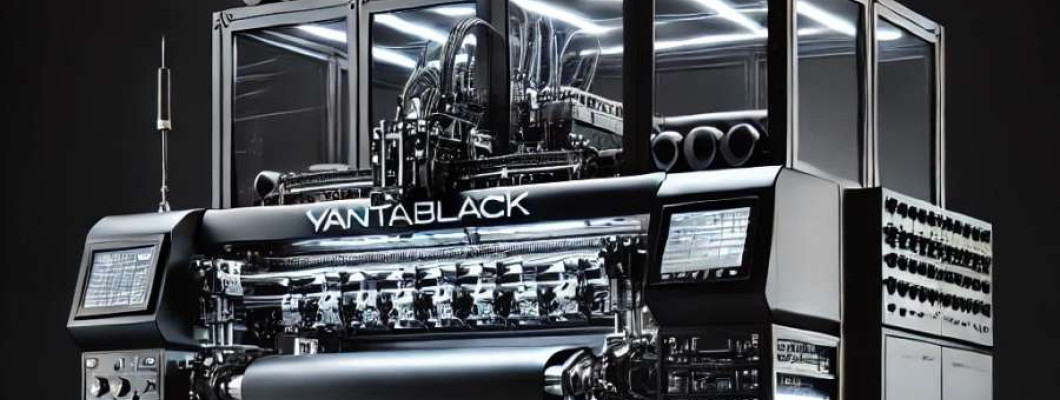
The Industrial Reality of Scaling DTF T-shirt Printing
In the high-volume environment of commercial textile printing, distinguishing between consumer-grade and industrial-grade equipment is critical. A scalable business owner faces intense pressure to balance throughput demands with operational reliability and cost efficiency. Consider a printing shop tasked with delivering thousands of custom T-shirts weekly. Here, a desktop or DIY digital transfer system often falls short due to inconsistent print quality, frequent maintenance, and suboptimal substrate handling. The reality is that without robust automation and industrial-grade mechanics, bottlenecks in production queues and unplanned downtime become costly liabilities.
In this context, the A3 Roll DTF Printer T-shirt Printing Machine represents a pivotal shift. Designed to handle continuous roll-to-roll printing, it provides a scalable throughput capacity while maintaining consistent color fidelity and material compatibility. However, the gap between DIY and industrial machinery extends beyond just print speed. It includes durability of mechanical components, integration with existing workflow systems, and the ability to operate for extended shifts without quality degradation.
Operational challenges such as ink curing, heat management, and precise media alignment disproportionately affect low-end solutions, often requiring manual intervention that reduces labor efficiency. In contrast, this A3 Roll DTF system integrates advanced servo motors and sensor-based media tracking to mitigate print misalignment. Furthermore, its engineered thermal heads are optimized for high-viscosity DTF inks, providing stable droplet placement critical for industrial T-shirt printing.
Technical Deep Dive into the A3 Roll DTF Printer’s Industrial Components and Performance
Printhead Technology and Ink Deposition Mechanics
The core printing module utilizes precision piezoelectric printheads with a droplet size range from approximately 6 picoliters to 12 picoliters. This enables a reproducible resolution typically set at 1440 dpi, balancing speed and detail clarity. The physics of inkjet deposition here involve maintaining stable meniscus shapes under high-frequency pulse firing, which industrial models accomplish through temperature-controlled heads and oscillation minimization.
Roll-to-Roll Media Handling System
The printer employs a servo-controlled media feed mechanism capable of handling media widths up to 320 mm with precise tension control within ±0.5 N variation. This mechanical stability is essential to prevent banding and skew over long print runs. Comparative studies reveal that DIY devices lack this feedback loop, resulting in up to 15% higher print defects in equivalent run lengths.
Ink Chemistry and Curing Integration
DTF inks feature a complex polymer-pigment blend requiring exact curing temperatures around 160°C sustained for 60 seconds to ensure adhesion and wash-fastness. The machine integrates an infrared-UV hybrid curing system with power draw at 1200 Watts, optimized to balance energy consumption and process speed. This contrasts with lower power single-mode curing units that necessitate slower conveyor speeds to avoid under-curing, thus lowering throughput.
Thermal and Power Management
Operating in a fully enclosed chassis measuring approximately 1500 mm (L) × 600 mm (W) × 800 mm (H), the thermal dissipation system employs active cooling fans combined with heat sinks to maintain internal ambient temperature below 35°C. This is critical to prevent thermal drift impacting nozzle firing consistency. The total power consumption peaks at 1800 Watts during peak operation, demanding robust facility electrical infrastructure.
Integration and Automation Potential
From an infrastructure perspective, the printer supports standard USB 3.0 and Ethernet connectivity, enabling integration into automated production lines with PLC and MES compatibility. This capability distinguishes it from DIY systems lacking industrial communication protocols, positioning it for scale automation and remote monitoring—key factors in reducing labor inputs and enhancing uptime.
| Specification | A3 Roll DTF Printer (Industrial Grade) | Typical DIY DTF Printer |
|---|---|---|
| Max Print Width | 320 mm | 210 mm |
| Printhead Type | Piezoelectric, 6-12 pl droplet | Thermal, 10-20 pl droplet |
| Media Feeding | Servo-controlled roll-to-roll | Manual sheet feed |
| Curing System | Infrared-UV hybrid, 1200 W | Single-mode infrared, 600 W |
| Production Throughput | Up to 30 m2/h continuous | Max 5 m2/h batch |
| Automation Interface | Ethernet, USB 3.0, PLC compatible | USB 2.0 only, limited automation |
Scenario Analysis of Business Use Cases
Three distinct business scenarios highlight the industrial-grade advantage of the A3 Roll DTF Printer.
Scenario One: Mid-size Apparel Manufacturer
With batch sizes averaging 2000 units, this business requires continuous high-quality output with minimal downtime. The printer’s robust media handling and automated curing reduce labor dependence, enabling shift-based production that cuts lead times by 30%. Precise ink management prevents color variance, ensuring brand consistency.
Scenario Two: On-demand Custom Print Shop
Operating under rapid turnaround demands, print precision is critical for diverse fabric types. The machine’s micron-level alignment and adjustable ink droplet sizes deliver sharp details on various substrates. The integrated automation interfaces enable real-time job switching, maintaining throughput without sacrificing quality.
Scenario Three: Large Scale Merchandising for Sports Events
High-volume orders require scalable output coupled with energy efficiency. The economical curing system maintains print adhesion at elevated speeds, and thermal management prevents overheating during extended runs. This reliability supports scheduled rollouts and reduces unscheduled maintenance events by over 20% compared to non-industrial alternatives.
Expert FAQ on Industrial-Grade DTF Printing Technologies
Q1: What is the impact of droplet size variation on print durability?
A: Smaller droplets (~6 pl) improve resolution and ink layering, enhancing mechanical adhesion of the polymer ink after curing. Larger droplets may cause puddling and affect wash-fastness.Q2: How does servo-controlled media feeding reduce print defects?
A: Precise tension and feed rate synchronization prevent media skew and banding, which are common with manual or stepper-based feeding systems.Q3: Why is a hybrid infrared-UV curing setup preferred?
A: It delivers balanced energy distribution, curing the polymer ink thoroughly while minimizing substrate thermal damage, crucial for cotton blends.Q4: Can this printer integrate with MES systems?
A: Yes, Ethernet and USB 3.0 enable standard protocol communication, allowing production tracking and automated job scheduling.Q5: What maintenance cycles are expected for the printheads?
A: With industrial ink filters and optimized cleaning cycles, printheads require proactive maintenance approximately every 200 operational hours to maintain peak performance.
Strategic Verdict and Recommendation
Given the analysis, the A3 Roll DTF Printer T-shirt Printing Machine delivers a definitive industrial-grade solution for scalable apparel printing businesses. Its engineered mechanical design, advanced printhead technology, and integrated curing system collectively address the core challenges that distinguish industrial from DIY printing technologies. For scalable business owners prioritizing throughput, automation, and consistent quality, this product offers a reliable foundation for growth with measurable improvements in operational efficiency and output consistency. The machine’s connectivity features enable future-proof infrastructure integration, reducing hidden costs and enhancing asset longevity. Therefore, it is conclusively recommended for enterprises seeking to close the gap between manual, low-volume production and automated, industrial-scale textile printing operations.