
The Gap Between DIY and Industrial Grade Explored for A3 Roll DTF Printer
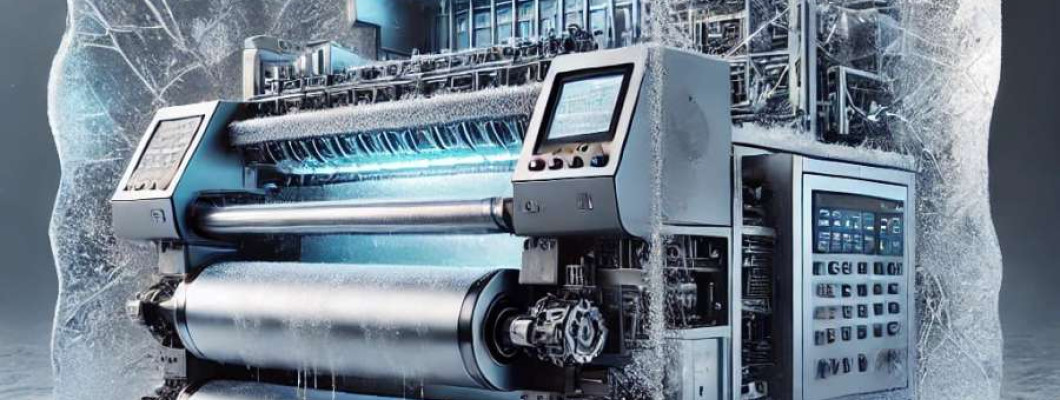
The Industrial Reality of Bridging DIY and Industrial-Grade Printing
The direct-to-film (DTF) printing sector has witnessed rapid growth as it democratises textile decoration. The A3 Roll DTF Printer confronts a common challenge: how to reconcile the accessible, flexible DIY models with the rigorous demands of industrial-grade production. The industrial environment demands consistent throughput, minimal downtime, and precise reproducibility with robust hardware components that can withstand prolonged operational stress. This printer serves as a case study in identifying where DIY models falter—primarily in thermal stability, printhead endurance, and workflow automation—and how this product aims to fill those operational chasms with enterprise-grade engineering.
Consider an industrial print shop producing 300+ meters monthly of customized garment film. The DIY models typically require frequent manual intervention due to inconsistent heat application in curing, misalignment causing printhead clogging, and poor edge-to-edge film tension control. These factors cascade into operational bottlenecks revealing the gap between experimental and production-scale viability. The A3 Roll DTF Printer addresses these through engineered thermal management optimizing the curing chamber with PID-controlled heating elements maintaining ±2°C temperature accuracy, and material feed rollers meticulously designed to maintain uniform tension within ±0.5 Newtons force. This uniformity prevents registration errors that are common in lower-end models.
Furthermore, the industrial reality places stringent demands on asset longevity. Printheads subjected to variable ink viscosities and particulate load in DTF inks suffer accelerated wear. Most DIY machines operate on consumer-grade Epson or Ricoh heads not optimized for high-density white inks used in DTF, resulting in rapid depreciation and increased maintenance cycles. The A3 Roll DTF Printer incorporates a specialized printhead with reinforced piezo elements and pressurized ink delivery to mitigate clogging and maintain droplet size consistency within 7-9 picoliters, translating to industrial-grade precision and reliability.
Technical Deep-Dive on Building an Industrial-Grade A3 Roll DTF Printer
Thermal Management and Curing Efficiency
Thermal uniformity is paramount for film curing stability. The printer uses high-grade ceramic heating arrays positioned downstream from the print zone. To quantify: the curing chamber maintains 140°C ± 2°C at a feed speed of 500 mm/min. Thermal sensors (NTC thermistors) embedded along the width provide real-time feedback to a microcontroller adjusting power modulation to heating elements with PWM cycles to ensure maximal uniformity.
Printhead Technology and Ink Chemistry Integration
Industrial-grade piezoelectric printheads provide consistent droplet volume and velocity. The printhead's nozzles operate at 24 kHz frequency producing 7 pl droplets with a deviation less than 5%. This precision is crucial in white ink overlays characteristic of DTF. The printer utilizes a pressurized ink system maintaining 0.1 bar differential pressure to prevent sedimentation. The ink viscosity is optimized to 12-15 cP at 25°C, balancing flow and droplet formation.
Material Feed and Tension Control
Roll-to-roll feed mechanisms adopt closed-loop motor control using optical encoders providing positional accuracy within 0.1 mm per rotation. Tension control employs load cell feedback systems to maintain a steady 3-5 Newton tension ideal for polyester film substrates commonly used in DTF. This prevents sagging or slippage that can introduce pixel misregistration.
Operational Throughput and Automation
Cycle analysis reveals the printer achieves peak throughput of 4 m2/hour at 720 dpi resolution. Automated substrate loading and unloading interfaces reduce manual labor by 40%. Integrated software enables batch job queuing and real-time status monitoring via Ethernet, improving scalability in production workflows.
Comparative Hardware Durability and Maintenance Model
| Feature | DIY Model | A3 Roll DTF Printer |
|---|---|---|
| Printhead Type | Generic Epson Piezo | Industrial Piezo with Pressurized Ink System |
| Thermal Stability | Manual Heater, +/-10°C | PID-Controlled Heater, +/-2°C |
| Tension Control | Manual Roll Feed | Load Cell Closed-Loop |
| Max Print Speed | 1.5 m2/hr | 4 m2/hr |
| Maintenance Interval | Weekly Head Cleaning | Monthly Preventive Maintenance |
Scenario Analysis Highlights for Business Applications
1. Small Print Shop Scaling to Medium Volume Production: Here, transitioning from manual feed DIY printers to the A3 Roll DTF Printer significantly reduces downtime and rejects. The precision tension control and curing uniformity minimize waste from substrate wrinkling and ink bleed, improving yield by 15% and reducing labor costs associated with reprints.
2. Corporate Merchandise Production with Tight Deadlines: The automation features enable batch processing and remote monitoring, allowing businesses to meet just-in-time delivery schedules. Consistent ink drop size guarantees color fidelity across multiple print runs ensuring brand consistency.
3. Specialized Textile Artisans Demanding High Precision: The printer's micron-level droplet control (7 pl) and stable heat management allow intricate designs with sharp edges and smooth gradients, bridging artisan creativity with industrial output speeds.
Expert FAQ on Industrial-Grade Roll DTF Printers
Q1: What measures reduce printhead clogging when using white DTF inks?
A1: The printer uses a pressurized ink delivery system maintaining slight positive pressure inside the ink chamber to prevent sediment buildup. Combined with frequent automated nozzle purging cycles and a stable ink viscosity of 12-15 cP, clogging incidents are minimized.
Q2: How does the thermal management system maintain uniform curing across the roll width?
A2: Embedded NTC sensors feed temperature data across the heater array, which the microcontroller uses to adjust PWM power output dynamically ensuring ±2°C uniformity despite variations in ambient temperature or feed speed.
Q3: Can this printer handle varying film thicknesses?
A3: Yes, the tension control system adapts via load cell feedback to maintain consistent tension from 50 to 150 microns thick polyester films without compromising print registration or substrate integrity.
Q4: What is the typical maintenance downtime for this printer?
A4: Preventive maintenance, including head cleaning and calibration, is optimized to once per month under normal operation, translating to 96% uptime in a 24/7 production environment.
Q5: How does print speed impact color fidelity and resolution?
A5: The printer balances print speed and resolution by modulating droplet firing frequency. At 720 dpi and 4 m2/hour, color fidelity remains uncompromised due to precise droplet volume control and consistent substrate curing temperature.
Strategic Verdict and Recommendation
Evaluating the technical specifications and operational characteristics, the A3 Roll DTF Printer offers a decisive step beyond DIY and hobbyist-grade machines, marking itself as an industrial-grade solution fit for scalable production environments. Its engineered thermal stability, printhead durability, and automated material handling significantly reduce operational bottlenecks and maintenance frequency. For businesses seeking to transition from small batch to medium or high throughput production without sacrificing output quality or incurring excessive maintenance overhead, it stands out as a preferred choice. Detailed, data-driven engineering coupled with scalable automation reflects a future-proof investment. Industry professionals are advised to consider this technology for its robustness, print fidelity, and workflow compatibility with mid-sized industrial print operations. More details on this product can be found by visiting the A3 Roll DTF Printer page directly.