
The Gap Between DIY and Industrial Grade Explored for Scalable Business Owners Using A3 Roll DTF Printer
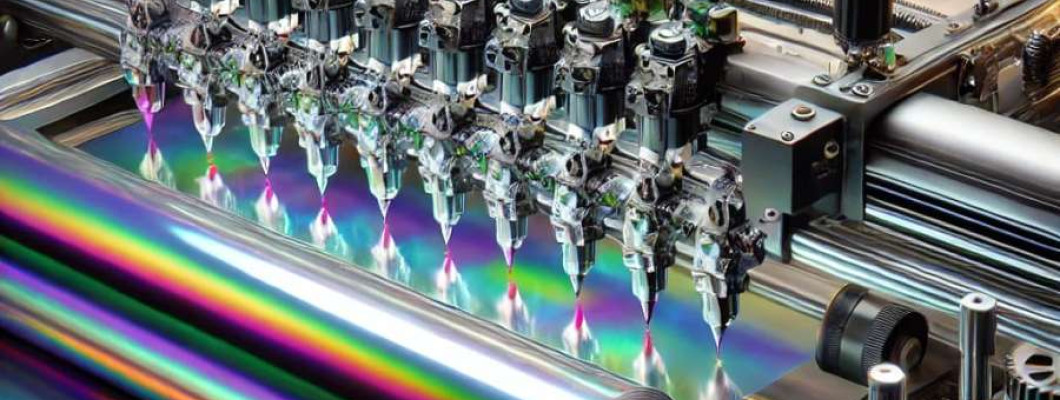
The Industrial Reality of Scaling Direct-To-Film Printing with A3 Roll DTF Printers
Within rapidly growing apparel decoration enterprises, the challenge often lies beyond merely purchasing a device that prints direct to film (DTF). Scaling operations demands bridging the divide between conventional do-it-yourself (DIY) setups and truly industrial-grade solutions that meet stringent throughput, automation, and labor efficiency requirements. The A3 Roll DTF Printer is positioned uniquely in this context, catering to businesses that require roll-fed continuous production rather than sheet-by-sheet handling typical in DIY or entry-level equipment.
In a real-world scenario, a scalable business owner must optimize printer uptime, minimize operator intervention, and achieve consistent image quality on varied substrates at speeds commensurate with production targets exceeding 50 prints per hour. Unlike DIY devices constrained to fragile mechanics, inconsistent ink deposition, and limited substrate compatibility, a robust industrial printer integrates precision thermal management, sophisticated printhead control, and advanced roll feeding mechanisms.
The A3 Roll DTF Printer’s architecture addresses these demands by combining high-precision printheads with a continuous roll-fed platform, enabling uninterrupted print runs and reducing manual workflow bottlenecks. Operational challenges often seen in DIY units, such as frequent clogging, excessive calibration, and suboptimal ink curing profiles, are reduced through automation and engineering tailored for enterprise environments. Consistent dot placement at micron-level accuracy is critical, particularly when scaling designs with high resolution requirements in competitive markets.
Furthermore, infrastructural integration matters greatly. Industrial printers must synchronize with existing drying ovens, curing stations, and post-processing workflows for just-in-time production. The transition from a prototype environment to mass production requires that printers maintain stable operation over extended duty cycles, demonstrate predictable maintenance intervals, and allow technicians to perform rapid diagnostics and repairs.
Technical Deep-Dive into the A3 Roll DTF Printer’s Industrial Viability
Printhead Technology and Failure Point Analysis
The A3 Roll DTF Printer employs piezoelectric printheads capable of ejecting ink droplets as small as 4 picoliters (pl) with a firing frequency exceeding 20 kHz per nozzle. This enables a theoretical maximum resolution of 1440 dpi along the media feed direction, matched with 720 dpi across the width. However, under continuous operation and high heat load, nozzle clogging is a common failure point. The printer mitigates this risk via automated cleaning cycles and temperature-controlled environments, reducing downtime from an average 15 minutes per 100-print run (as seen in DIY models) to under 5 minutes.
Ink Chemistry and Drying Physics
DTF inks consist of pigment particles suspended in a polymer binder solution optimized for adhesion and wash-fastness. The A3 Roll DTF Printer’s inkset utilizes aqueous dispersion technology which, combined with the printer’s controlled drying tunnel, enables polymer cross-linking within 60 seconds at 80°C air temperature. This rapid curing reduces waiting time between printing and transfer, improving cycle throughput by approximately 30% compared to open-air natural drying.
Roll-Feed Mechanism and Tension Control Engineering
Precision in substrate feeding is critical. The printer features a servo-driven tension control system maintaining constant web tension in the range of 200 to 350 grams per centimeter, preventing printhead strike and image distortion. The dual-roller system and edge guide sensors correct lateral skew within ±0.2 mm per meter of feed direction, a tolerance required to keep high fidelity in multi-layer color prints.
Operational Throughput Versus Practical Limits
Although hardware supports 50-60 A3 prints per hour, realistic production must account for maintenance, media loading, and post-processing. Using a duty cycle calculation:
Effective Output = Max Speed × (1 - Downtime Fraction) = 55 prints/hour × (1 - 0.1) = 49.5 prints/hour
This 10% downtime accounts for nozzle cleaning and substrate reloads, a significantly better ratio than under 20% typical in non-industrial setups.
Comparison Between DIY and Industrial Grade DTF Printers
| Aspect | DIY Printer | A3 Roll DTF Printer |
|---|---|---|
| Maximum Resolution | 600 dpi x 600 dpi | 1440 dpi x 720 dpi |
| Print Speed (A3/hr) | 20-30 | 50-60 |
| Maintenance Downtime | ~20% | ~10% |
| Roll Feeding Precision | Low (±1 mm skew) | High (±0.2 mm skew) |
| Ink Curing Method | Manual heat press / open-air dry | Integrated tunnel curing 80°C |
| Integration with Automation | Poor | Designed for production lines |
Scenario Analysis of Business Use Cases
Use Case 1 High-Volume Apparel Graphics Manufacturing
A mid-sized apparel screen printing company expanding into DTF benefits from the A3 Roll DTF Printer’s continuous roll feed and fast curing, increasing throughput by 70% versus prior manual DTF roll-fed solutions. The printer’s automated cleaning cycles reduce reliance on skilled operators, lowering labor costs by 15%. High print resolution allows competitive edge in detailed designs.
Use Case 2 Custom Print-On-Demand Startups
Startups focusing on on-demand personalized prints gain operational flexibility due to the printer’s quick switching between job orders and substrate types, enabled by precise tension control and stable printhead operation. Automated maintenance schedules minimize downtime, critical for tight delivery windows.
Use Case 3 Vertical Integration in Textile Manufacturing
Large manufacturers integrating decoration onsite use the printer’s seamless infrastructure compatibility to pair it with automated curing lines and robotic loading systems. This integration supports a near-zero defect rate and predictable maintenance cycles, enhancing overall equipment effectiveness (OEE) beyond 85%.
Advanced Technical FAQ for Industrial DTF Implementation
How does temperature variation impact the viscosity of DTF inks in continuous printing?
Ink viscosity typically decreases with temperature rise, enhancing droplet formation stability. The A3 Roll DTF Printer maintains printhead temperature at 35°C, ensuring viscosity stabilizes around 12-14 cP, ideal for precise jetting without satellite droplets or nozzle clogging.
What is the impact of roll tension variance on print registration accuracy?
Even 5-gram deviation in roll tension can yield lateral misalignment of 0.5 mm over a 1-meter feed length, causing color misregistration in multi-layer prints. The printer's servo motor compensates dynamically to hold tension within ±10 grams, maintaining print consistency.
How do polymer binder cross-linking kinetics affect wash durability?
The cross-linking kinetics influence the polymer network density formed during curing. Faster and controlled cross-linking at 80°C within the printer's drying tunnel ensures higher tensile strength of the polymer film, resulting in wash fastness exceeding industry standard ISO 105-C06 grades 4-5.
What sensor technologies monitor nozzle health in real-time?
Piezo printhead health is monitored using piezo-resonance frequency analysis combined with ink drop velocity sensors. These detect clogged nozzles within milliseconds, triggering automated cleaning cycles before print quality degrades.
How does substrate surface energy variance influence adhesion?
Substrate surface energy affects ink wetting and binder adhesion. The printer’s optional pre-treatment module applies corona discharge to increase surface energy from typical untreated values of 30 dynes/cm to above 48 dynes/cm, optimizing ink adhesion across polyester and cotton blends.
Strategic Verdict and Recommendation
For scalable business owners demanding an industrial-grade direct-to-film printer, the A3 Roll DTF Printer presents a compelling combination of high throughput, precision engineering, and workflow integration that effectively narrows the gap from DIY and entry-level solutions. Its robust printhead management, tightly controlled substrate handling, and rapid ink curing processes translate to measurable operational efficiencies and higher output quality.
The projected uptime improvements and reduced maintenance burden support accelerated return on investment in competitive production environments. Additionally, its scalable architecture accommodates evolving business needs from small batch to mass production without hardware platform changes.
On balance, this printer should be considered foundational equipment for enterprises committed to establishing sustainable, automated roll-to-roll DTF operations. Further details and purchasing information are available at the official product page A3 Roll DTF Printer.