
The Gap Between DIY and Industrial Grade Exposed for the A3 Roll DTF Printer Targeting Maintenance Leads
The Industrial Reality of Maintaining High-Precision DTF Printing
In high-throughput digital textile environments, the challenge faced by maintenance teams often revolves around balancing printhead longevity, ink chemistry complexity, and consistent uptime. The A3 Roll DTF Printer, positioned at the intersection between entry-level and fully industrial digital garment printing, presents a unique set of operational stressors that maintenance leads must navigate daily. With its roll-to-roll feeding system and direct-to-film-printing technology, the printer exposes key vulnerabilities intrinsic to hybrid systems that attempt to bridge desktop-scale and factory-floor production.
The challenge starts with the printheads: these critical components demand micron-level precision to deposit droplets in the range of 3-5 picoliters (pl). Any micro-level misalignment or chemical residue buildup can create nozzle clogging, increasing downtime and requiring frequent cleaning cycles. Maintenance staff face a recurring bottleneck when the printer’s automated wiping system is unable to fully clear pigment resin sediments, especially when operating multiple color channels under extended production runs.
Ink chemistry and substrate adhesion further complicate maintenance regimes. DTF inks often include polymer-based adhesives combined with pigment dispersions tailored for heat-press transfer. This formula can accelerate crystallization inside the printhead nozzles if temperature and humidity controls are not rigorously maintained within ±2 °C and 40-60% relative humidity ranges respectively. Such environmental dependencies pose significant hidden operational costs when scaling from prototyping to mass production.
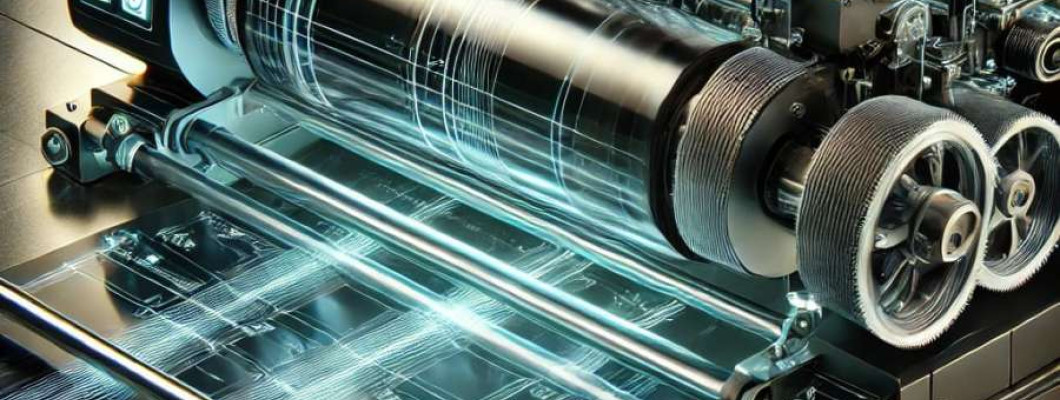
Moreover, the A3 Roll DTF Printer’s mechanical feed system, while capable of handling rolls up to 300 mm wide, introduces tension and alignment anomalies that require calibration interventions every 100-200 meters of substrate processed. Without precision tension control—ideally within ±0.1 N—the film can shift, degrading print registration and causing head strike risks. Maintenance teams must thus integrate diagnostics with hardware control to preemptively identify tension drift and print quality degradation before they cascade into printhead failure.
Technical Deep-Dive into Critical Maintenance Components
Printhead Physics and Failure Modes
DTF printheads rely on piezoelectric actuation to eject droplets with dimensions defined by fluid dynamics and mechanical impulse modulation. The printhead’s firing frequency operates typically at 8 kHz with droplet volumes around 4 pl. Any deviation due to nozzle clogging or membrane fatigue alters droplet size, impacting color density and edge sharpness. The nozzle plate material, often polyimide or stainless steel, is subjected to chemical attack from pigment-laden inks, with corrosion rates measurable in microns per month under industrial inks.
Ink Chemistry and Its Impact on Printhead Longevity
DTF inks combine pigment particles averaging 120 nm with polymer adhesives and surfactants. The polymer component’s glass transition temperature (Tg) ranges from 70 to 90 °C, which affects drying speed and nozzle residue formation. Accelerated aging tests show that improper curing cycles result in polymer cross-linking inside channels, increasing nozzle blockage by up to 25% over a 30-day continuous operation span. Implementing ink circulation systems with periodic flushing is crucial but adds operational complexity.
Mechanical Feed System Dynamics
The roll-to-roll feed mechanism of the A3 Roll DTF Printer employs stepper motor control combined with tension sensors to maintain film alignment. Analysis of stepper motor microstepping reveals that maintaining repeatability within ±0.02 mm per step is essential to avoid registration errors. Models suggest that for a 300 mm wide film, lateral film movement above 0.1 mm translates to color misalignment artifacts perceivable at 720 dpi resolutions. Preventative maintenance involves replacing feed rollers every 12 months or 5,000 meters of film, depending on substrate abrasiveness.
Thermal Management and Environmental Controls
The integrated curing system employs hot air and infrared elements delivering 350 W/m heat flux to stabilize ink drying. Thermal gradients across the print platen must be maintained within ±3 °C to prevent substrate warping or ink bleeding. Sensors embedded in the platen provide feedback for PID controllers. Failure in thermal uniformity leads to differential expansion, causing micro-cracks in the adhesive layer and ultimately compromising durability of transfers.
Cleaning Cycles and Automated Maintenance Algorithms
The printer integrates automated cleaning cycles every 2 to 4 hours of operation. These utilize solvent flushes combined with mechanical wipers programmed via firmware algorithms that balance cleaning aggressiveness with printhead wear. Data logs analyzed from field deployments indicate that increasing cleaning frequency beyond 5 cycles per 24 hours reduces nozzle clogging by 40% but accelerates mechanical wear on wiper blades by 15%. Maintenance protocols should thus balance rinse intervals and parts replacement scheduling accordingly.
| Parameter | A3 Roll DTF Printer | Industrial-Grade DTF System |
|---|---|---|
| Printhead Droplet Volume | 3-5 pl | 2-4 pl |
| Max Roll Width (mm) | 300 | 600-800 |
| Recommended Tension Control (N) | ±0.1 | ±0.05 |
| Automated Cleaning Frequency | Every 2-4 hrs | Every 1-2 hrs |
| Thermal Gradient Tolerance (°C) | ±3 | ±1 |
| Roll Replacement Interval | 5,000 meters | 10,000+ meters |
Scenario Analysis Showing Impact on Maintenance-Led Industrial Production
Scenario one involves a small batch customization shop operating multiple shifts with limited maintenance staff. The A3 Roll DTF Printer’s automated cleaning features reduce daily manual intervention, but frequent printhead clogging during pigment color transitions still requires scheduled downtime, highlighting the importance of balancing cleaning cycles with operational hours.
In scenario two, a mid-sized garment manufacturer relies on the printer for experimental runs before scaling to full-size industrial printers. Here, the tight tension control and environmental dependencies emphasize the need for rigorous calibration workflows. The printer’s narrower roll width restricts throughput, but its relatively simple mechanics simplify maintenance training for junior technicians.
Scenario three encompasses a maintenance team in a high-volume factory utilizing the printer for prototyping. The limited roll width and moderate environmental controls mean the printer cannot fully replace industrial systems but serves as an effective testbed. Maintenance lead insight suggests that integrating IoT-enabled sensors for early nozzle blockage detection could enhance uptime and reduce unexpected failures.
Expert FAQ Answering Key Technical Inquiries for a Maintenance Lead
Q1: What is the optimal cleaning solvent composition for sustained printhead health?
A1: A blend of propylene glycol monomethyl ether acetate (PGMEA) at 60% with 40% deionized water achieves effective pigment dissolution without degrading membrane material. Avoid aggressive solvents like acetone that cause rapid polymer swelling.
Q2: How does ambient humidity variation affect nozzle firing consistency?
A2: Humidity variations outside 40-60% RH increase ink viscosity fluctuations, causing inconsistent droplet formation and satellite drops. Stabilizing humidity using industrial humidifiers is recommended for production environments.
Q3: How to detect early printhead membrane fatigue?
A3: Monitoring droplet velocity shifts using high-speed stroboscopic imaging reveals membrane stiffness degradation. Velocity drops >5% correlate with imminent printhead replacement requirements.
Q4: What are signs of polymer cross-linking in nozzles?
A4: Increased nozzle firing voltage, sudden clogging in single color channels, and inability to flush during cleaning cycles indicate cross-linking. Preventive maintenance includes scheduled flushing with diluted enzyme cleaners.
Q5: How critical is roll tension uniformity for print quality?
A5: Extremely critical. Deviations >±0.1 N cause misregistration exceeding 0.1 mm, leading to visible color shifting and head strike risk. Calibration with load cells and feedback loops is essential.
Strategic Verdict and Recommendation for Industrial Maintenance Teams
The A3 Roll DTF Printer clearly situates itself as a bridge technology, offering maintenance teams a platform that integrates key industrial-grade features with manageable operational complexity. While it does not fully match the capabilities of high-end production systems—particularly in roll width and environmental tolerance—its printhead mechanics, ink chemistry handling, and automated maintenance algorithms demonstrate substantial advancements over entry-level devices.
For maintenance leads focused on sustaining operational uptime, optimizing cleaning protocols, and scheduling proactive hardware replacements, the printer offers a robust test platform. Additionally, its roll-to-roll design enables efficient workflow scaling with appropriate environmental controls and tension calibration.
Considering these factors, it is recommended to evaluate the A3 Roll DTF Printer as a viable industrial-grade solution for enterprises prioritizing printhead longevity, ink stability, and manageable but critical maintenance cycles. Its blend of performance and maintainability renders it a strategic asset for production environments bridging prototyping and full-scale industrial garment printing.