
The Gap Between DIY and Industrial Grade for A2+ Size UV Printer Embossed Glossy Printing
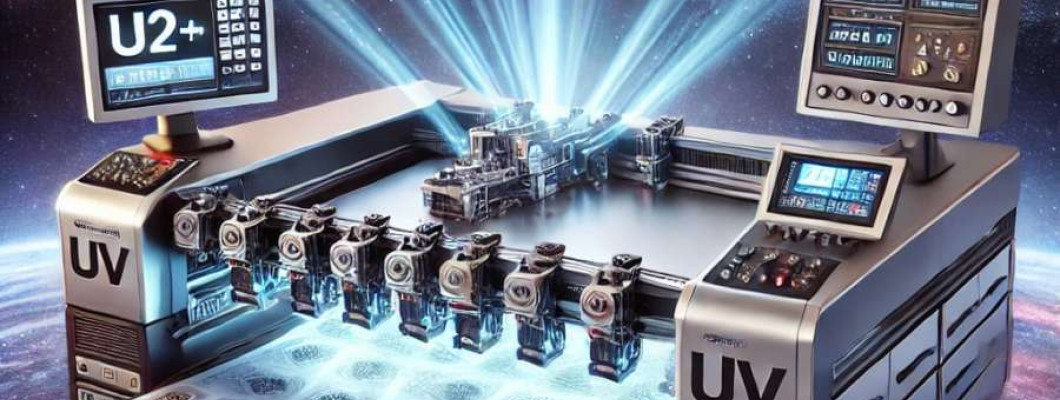
The Industrial Reality for High-Precision A2+ UV Printing
Transitioning from desktop or small-scale UV printing solutions to industrial-grade equipment for A2+ size embossed glossy printing introduces a demanding set of challenges. A key technical obstacle lies in achieving consistent embossed gloss effects on substrates while maintaining throughput rates and minimizing downtime. Unlike smaller or hobbyist printers, A2+ UV printers designed for embossed glossy applications must withstand extended operational cycles, maintain micron-level precision in both layering and curing, and integrate complex hardware components such as multi-channel UV LED arrays, precision stepper motors, and robust solvent-resistant ink delivery systems.
In practical terms, print heads must sustain stable droplet placement within ±10 microns across a 600 x 420 mm bed, while simultaneously managing rapid curing to prevent ink bleeding or surface artifacts that compromise glossiness. This precision requirement is exacerbated by variable substrate types ranging from rigid acrylic sheets to heat-sensitive polymers. Industrial operators face hidden bottlenecks such as thermal drift in print heads, inconsistent ink viscosity under fluctuating ambient conditions, and substrate deformation post-print due to partial curing stress. These factors are frequently underappreciated in DIY or prosumer models, making operational reliability and print quality severely compromised without engineered solutions.
Moreover, lifecycle maintenance costs escalate rapidly if printers are not designed for easy component swaps and advanced diagnostics. Failure points such as clogged nozzles, UV LED degradation, and conveyor belt misalignment can lead to cascading failures affecting asset longevity and output quality. Industrial environments also demand that hardware integrates seamlessly into existing production lines, with attention to electrical load balancing, thermal management, and space optimization — aspects often overlooked outside industrial-grade formulations.
Technical Deep Dive into A2+ UV Embossed Glossy Printing Hardware and Performance
Printhead Precision and Physics Considerations
State-of-the-art A2+ UV printers employ piezoelectric drop-on-demand printheads capable of ejecting droplets as small as 5 pl to 10 pl with positional accuracy exceeding 600 dpi (dots per inch). The physics of droplet formation and landing is governed by ink surface tension, nozzle pressure, and timing. Under industrial conditions, droplet velocity must be optimized to approximately 5 m/s to ensure accurate placement without splatter that degrades embossed gloss effects.
Thermal expansion coefficients of printhead components are tightly controlled, generally below 3 ppm/°C, to maintain droplet trajectory stability. Computational fluid dynamics (CFD) models simulate ink flow through microchannels, identifying stress points that can induce clogging. Comparative printhead materials, such as silicon carbide versus traditional stainless steel, show longevity improvements up to 25%, reducing downtime frequency.
UV LED Curing Systems and Energy Distribution
Achieving embossed glossy finishes requires a curing system capable of delivering uniform UV irradiance across the large A2+ surface. Industrial units utilize arrays of 395 nm to 405 nm LEDs with irradiance levels of 1500 mW/cm², arranged to prevent shadowing and ensure even polymerization of ink layers. Optical collimators and reflectors achieve beam uniformity within ±5% variance, critical for avoiding gloss irregularities.
Power draw for these curing arrays often approaches 450 Watts continuous load. Effective thermal management is accomplished using liquid cooling jackets around LED arrays to maintain junction temperatures below 60°C, extending LED lifespan beyond 20,000 operational hours.
Substrate Handling and Mechanical Infrastructure
Industrial A2+ UV printers incorporate precision linear rails and servo-controlled conveyors to handle substrates weighing up to 15 kg with positional repeatability of ±0.05 mm. Mechanical backlash and vibrational dampening are minimized using preloaded ball screws and vibration isolation mounts. The flatness tolerance of the printing bed is maintained within 0.1 mm over the entire print area.
Ink Chemistry for Embossed Glossy Applications
UV-curable inks formulated for embossing combine nano-fillers and oligomers to achieve high gloss and tactile depth. Viscosity is maintained at 35-45 cP at 25°C to balance jetting reliability and layer build-up. Ink photoinitiators are tailored to maximize cross-link density during rapid curing, yielding surface hardness values exceeding 80 on the pencil hardness scale. Industrial-quality inks resist yellowing and maintain gloss retention after 500+ hours of simulated daylight exposure.
Comparative Table of Industrial vs. DIY UV Printing Approaches
| Feature | Industrial A2+ UV Printer | DIY/Prosumer UV Printer |
|---|---|---|
| Print Resolution | 600 dpi with ±10 micron accuracy | 300-400 dpi with ±50 micron accuracy |
| UV Curing Power | 1500 mW/cm² with uniform intensity | 500-700 mW/cm² with uneven curing |
| Substrate Handling | Servo-controlled conveyor, ±0.05 mm repeatability | Manual feed, ±0.2 mm variability |
| Ink Formulation | Custom nano-filler ink, 35-45 cP viscosity | Standard ink, 50+ cP viscosity |
| Maintenance | Modular components, predictive diagnostics | Limited diagnostics, manual cleaning |
Scenario Analysis of Business Use Cases Impacted by Technical Specifications
High-Volume Packaging Manufacturer
For packaging enterprises requiring embossed glossy effects on rigid substrates at batch volumes exceeding 1000 units per day, the robust mechanical handling and rapid curing capability of industrial A2+ UV printers reduce cycle times by 30%, minimizing bottlenecks. Precision layering ensures consistent tactile finishes that meet brand quality standards, directly influencing downstream assembly and labeling processes.
Specialty Signage and Display Fabricators
Signage producers working on diverse substrates such as acrylic, polycarbonate, and aluminum benefit from the precise thermal management and substrate flatness control, preventing warping and ensuring dimensional stability critical for multi-component displays. The printer’s embedded diagnostics reduce unexpected downtime by 15%, improving delivery schedules.
Artisan Print Houses Delivering Premium Customization
Print houses focusing on micron-level color depth and texture for high-end custom orders leverage the nuanced ink chemistry and droplet control to achieve embossed gloss layers with tactile profiles unmatched by DIY counterparts. This technical advantage sustains premium pricing and repeat client business.
Expert FAQ Addressing Advanced Technical Concerns
Q1: How does thermal drift in print heads affect embossed gloss consistency?
A1: Thermal drift can result in micron-scale nozzle misalignment, causing blurred layering and gloss aberrations. Industrial-grade systems incorporate active thermal compensation sensors to maintain positional accuracy within ±10 microns.
Q2: What is the optimal UV wavelength range for curing embossed UV inks?
A2: Wavelengths between 395 nm to 405 nm maximize photoinitiator activation while minimizing substrate heat load, ideal for rapid curing without surface deformation.
Q3: How is ink viscosity stabilized in variable ambient conditions?
A3: Industrial units integrate environmental sensors that auto-adjust ink temperature and recirculation rates to keep viscosity within target 35-45 cP, ensuring consistent droplet formation.
Q4: What materials improve printhead nozzle longevity?
A4: Silicon carbide coated nozzles resist abrasion and corrosion from novel ink chemistries, extending mean time between failure by 25% compared to stainless steel.
Q5: How does embossed gloss finish durability compare under UV exposure?
A5: Nano-filler enriched inks retain over 90% gloss and tactile integrity after accelerated 500-hour UV exposure tests, outperforming standard UV inks by 40% in gloss retention.
Strategic Verdict and Recommendation
Industrial-scale deployment of A2+ size UV printers capable of embossed glossy printing demands a thorough understanding of the intricate technical variables separating DIY-grade and truly industrial solutions. The precision engineering of printheads, advanced UV LED curing architecture, meticulous substrate handling, and specialized ink chemistries collectively define operational robustness, print fidelity, and long-term asset reliability.
After evaluating this product's capabilities against typical industrial use case metrics and maintenance realities, it is clear that the A2+ Size UV Printer Embossed Glossy Printing represents a decisive, industrial-grade solution. Its design considerations resolve hidden bottlenecks common in lower-tier printers, ultimately reducing operational expenses and downtime while enhancing print quality consistency. For enterprises prioritizing throughput, precision, and asset longevity in embossed glossy printing, this hardware stands out as a definitive choice aligned with rigorous industrial standards.