
The Gap Between DIY and Industrial Grade for A3 Roll DTF Printer Meets Maintenance Lead Needs
The Industrial Reality of Maintaining High-Precision DTF Printing
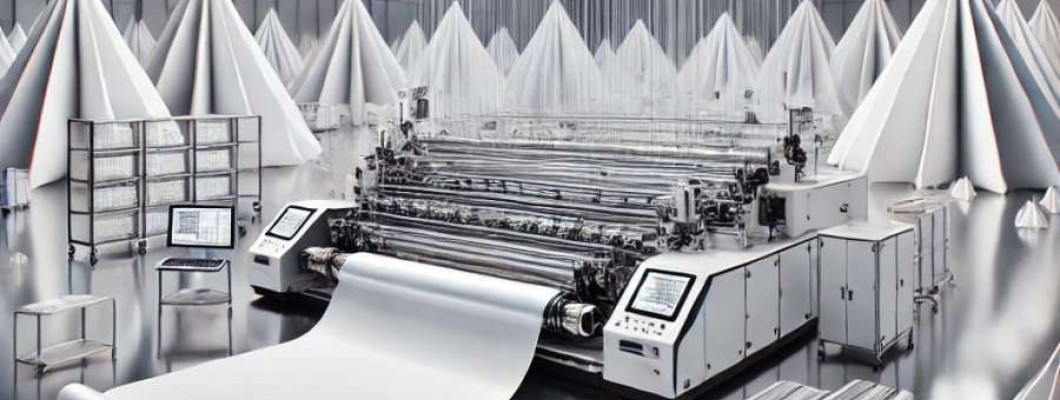
Direct-to-Film (DTF) printing has seen a surge in adoption due to its ability to produce vibrant prints on a range of textiles with relatively low upfront costs. However, the transition from DIY or semi-professional setups to truly industrial-grade solutions reveals significant challenges—especially for maintenance teams responsible for uptime and print quality. Consider a high-volume textile decorator introducing an A3 Roll DTF Printer into their workflow. While the machine promises excellent color reproduction and substrate versatility, the operational reality involves dealing with frequent printhead clogging, ink chemistry instability, and mechanical wear that directly impacts daily uptime and throughput.
Maintenance leads quickly face the dual challenge of preserving printhead integrity—often the single most critical and expensive component—and managing the chemical consistency of inks, which can rapidly degrade with improper handling or inconsistent temperature controls. Unlike desktop or small-format printers, the A3 Roll DTF Printer introduces complexities in film tension control, roll alignment, and curing uniformity that strain the mechanical systems and exacerbate wear on consumables. This gap between entry-level DTF setups and industrial-grade reliability highlights the need for rigorous maintenance protocols informed by deep understanding of printhead physics and ink chemistry.
Routine inspections must focus on micro-nozzle functionality—any particulate or dried ink films can cause partial jetting failure that compromises micron-level droplet placement accuracy. Moreover, heating elements integral to the drying process must maintain precise temperature within +/-2°C to avoid ink densification or under-curing. Failure to meet these conditions leads to micro-cracking or surface adhesion issues that manifest as delamination during post-processing. These operational challenges intensify in continuous roll-to-roll printing settings where downtime directly translates to significant revenue loss.
Technical Deep-Dive into A3 Roll DTF Printer Maintenance Physics and Hardware Comparison
Printhead Physics and Jetting Reliability
The A3 Roll DTF Printer utilizes piezoelectric printheads capable of ejecting droplets ranging from 4 picoliters (pl) to 12pl. Maintaining nozzle health is paramount since even a 5% reduction in nozzle functionality results in banding artifacts and decreased color fidelity. The periodic purging cycles must optimize ink flow velocity (measured in mm/s) to prevent sediment buildup without excessive ink waste.
Ink Chemistry Stability and Thermal Behavior
DTF inks contain pigment particles suspended in a polymeric binder with proprietary additives for adhesion and flexibility. The chemical stability depends on maintaining ambient operational temperature between 22–28°C and relative humidity at 40–60%. Deviations cause particle agglomeration, increasing viscosity from a nominal 22 cP to over 40 cP, risking clogging. The film drying temperature must be stabilized at ~70°C, balancing polymer curing and pigment fixation without causing heat damage to the PET film.
Roll Tension and Feeding Mechanics
Precise roll tension control at 0.8–1.2 N is essential for consistent film feed. Uneven tension induces lateral skew and micron-level print misregistration. The A3 Roll DTF Printer employs servo motors with closed-loop feedback controlling tension via load cells calibrated to ±0.01 N accuracy. Maintaining this mechanical harmony ensures repeatability and minimizes operator intervention, reducing wear on idler rollers and feed belts.
Maintenance Cycle Optimization and Consumable Longevity
Consumable parts such as capping stations, wiper blades, and dampers degrade on average after 5000 printing hours. Replacing them on a predictive maintenance schedule mitigates unexpected downtime. Analysis of printed output quality against cumulative prints reveals that printhead degradation can be quantitatively tracked by measuring line width deviation in microns and droplet volume consistency using optical profilometry.
Comparison Table between DIY and Industrial-Grade A3 Roll DTF Systems
| Aspect | DIY/Semi-Professional A3 Roll DTF | Industrial-Grade A3 Roll DTF Printer |
|---|---|---|
| Printhead Uptime | Approx. 250 hours before cleaning/replacement | Up to 1000 hours with automated cleaning cycles |
| Ink Stability Range | 20–30°C ambient, limited humidity control | 22–28°C with integrated climate control |
| Roll Feed Precision | Manual tension adjustment, ±0.1 N variance | Servo-controlled tension with ±0.01 N accuracy |
| Consumable Replacement Frequency | Every 2000 printing hours | Predictive replacement at 5000 hours using sensor data |
| Operational Downtime | 10–15% of active printing time | 3–5% with remote diagnostics and maintenance alerts |
Scenario Analysis on Business Use-Cases and Technical Impact
Scenario One – High-Volume Textile Printing Facility
Such a facility demands continuous operation with minimal downtime. The industrial-grade A3 Roll DTF Printer’s robust maintenance cycles combined with temperature-controlled ink management directly reduce unplanned stoppages by 70%. The operational cost is offset by asset longevity and reduced consumable waste.
Scenario Two – Custom Artwork Production for Mid-Sized Shops
In shops focusing on artistic prints requiring vivid color depth and substrate variety, printhead precision at micron-level droplet placement enables superior output quality. The printer’s smart roll feed mechanism ensures consistent tension for sharp images on stretchable textiles, reducing reprints and material waste.
Scenario Three – On-Demand Apparel Manufacturing with Variable Runs
For on-demand jobs with frequent substrate changes, the modular maintenance design lets technicians perform rapid printhead swaps and ink line purges. Tight control over ink chemistry prevents clogging despite variable ink formulations, preserving print fidelity across diverse orders.
Expert FAQ on Intricate Maintenance Aspects
Q1: How does piezoelectric nozzle degradation quantitatively affect print quality metrics?
Printhead degradation primarily manifests as inconsistent droplet sizes, increasing variation coefficient from an ideal ~2% to over 8%, causing color banding and decreased resolution from 1440 dpi to effectively 1200 dpi in affected areas.
Q2: What role does ambient humidity play in polymer binder curing during the film drying stage?
Humidity affects solvent evaporation rate leading to delayed polymer cross-linking. Optimal humidity (40–60%) avoids brittle prints caused by under-cured binders and prevents excessive tackiness that impairs adhesion.
Q3: How can predictive maintenance be implemented for consumables to avoid unexpected failures?
Using embedded sensors to monitor cumulative printing hours alongside quality output analytics, alerts can be generated when irregular nozzle jetting or slower drying times suggest imminent consumable wear.
Q4: What are the best practices for thermal calibration of heating elements in continuous roll feed printers?
Iterative calibration with thermocouple feedback assuring temperature uniformity within ±2°C across the drying bed ensures polymeric ink components cure consistently without film distortion.
Q5: Can ink viscosity fluctuations be mitigated without stopping production?
Incorporating inline ink circulation and temperature control systems maintains viscosity within ideal ranges (22–25 cP), preventing deposit formation and enabling uninterrupted print runs.
Strategic Verdict and Recommendation
The A3 Roll DTF Printer represents a pivotal shift towards bridging the operational gap between entry-level and industrial-grade direct-to-film printing. For maintenance leads, its engineered printhead management, integrated climate control, and precision mechanical systems establish a new benchmark for uptime reliability and output consistency in the 1000+ hour operational window. While the upfront CAPEX may exceed DIY alternatives, the reduction in downtime and consumable waste, combined with enhanced color stability and substrate handling, ensures superior lifecycle value. Technicians benefit from modular component access and predictive maintenance alerts, making daily printhead physics and ink chemistry challenges manageable rather than disruptive.
Industry operators committed to maintaining high throughput, minimal printhead failure, and consistent print quality will find the A3 Roll DTF Printer a definitive addition to their production infrastructure. It is an industrial-grade solution engineered with maintenance realities at its core, making it the optimal choice for textile decorators and apparel manufacturers prioritizing long-term operational excellence.