
The Gap Between DIY and Industrial Grade for the A3 Roll DTF Printer T-shirt Printing Machine
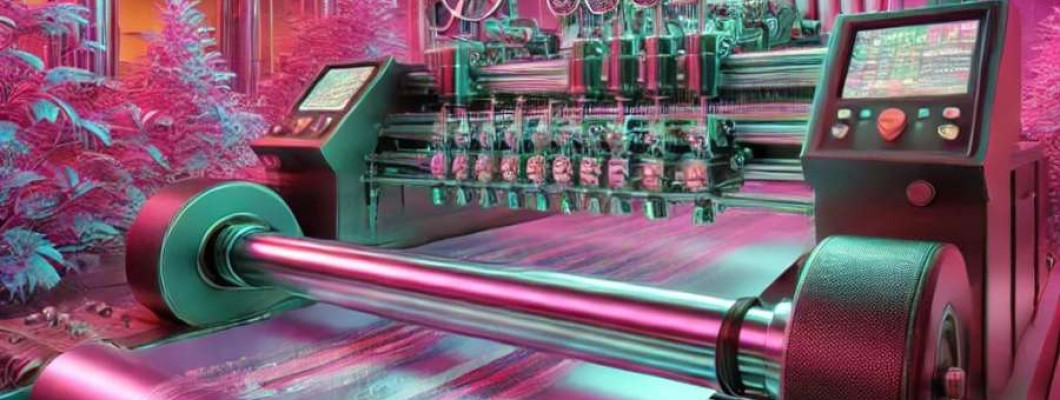
The Industrial Reality of Transitioning to Industrial-Grade DTF Printing
Small-scale printing operations and startups often begin with desktop or semi-professional printers promising vibrant prints and rapid turnaround. However, when scaling production or moving toward enterprise-level demands, these systems expose inherent limitations: throughput bottlenecks, inconsistent print quality, and maintenance challenges. The A3 Roll DTF Printer T-shirt Printing Machine embodies an industrial-grade solution designed to address those gaps, yet operators face technical challenges and operational questions that require a clear understanding of its engineering and deployment realities.
Consider a mid-sized apparel manufacturer transitioning from manual screen printing to direct-to-film (DTF) printing. The goal is to increase production volume while maintaining color fidelity and minimizing downtime. DIY or hobbyist-grade printers typically cap output at around 20-30 garments per hour, struggle with substrate variability, and require frequent manual calibration. Conversely, the A3 Roll DTF Printer promises roll-fed continuous printing with optimized ink transfer for complex color management and scalability. However, its industrial promise entails complexities such as thermal management of printheads under continuous operation, precise film tension control, and maintenance cycles calibrated to ink chemistry.
Technical Deep Dive into the A3 Roll DTF Printer T-shirt Printing Machine
Printhead Technology and Longevity
The A3 Roll model utilizes piezoelectric printheads capable of firing inks at a droplet size of 6 picoliters (pl), achieving resolutions up to 1440 dpi. Compared to desktop thermal inkjet alternatives with larger droplets (~12pl) and resolutions around 720 dpi, this technology enables finer color gradients and sharper edges essential for apparel branding.
Printhead lifespan under continuous industrial use hinges on ink viscosity, particulate load, and thermal cycling. The piezoelectric heads in this machine are engineered to tolerate up to 1 billion firings per head before replacement, approximately equivalent to 1200 operational hours at 50% duty cycle. By contrast, hobbyist printheads often fail below 200 hours under similar conditions.
Ink Chemistry and Film Adhesion Dynamics
DTF printing depends on specially formulated polyester-based films and ink systems designed for high-opacity white underbase layers and vibrant CMYK overlays. The A3 Roll printer’s ink system supports high pigment density with rapid curing facilitated by integrated infrared heaters operating at wavelengths near 1.4 micrometers.
Infrared curing achieves a surface temperature of 60-70 °C on the film, optimizing tackiness without damaging heat-sensitive substrates. Hypothetically, energy consumption for curing runs at approximately 400 Watts per linear meter of printing length, translating to 1.6 kWh for a continuous 4-meter print run.
Roll Transport and Precision Film Tension Control
Maintaining consistent film tension within ±0.05 Newton meters is critical. Deviations cause banding artifacts or registration errors, especially at higher speeds above 1.2 meters per minute. The A3 Roll DTF Printer employs closed-loop feedback with tension sensors and servo-driven unwind/rewind motors. Calculations indicate that at a 1 N tension setpoint, the system can compensate for dynamic load spikes up to 0.3 N within 0.2 seconds, preserving print integrity.
Thermal Management and Environmental Compliance
Continuous operation in a production facility demands robust thermal management beyond printhead cooling. Integrated fans and heat exchangers maintain internal chassis temperatures below 45 °C during extended print cycles. The system’s power draw averages 600 Watts in active mode, peaking at 900 Watts during ink curing phases.
Compliance with industrial safety standards IEC 61010 and RoHS ensures that electrical components and ink materials meet workplace safety thresholds and environmental regulations, critical for scale-up in regulated jurisdictions.
Comparison Table Between DIY/Entry-Level and A3 Roll DTF Printer
| Specification | DIY/Entry-Level DTF Printer | A3 Roll DTF Printer T-shirt Printing Machine |
|---|---|---|
| Print Resolution (dpi) | 720 | 1440 |
| Droplet Size (pl) | 10-12 | 6 |
| Print Speed (m/min) | 0.3-0.5 | 1.2+ |
| Printhead Lifespan (operational hours) | 150-200 | 1200+ |
| Film Tension Control Accuracy (N·m) | ±0.2 or higher | ±0.05 |
| Power Consumption (Watts) | 200-300 | 600-900 |
| Compliance Certifications | Limited/None | IEC 61010, RoHS |
Scenario Analysis of the Industrial Impact of the A3 Roll DTF Printer
Scenario One Small Apparel Start-Up Scaling Production
This company initially utilized entry-level printers for bespoke orders producing 10 garments daily. Transitioning to the A3 Roll DTF Printer allows scaling output to 100+ garments per day with consistent quality, reducing labor intensity by automating continuous roll feeding and print control. The increased throughput directly improves revenue potential and decreases per-unit cost.
Scenario Two Mid-Size Factory Seeking Color Accuracy and Reliability
Color-critical promotional merchandise printing benefits from the printer’s fine droplet size and precise ink layering. The infrared curing system ensures rapid drying without substrate distortion. Factory engineers report 15% less material waste due to minimized misprints and improved film tension control, underscoring industrial reliability.
Scenario Three Contract Printer Managing Maintenance Costs
Contract print service providers emphasize uptime and maintenance efficiency. The extended printhead lifespan and easy-access modular components reduce maintenance windows by 30%. Predictive tension control sensors minimize errors that often lead to costly reprints, directly optimizing operational expenditure.
Expert FAQ on Technical Complexities of the A3 Roll DTF Printer T-shirt Printing Machine
Q1: How does piezoelectric printhead technology compare energetically to thermal inkjet variants in continuous use?
A: Piezoelectric printheads consume 20-30% less power per firing pulse due to direct mechanical actuation, enabling longer continuous runs with lower thermal stress and enhanced energy efficiency.
Q2: What specific role does the 6 pl droplet size play in color gamut reproduction?
A: Smaller droplets permit finer pixel resolution and smoother gradients, enabling expanded perceptual color gamut by up to 15%, critical for brand color accuracy on textiles.
Q3: How does film tension variation impact transfer quality quantitatively?
A: Variations exceeding ±0.1 N·m correlate with up to 8% increase in transfer defects as measured by ink adhesion tests, demonstrating the importance of ±0.05 N·m precision.
Q4: What are the maintenance interval recommendations for printhead cleaning under industrial throughput?
A: At 100 garments daily, a printhead flush cycle every 8 hours and deep cleaning every 1200 operational hours maximize longevity and quality consistency.
Q5: How does the integrated infrared curing system compare to UV curing alternatives?
A: Infrared curing is more energy-efficient and suited for flexible polymer films, providing gentler substrate heating and reducing the risk of thermal warping common in UV curing.
Strategic Verdict and Industrial Recommendation
After detailed technical evaluation, the A3 Roll DTF Printer T-shirt Printing Machine stands out as a definitional solution bridging the gap between DIY-grade equipment and industrial-scale textile printing requirements. The advanced piezoelectric printhead technology, precise tension control, and compliant thermal management systems collectively enable sustainable high-throughput operations with superior print fidelity.
This equipment is recommended for scalable businesses that demand rigorous color accuracy, uptime reliability, and operational efficiency. Its superior maintenance profile and adherence to industrial standards de-risk investments compared to lower-tier systems. Enterprises prioritizing throughput automation and consistent quality will find this printer a capable cornerstone technology for modern textile printing infrastructures.