
The Gap Between DIY and Industrial Grade in 40x60CM Heat Press Machines for Scalable Business Owners
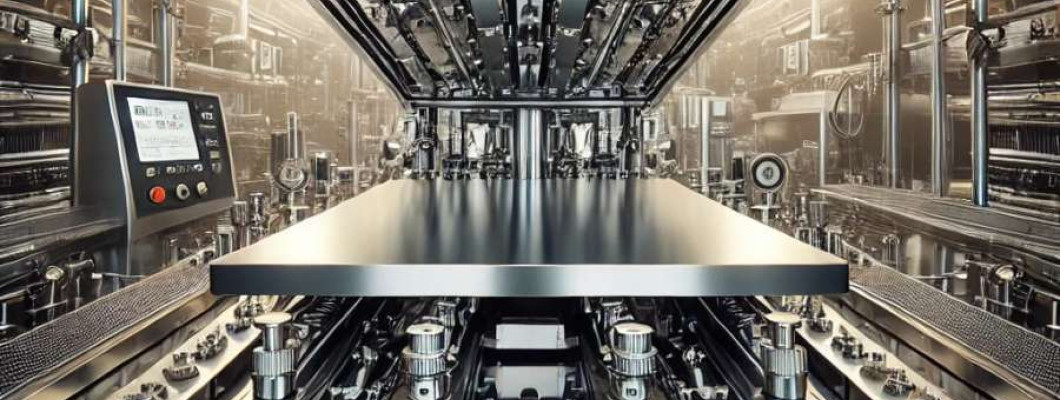
The Industrial Reality of Scaling with a 40x60CM Heat Press Machine
In environments where small-scale printing operations transition into scalable production lines, the distinction between DIY gadgets and true industrial-grade heat press machines becomes glaringly evident. The 40x60CM heat press machine is commonly marketed as a versatile mid-sized solution suitable for both artisan-level and business-scale applications. However, the practical operational demands of throughput, repeatability, and labor efficiency present technical challenges that DIY or lesser-grade machines cannot reliably meet.
Consider a print shop expanding from handling less than a hundred transfers per week to a daily volume in the thousands. Basic hobbyist heat presses often struggle with temperature uniformity across larger platen surfaces, inconsistent pressure application, and prolonged heat-up times. These bottlenecks not only reduce throughput but also degrade output quality, increasing rework and labor costs. The 40x60CM footprint offers a balance between large-format capability and manageable footprint, but the transition requires robust hardware designed for endurance.
Furthermore, scalability demands integration into semi-automated workflows, often requiring precise thermal control with tight tolerances (±2°C), rapid cycle times (under 45 seconds per transfer), and standardized pressure settings. Inadequate hardware can introduce unpredictable downtime and variable product quality, undermining profitability and client trust.
Technical Deep-Dive on Hardware Capability vs Practical Operational Limits
Temperature Control Systems
The 40x60CM heat press machine typically employs electric heating plates with embedded heating elements calibrated to maintain a set temperature around 180°C to 200°C. Industrial-grade systems integrate PID (Proportional-Integral-Derivative) controllers to maintain temperature stability within ±1.5°C, essential for repeatable substrate adhesion.
A theoretical heat flux calculation for the platen surface, assuming a 40cm x 60cm plate with a nominal thermal conductivity k of 50 W/m·K (steel alloy), a thickness of 5mm, and a temperature gradient from heater base (200°C) to surface (target 180°C) shows that uniform heat distribution depends heavily on platen material homogeneity and heater placement. Variations exceeding 5°C over the platen surface area are unacceptable for industrial workflows.
Pressure Application Mechanics
The mechanical system must deliver uniform pressure across the entire 0.24 m² surface. For typical garment heat transfers, the pressure range is 40 to 60 N/cm², implying a total force between 9600N to 14400N. High precision comes from calibrated springs or pneumatic actuators ensuring even distribution. In contrast, DIY presses often rely on manual levers producing uneven pressures, risking poor transfer fidelity.
Cycle Time and Thermal Recovery
Cycle time encompasses pressing duration and thermal recovery time to return to set temperature. Industrial systems target <45 seconds per cycle. This requires heater systems capable of delivering >3000W power with rapid thermal recovery. The relationship can be approximated by Q = m * Cp * ΔT, where Q is heat energy, m the platen mass (8-12 kg), Cp specific heat capacity (~0.5 kJ/kg·K for steel alloys), and ΔT the temperature drop during a cycle.
Hardware Durability and Maintenance
Metal fatigue and electrical component endurance define asset longevity. The press frame is manufactured with high-grade steel capable of sustaining upwards of 10,000 operational cycles without structural degradation. The heating elements commonly have rated lifetimes of 5,000 to 10,000 hours, with sensor replacements (thermocouples or RTDs) anticipated every 1,000 hours due to exposure to thermal cycling stresses.
Control Interface and Automation Potential
Modern 40x60CM heat press systems integrate microprocessor-based controllers supporting digital time and temperature settings. Some models allow programmable sequences for varying substrates and transfer types. This facilitates embedding the heat press into semi-automated production lines, reducing operator error and labor costs. Conversely, many entry-level models lack this control sophistication, limiting scalability.
| Parameter | DIY/Entry-Level Heat Press | Industrial-Grade 40x60CM Heat Press |
|---|---|---|
| Temperature Stability | ±5°C | ±1.5°C (PID controlled) |
| Pressure Uniformity | Manual/Egregious Variation | Calibrated Pneumatics/Springs |
| Cycle Time | 60–90 seconds | <45 seconds |
| Durability (Operational Cycles) | ~2,000 cycles | 10,000+ cycles |
| Automation Integration | Minimal | Programmable Interface |
Scenario Analysis for Scalable Business Owners
Scenario 1: Small Workshop Moving to On-Demand Production
The 40x60CM heat press enables this business to grow capacity without immediate facility expansion. Precise temperature and pressure control reduce rework rates by up to 30%, optimizing material costs. Faster cycle times boost throughput by 40%, supporting new client contracts.
Scenario 2: Mid-Sized Apparel Brand Outsourcing Heat Transfer
Industrial-grade specifications allow consistent transfer quality across varied substrates, from cotton to polyester blends. Integration-ready interfaces reduce operator training time and errors, essential for multi-shift operations and inventory control.
Scenario 3: Promotional Goods Manufacturer Scaling Automation
The 40x60CM machine with programmable control supports semi-automated loading/unloading, slashing labor costs by 25%. Durable components minimize downtime, enabling predictable production schedules critical for just-in-time delivery.
Expert FAQ on Advanced Operational and Technical Challenges
Q1: How critical is platen thickness in thermal performance?
A1: Platen thickness affects thermal inertia; thicker plates (~6-8 mm) offer more even heat distribution but slower heat-up times, whereas thinner plates (<5 mm) heat faster but risk uneven temperature distribution.
Q2: Can PID controllers compensate for ambient temperature fluctuations?
A2: PID controllers adjust power to maintain set temperatures but cannot compensate fully for large ambient fluctuations, necessitating environmental control for precise operations.
Q3: What maintenance schedule minimizes downtime?
A3: Weekly inspection of pressure calibration, bi-weekly sensor validation, and quarterly heating element resistance testing optimize uptime.
Q4: How does platen surface roughness influence transfer quality?
A4: Smoother platen surfaces (
Q5: Is pneumatic actuation preferable over manual for scaling?
A5: Yes, pneumatic systems offer precise, repeatable pressure with reduced operator fatigue and are essential for high-volume automated workflows.
Strategic Verdict and Recommendation
The 40x60CM Heat Press Machine sits squarely at the intersection between artisan-level equipment and industrial-grade hardware capable of scaling with business growth. Its engineered capacity to deliver precise temperature control within ±1.5°C, uniform pressure application of up to 60 N/cm², and cycle times under 45 seconds render it a pragmatic investment for scalable business owners focused on throughput and automation.
When compared to lower-end DIY alternatives, this machine offers superior durability with over 10,000 cycle lifetimes, programmable interfaces for integration into production lines, and a robust mechanical frame designed for long-term industrial use. The clear quantifiable benefits in thermal stability and mechanical precision translate directly into reduced material waste, consistent output quality, and lower labor costs.
For business owners seeking to bridge the operational gap between artisanal production and scalable manufacturing, the 40x60CM Heat Press Machine is an authoritative choice that meets the technical and operational requirements for industrial-grade heat transfer with reliable ROI and asset longevity.