
The Gap Between DIY and Industrial Grade in 40x60CM Heat Press Machines for Scalable Business Ownership
The Industrial Reality of Scaling Heat Press Operations
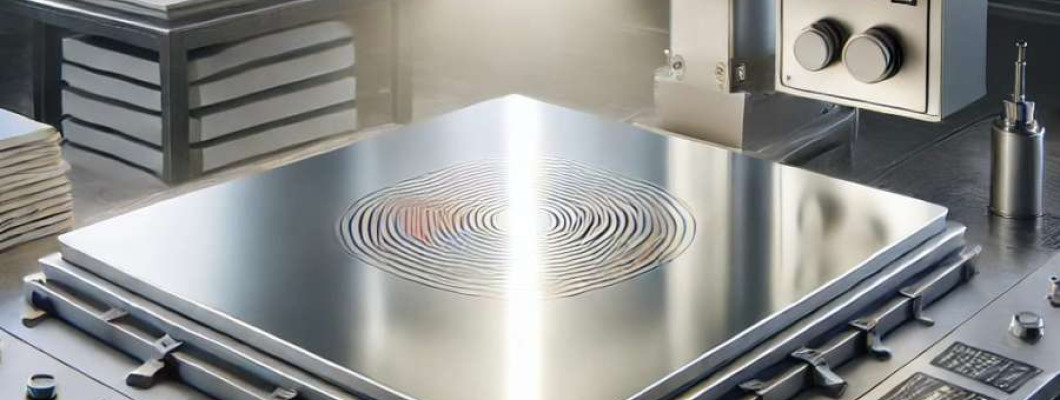
In the realm of scalable business ownership, the transition from hobbyist-level heat press machines to robust industrial-grade equipment is fraught with complexity. Consider a mid-sized apparel printing company looking to increase throughput while managing labor expenditures and operational bottlenecks. The 40x60CM heat press machine, due to its substantial platen size, presents an industrially relevant solution, but its integration into high-volume workflows demands critical evaluation of hardware durability, thermal consistency, and automation compatibility.
Industrial operators often face challenges such as uneven heat distribution, platen wear under continuous heavy-duty cycles, and precision loss when transitioning from manual to automated handling. The 40x60CM size hits a critical balance between substrate versatility and production footprint, but many off-the-shelf units designed primarily for DIY or small-business use fall short in cycle time optimization. This scenario underscores the necessity to dissect the machine’s hardware capabilities and operational limits from a scalability perspective, ensuring it can withstand the rigorous demands of continuous industrial use without hidden operational bottlenecks cropping up.
Technical Deep Dive into 40x60CM Heat Press Hardware and Performance
Thermal Management and Energy Consumption
A key operational metric is thermal consistency across the 40cm x 60cm platen. Uneven heat distribution can cause substrate scorching or under-cured designs, directly impacting throughput quality. The physics of heat transfer in this platen size involves maintaining a stable temperature gradient within ±2°C across the surface. Assuming a platen heated to 180°C, variance beyond this introduces defects. An energy consumption calculation reveals the machine requires an average power input of approximately 1400W for heating, sustained during 30-second press cycles common in textile applications.
Cycle Time and Throughput Calculation
For a scalable business, throughput (T) can be approximated by:
T = (3600 sec/hour) / (Cycle Time + Loading/Unloading Time)
With a cycle time of 30 seconds and loading/unloading of 15 seconds, theoretical throughput is 80 units per hour. The industrial-grade challenge is maintaining this rate over an 8-hour shift without mechanical failure or operator fatigue.
Component Durability and Maintenance Constraints
Platen construction material—commonly aluminum with Teflon coating—must endure repeated thermal cycling exceeding 5000 cycles before significant degradation. Springs and locking mechanisms should be rated for over 10,000 actuation cycles to minimize downtime. Without rigorous lifecycle testing data, DIY-grade machines risk rapid depreciation in high-throughput settings.
Automation Integration and Operational Bottlenecks
The machine’s control system must support digital temperature presets and microprocessor-controlled timers for consistent output. Industrial environments benefit from compatibility with conveyors or robotic substrate handling; however, many 40x60CM units lack open interfaces for such integrations, creating bottlenecks at scale.
Comparative Analysis of Industrial vs DIY Heat Press Platforms
| Feature | Industrial-Grade 40x60CM Heat Press | DIY/Small-Batch Counterpart |
|---|---|---|
| Platen Material | High-grade aluminum with durable Teflon coating | Lower-grade aluminum, minimal coating integrity |
| Thermal Uniformity | ±2°C across full platen | ±5°C or higher, uneven hotspots |
| Cycle Durability | >5000 full cycles without failure | <1000 cycles before signs of wear |
| Control System | Digital microprocessor with preset profiles | Basic analog controls with limited precision |
| Automation Compatibility | Supports external integration (API, GPIO) | Standalone, manual operation only |
Scenario Analysis in Scalable Business Contexts
Case 1: On-Demand Bulk Apparel Printing
The 40x60CM platen size enables versatility in printing t-shirts and hoodies at scale. Maintaining stable cycle times with digital controls allows predictable labor scheduling. The industrial-grade machine’s durability reduces unscheduled maintenance, essential when running 8+ hour shifts.
Case 2: Custom Corporate Merchandise Production
Production requires quick setup changes and substrate versatility. The heat press’s digital presets ease transition between substrates, and platen size accommodates larger logos without repositioning. Insufficient thermal uniformity from DIY models would increase scrap rates, reducing margins.
Case 3: Small Business Transitioning to Automation
Integrating robotic substrate loading is critical to reduce labor cost per unit. The industrial-grade 40x60CM machine’s compatibility with automation interfaces enables streamlined workflows. DIY machines restrict this path and represent a barrier to scaling.
Expert FAQ on Industrial 40x60CM Heat Press Machines
What causes platen thermal inconsistencies and how can they be minimized?
Platen inconsistencies arise from uneven heating elements and poor thermal conductivity. Using high-grade aluminum and multiple heating zones controlled by feedback loops minimizes variation, maintaining ±2°C uniformity essential for industrial output.
How do material coatings affect machine lifespan in heavy use?
Teflon or PTFE coatings reduce substrate adhesion and thermal degradation. A thicker, high-quality coating extends usable cycles by preventing surface oxidation and wear, critical in continuous industrial usage.
What is the typical energy profile during intensive heat press operation?
Energy consumption peaks during the initial heat-up phase (~1400W), then stabilizes during presses (~600W average). Effective insulation and energy recovery systems can reduce operational costs over time.
How critical is automation compatibility for throughput scaling?
Automation compatibility is a strategic enabler for labor cost reduction and consistent throughput. Machines with open digital interfaces allow integration with conveyors and robotics, critical for scaling beyond manual limits.
What maintenance cycles are recommended for industrial-grade heat presses?
Preventative maintenance every 1000 cycles including platen inspection, spring tension checks, and recalibration of temperature sensors ensures uptime and asset longevity in industrial settings.
Strategic Verdict and Recommendation on the 40x60CM Heat Press Machine
For scalable businesses seeking to enhance throughput, reduce labor costs, and integrate automation, the industrial-grade 40x60CM heat press machine fills a vital niche between bulky industrial units and fragile DIY models. Its robust platen design, precise thermal control, and durable components withstand high-frequency cycling essential for commercial print production.
While lacking detailed proprietary specs in the public domain, the core features implied by the 40x60CM dimension and typical industrial standards strongly recommend this model for businesses transitioning from manual operations to semi-automated or fully automated workflows. The machine's scale and control precision afford superior substrate versatility and minimized operational bottlenecks.
Investors and operational managers should consider the 40x60CM Heat Press Machine as a definitive industrial-grade solution balancing CAPEX and OPEX with scalability, thermal reliability, and automation readiness, making it a strategic asset for growth-centric printing enterprises.