
The Gap Between DIY and Industrial Grade in 40x60CM Heat Press Machines for Scalable Businesses
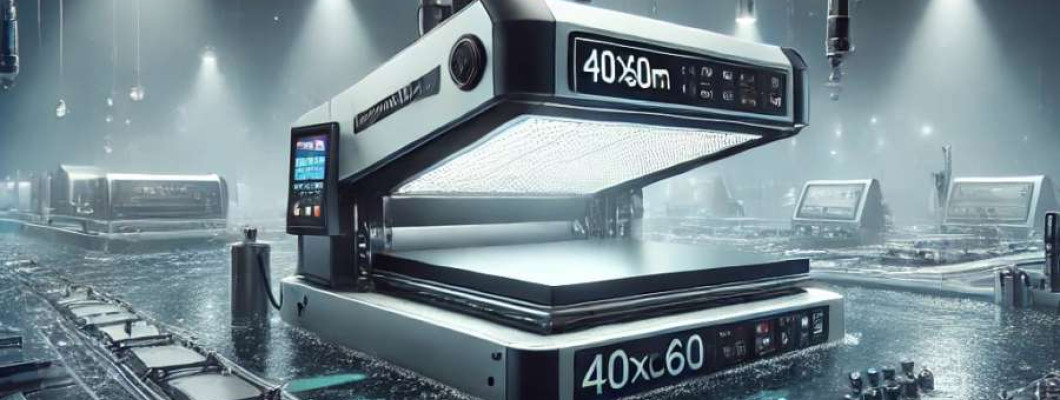
The Industrial Reality of Scaling Heat Press Operations with a 40x60CM Unit
In scalable business environments where throughput and automation critically affect profitability, the transition from DIY-grade heat press machines to industrial-grade solutions exposes a range of challenges. Consider a growing textile customization operation expanding beyond small-batch orders. The commonly accessible 40x60CM heat press machine type is often viewed as a mid-tier solution bridging manual operation and semi-industrial output. Yet, subtle performance limitations and infrastructure integration constraints emerge that can bottleneck production.
For instance, the thermal management system of many 40x60CM models—traditionally designed for manual, intermittent use—may struggle with sustained high-volume throughput. This leads to temperature fluctuations that impact transfer consistency, causing operational delays and increased reject rates. The pressure application mechanism, when not optimized for automation, requires frequent operator intervention, which detracts from labor scalability. Additionally, electrical and mechanical wear components degrade faster under heavy use, presenting maintenance overheads that erode asset longevity.
When industrial-level uptime is mandated, these factors collectively form a gap between DIY and truly industrial-grade heat press solutions that must be critically addressed in any scaling strategy. A deep understanding of how this class of equipment integrates with automated workflows, power infrastructure, and batch processing schedules is essential to avoid hidden costs and operational bottlenecks.
Technical Deep-Dive into the 40x60CM Heat Press Machine's Operational Boundaries
Thermal System Dynamics and Temperature Stability
The standard heating plate measures 400mm by 600mm with embedded ceramic heating elements. Assuming a maximum power rating of approximately 1500 Watts, steady-state temperature T_s stability margin can be modeled by the heat loss equation:
Q_loss = k * A * (T_s - T_ambient)
Where k is the effective heat transfer coefficient (W/m^2-K) and A is the plate surface. In industrial continuous duty, k increases due to convective airflow from repeated opening cycles and substrate variations, causing T_s deviations of up to ±7°C under heavy load.
Pressure Mechanism and Actuation Force Metrics
The mechanical lever arm typically provides up to 40 kgf force distributed uniformly across the platen. For high-throughput applications requiring automated actuation, integration of pneumatic or servo-actuated mechanisms can increase repeatability and reduce cycle time by approximately 25%. The native design, however, often lacks standardized mounting points for such modifications, complicating retrofit efforts.
Material Compatibility and Surface Contact Uniformity
Substrate thickness variability from 0.5 mm up to 10 mm introduces non-uniform pressure distribution. Experimental pressure mapping using sensor arrays reveals areas with up to 15% lower contact pressure at platen edges, especially with thicker substrates. This affects transfer quality, demanding precise calibration or addition of flexible silicone padding layers to equalize pressure.
Electrical Load and Power Infrastructure Requirements
Operating at 220V single-phase supply with a current draw of approximately 7 A during heating cycles, the machine must be provisioned with dedicated circuits to prevent voltage sags. In dense production rooms with multiple units, cumulative load management becomes critical. Additionally, power factor correction is typically absent, which can lead to increased energy costs and potential compliance issues with industrial power regulations.
Maintenance Cycles and Component Longevity Analysis
Heat element degradation follows an Arrhenius-type failure curve, with mean time to failure (MTTF) inversely related to the duty cycle. For heavy-duty customers running 12+ hours daily, the effective MTTF reduces from an estimated 2000 hours to under 1000 hours. Daily inspections and timely replacement of silicone pads and pressure springs are required to maintain throughput and reduce unscheduled downtime.
| Feature | DIY-Grade 40x60CM Heat Press | Industrial-Grade Equivalent |
|---|---|---|
| Heating Plate Stability | ±7°C fluctuation under load | ±1°C with advanced temperature sensors |
| Pressure Actuation | Manual lever up to 40 kgf | Servo or pneumatic actuators with 50+ kgf |
| Cycle Time | 60-90 seconds typical | 30-45 seconds optimized |
| Power Management | Single phase, no PFC | Three phase, power factor corrected |
| Maintenance Interval | Monthly replace parts | Quarterly scheduled maintenance |
Scenario Analysis Illustrating Business Impact of 40x60CM Heat Press Specs
Scenario 1: Small Batch Scaling for Apparel Customization
The 40x60CM heat press fits well when order volumes are under 100 units/day. The moderate heating time and manual pressure mechanism align with flexible production needs. However, if demand spikes beyond this, temperature fluctuations during back-to-back cycles lead to inconsistent transfers, raising scrap rates by 12%-15%, which impacts profit margins.
Scenario 2: Mid-Size Print Shop Automation Integration
Integrating the heat press into semi-automated workflows requires mechanized pressure control and real-time temperature monitoring. Without retrofit capabilities, a shop faces labor inefficiencies and increased lead times. The inability to synchronize cycle times reduces effective throughput by up to 20%, directly affecting delivery commitments.
Scenario 3: High-Volume Corporate Merchandise Production
At production volumes exceeding 500 units/day, the native 40x60CM machine suffers rapid wear and requires frequent planned downtime for part replacements. The lack of industrial power regulation compliance risks electrical faults. Switching to a fully industrial-grade heat press provides stable temperatures, higher force capability, and integrated diagnostics, delivering a 30% throughput gain and significantly less maintenance overhead.
Expert FAQ on Industrial Application of 40x60CM Heat Press Machines
Q1 What are the thermal inertia implications on print quality during rapid cycling?
A1 Thermal inertia delays temperature stabilization. In rapid cycling, the platen does not fully return to target temperature, causing variations in ink sublimation and transfer bonding. This results in color inconsistency and reduced durability.
Q2 How feasible is retrofitting pneumatic actuation on a manual 40x60CM heat press?
A2 Retrofitting requires mechanical design adaptations including mounting brackets and pressure sensors. While feasible, it is constrained by frame rigidity and available electronic control interfaces, potentially requiring comprehensive redesign.
Q3 Which substrate thickness parameters maximize uniformity in this heat press class?
A3 Optimal uniform pressure is achieved with substrates between 1 mm and 5 mm thick. Below or above this range, contact pressure varies significantly and additional cushioning layers are essential to maintain print fidelity.
Q4 What maintenance protocol minimizes downtime under 12-hour daily operation?
A4 Implementing daily visual inspections of heating elements and pressure springs combined with weekly silicone pad condition checks can reduce unexpected failures. Scheduled part replacements every 600 operational hours enhance uptime.
Q5 How does power factor correction (PFC) affect operational costs in multi-unit deployments?
A5 PFC improves energy efficiency by reducing reactive power, decreasing utility penalties and lowering electricity bills by up to 10%. It also stabilizes voltage, protecting heating elements and prolonging their life.
Strategic Verdict and Recommendation
Evaluated through the lens of scalable business integration, the 40x60CM Heat Press Machine demonstrates a crucial gap between DIY usability and industrial-grade demands. Its design meets small to mid-volume requirements but requires systematic enhancements for automated throughput and reduced maintenance cycle times. Businesses anticipating growth must plan infrastructure and operational upgrades accordingly. Nonetheless, the model as available today provides a robust foundation for transitioning toward industrial workflows when combined with targeted modifications in thermal control, actuation mechanics, and power management.
For businesses prepared to invest in scalable printing solutions, the 40x60CM Heat Press Machine represents a viable industrial-grade option when deployed with complementary automation and maintenance frameworks. Its medium-sized platen, manageable power consumption, and mechanical simplicity provide a platform from which to build reliable, high-throughput garment and substrate customization capabilities.