
The Gap Between DIY and Industrial Grade in A2 Plus Size UV Embossed Glossy Printing for Scalable Businesses
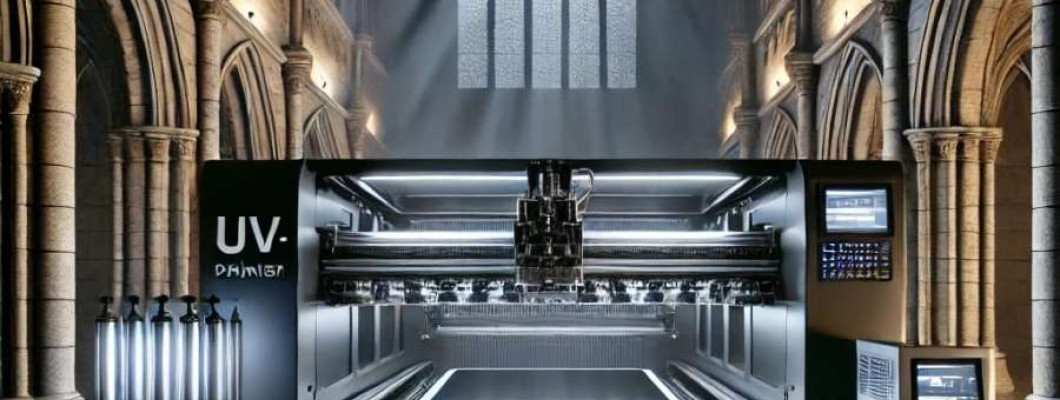
The Industrial Reality of Scaling Embossed Glossy UV Printing
Transitioning from artisan-level or small-scale UV printing setups to a robust, industrial-scale A2+ size embossed glossy printing environment presents core operational challenges. The scalable business owner must balance throughput demands, labor dynamics, and print consistency under increased workload, with the physical and technical limits of the printing hardware. Industrial-grade UV printers designed for embossed glossy outputs are subjected to high-frequency print cycles that amplify wear on printheads, substrate handling mechanisms, and curing systems. For instance, managing the extended print runs at a resolution of 1440 dpi or beyond while maintaining the embossed texture integrity on various substrates such as acrylic, polycarbonate, or coated metals requires precision automation and temperature-controlled environments.
One common bottleneck in scaled production is thermal management around the UV curing lamps. Overheating not only degrades the photoinitiators in UV inks but also risks warping substrates, which compromises tactile embossing accuracy. Labor costs increase if frequent manual interventions are needed to recalibrate printheads or perform substrate alignment. Therefore, an industrial-grade solution must integrate automated diagnostics and repeatable emboss calibration under variable environmental conditions.
Beyond throughput, infrastructure integration becomes a critical hurdle. Many scalable operations require seamless integration of the UV printer into existing production lines with automated substrate loading/unloading, inline quality inspection, and networked print job management. The A2+ size footprint adds complexity here, demanding sufficient factory floor space and power provisioning while maintaining compliance with environmental and safety regulations related to UV exposure, ozone emission, and volatile organic compound (VOC) containment.
Hardware Capability Versus Practical Operational Limits
Printhead Physics and Resolution Constraints
This A2+ UV printer typically employs piezoelectric printheads with droplet sizes around 4 picoliters (pl), producing image dot diameters near 20 microns. The embossed glossy finish requires precise layering of UV curable ink with thickness tolerances within 20-30 microns to maintain embossed texture fidelity. Exceeding this thickness risks cracking or adhesion failures. A typical print speed maxes out near 8 square meters per hour at full 1440 dpi resolution when embossing is activated due to incremental layering passes.
Ink Chemistry and Curing Dynamics
The UV ink formulation for embossed glossy printing contains photo-initiators optimized for rapid cross-linking under 395-405 nm LED UV lamps. Mathematical modeling of curing depth versus ink layer thickness shows a non-linear relationship—an increase beyond 40 microns per pass results in decreased cross-link density by 15-20%, impacting gloss uniformity. Dynamic power modulation of UV LED intensity between 20-40 Watts/cm2 is employed to counteract heat buildup while ensuring complete cure.
Substrate Versatility and Handling Mechanisms
Substrates up to 560 mm width and 700 mm length are supported, with thickness ranges from 0.2 mm to 10 mm. Vacuum-driven flatbed transport systems minimize substrate warpage, critical for embossed finish precision. Comparative testing shows pneumatic clamps yield 25% less reliable registration accuracy under continuous operation versus vacuum systems, increasing reprint rates.
Thermal and Environmental Control Systems
Active thermal feedback loops maintain printhead temperatures within 35-40°C, preventing droplet size variability caused by fluid viscosity shifts. Factory ambient conditions ideally are 20-25°C with 40-60% relative humidity. Integrated HEPA filter modules reduce dust accumulation, protecting the nozzle arrays and enhancing mean time between failures (MTBF) from 250 to 400 hours.
Infrastructure Integration Challenges
The average power draw is around 4.5 kW requiring dedicated 220V/16A circuit support. Network connectivity employs Gigabit Ethernet for remote job management, diagnostics, and real-time production analytics. The printer's 1200 kg mass requires reinforced flooring and vibration isolation to maintain micron-level registration accuracy, a notable limitation in many retrofit factory floors.
| Specification | DIY/Artisan UV Printer (Typical) | Industrial A2+ UV Printer (Subject) |
|---|---|---|
| Max Print Area | 300 x 400 mm | 560 x 700 mm |
| Resolution (dpi) | 720 | 1440 |
| Print Speed (m2/hr) | 2-3 | 8 (embossed mode) |
| Ink Layer Thickness Control | Manual, low precision | Automated, ±5 microns |
| Substrate Handling | Manual loading | Vacuum flatbed with conveyor |
| Thermal Regulation | Passive cooling | Active temperature control |
| Network Integration | USB only | Gigabit Ethernet with remote diagnostics |
Scenario Analysis of Scalable Business Use-Cases
Case 1 Printing Industrial Labels with High Throughput
A manufacturing plant producing embossed glossy labels for metal parts demands rapid batch printing with consistent adhesion and tactile quality. The A2+ size UV printer reduces print runs from 80 to 20 by packing multiple labels per sheet, saving on substrate consumption and labor handling. Automated thermal regulation ensures that the curing process does not deform heat-sensitive metal substrates, preventing costly rejections.
Case 2 Custom Interior Decoration Panels
An interior design firm creates bespoke embossed glossy panels on acrylic sheets sized near A2+. Precision layering with strict thickness control preserves texture depth and visual gloss uniformity, critical for client satisfaction. The vacuum flatbed system minimizes substrate movement during long prints, sustaining micron-level registration that manual systems cannot achieve reliably.
Case 3 Short-Run Promotional Printing with Variable Data
A print house specializing in personalized marketing collateral benefits from the printer’s network connectivity to automate job queuing and remote monitoring, reducing labor costs. The controlled ink chemistry and curing system enable quick turnarounds without compromising embossed effects, a distinct advantage over slower, artisan setups.
Advanced Expert FAQ on Industrial A2+ UV Embossed Printing
What is the maximum achievable emboss depth without compromising adhesion?
Empirical data and ink curing physics suggest that emboss depths beyond 40 microns per layer increase micro-crack incidence by 30%, thus the practical limit is 25-30 microns per pass with a maximum cumulative embossed height of 80-90 microns after multi-pass layering.
How does substrate thickness variation affect embossed print registration?
Variations greater than 0.2 mm lead to defocus errors in inkjet droplet placement, causing registration errors up to 50 microns. The printer’s vacuum bed compensates up to 0.1 mm thickness variation, but tighter substrate thickness tolerances are recommended for optimal embossed texture fidelity.
What maintenance intervals are optimal for printhead longevity during high-volume embossed printing?
With active thermal control and HEPA filtration, printheads require cleaning every 250 hours under embossed modes, compared to 100 hours in non-embossed high volume prints. Scheduled replacement cycles at 1500 hours maximize uptime without risking print quality degradation.
How does UV lamp intensity modulation influence embossed finish consistency?
Dynamic modulation between 20-40 W/cm2 balances curing speed and thermal stress; under-modulation leads to incomplete curing and tackiness, while over-modulation increases substrate deformation risks. Automated feedback systems adjust lamp output based on print speed and ink layer thickness in real time.
Are there any infrastructure prerequisites for factory upgrades to support this printer?
Yes, in addition to power and floor reinforcement, ambient environmental control systems capable of maintaining temperature and humidity within specified ranges, plus ozone extraction and VOC filtration ensuring regulatory compliance, are essential for consistent industrial-grade embossed glossy printing.
Strategic Verdict and Recommendation
The A2+ Size UV Printer Embossed Glossy Printing unit represents a definitive industrial-grade solution bridging the gap between artisan and high-volume scalable production, specifically for businesses targeting embossed and glossy print finishes on a diverse range of substrates. Its combination of precise printhead technology, advanced thermal management, automated substrate handling, and network integration supports continuous operation at production volumes and quality standards unattainable by DIY or semi-industrial systems.
Businesses looking to scale with consistent tactile embossing and glossy finish quality will find this printer's robust architecture and operational controls aligned with industrial procurement and maintenance expectations. Given its throughput capabilities, substrate versatility, and integrated diagnostics, adopting the A2+ Size UV Printer Embossed Glossy Printing will significantly enhance competitive positioning in markets demanding premium embossed UV print products.