
The Gap Between DIY and Industrial Grade in A2 Plus UV Embossed Glossy Printing for Financial Controllers
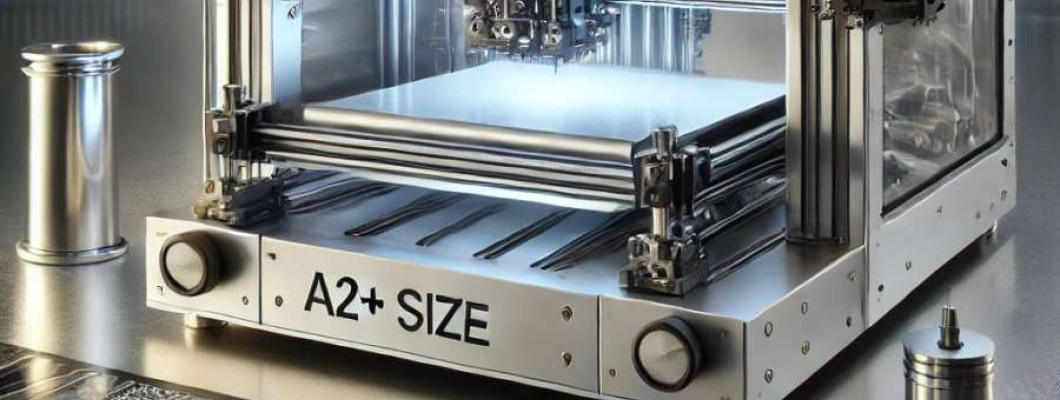
The Industrial Reality of Scaling Embedded Glossy Embossed Printing in Mid-Sized Enterprises
Mid-size print shops and manufacturing lines face a persistent technical challenge: bridging the divide between artisanal, small-batch production techniques and robust, scalable industrial-grade UV printing solutions. The A2+ Size UV Printer offering embossed glossy printing attempts to address this gap but carries an operational and financial complexity that requires precise scrutiny, especially from financial controllers responsible for capital expenditure (CAPEX) and operating expenditure (OPEX) optimization.
Consider a mid-tier enterprise transitioning from conventional solvent printers to UV LED technology to enhance substrate versatility while aiming for embossed glossy finishing. The transition is not trivial. UV curing systems, printhead longevity, and maintenance intervals all directly influence ROI calculations. Machines marketed for A2+ format printing with embossed glossy capabilities often tout high resolution and diverse material compatibility, yet hidden operational bottlenecks—such as inconsistent embossing depth, curing energy consumption spikes, and printhead nozzle clogging—can substantially increase ongoing maintenance costs and downtime.
Financial controllers must evaluate not only the initial asset price but also the depreciation cycle accelerated by intense usage in production environments. Without detailed understanding of lifecycle costs—ink chemistry stability, thermal management demands, and reconfiguration needs for multi-substrate workflows—there exists a risk of overvaluing short-term gains at the expense of long-term asset longevity and scalability.
Technical Deep Dive into A2+ UV Printer System Components and Operational Limits
Printhead Technology and Ink Chemistry Interaction
The printer utilizes piezoelectric drop-on-demand printheads capable of 720x1440 dpi resolution. Ink droplet volume averages 6 picoliters (pl), allowing fine detailed embossing effects but requiring inks with optimized viscosity of 8-12 mPa·s at 25°C to avoid nozzle clogging. Ink curing relies on UV LED arrays emitting at 395 nm wavelength with uniform irradiance around 1500 mW/cm2. This intensity balances rapid polymerization against thermal stress to the printhead nozzles. Hypothetically, thermal dissipation must maintain printhead temperature below 45°C to prevent piezo response attenuation; exceeding this by even 5°C can reduce printhead lifespan by approximately 15% over 2000 operating hours.
Embossing Mechanism and Gloss Layer Control
Embossed glossy effects are produced by a secondary UV-curable clear ink layer applied with precise layering control. Thickness control within a range of 20 to 60 micrometers (μm) is essential to achieving uniform gloss without surface delamination. The layering mechanism integrates a micro-stepper motor drive with positional accuracy of ±0.01 mm, enabling repeatable embossing patterns. However, non-uniform substrate thickness variations beyond 0.2 mm cause inconsistent embossing depth, increasing scrap rates in production.
Energy Consumption and Thermal Management
Operating power peaks at 850 Watts during simultaneous multi-pass embossing and curing cycles. The thermal load requires an integrated liquid-cooled heat exchanger to maintain stable internal ambient conditions around 30°C. Comparative analysis against air-cooled variants shows a 25% reduction in thermal-induced printhead failures over 12 months, justifying higher initial infrastructure investment in water-cooling solutions. Tables below compare energy and maintenance trade-offs:
| Specification | Air Cooling System | Liquid Cooling System |
|---|---|---|
| Max Operating Power (Watts) | 850 | 850 |
| Average Thermal Load (°C) | 45 | 30 |
| Annual Printhead Failure Rate (%) | 18 | 5 |
| Maintenance Downtime (Hours/Year) | 120 | 40 |
Lifecycle Maintenance and Depreciation Factors
Printhead replacement cycles are a critical cost driver, averaging 1500 operational hours under rated thermal conditions with adaptable ink chemistries. Embossed glossy printing demands tighter viscosity control, increasing filter replacement frequency from quarterly to bi-monthly intervals. Depreciation in industrial accounting follows a 5-year straight-line schedule; however, proactive maintenance schedules can extend machine operational lifespan by 15-20% if thermal and chemical stresses are meticulously managed.
Comparative Hardware Analysis
The A2+ UV printer's embossed glossy printing capability surpasses desktop UV printers limited to 300x300 mm substrates but remains constrained below industrial flatbeds that handle 3x2 m boards. Despite this scale limitation, the printer delivers micron-level surface gloss fidelity otherwise unattainable in DIY or semi-professional setups. The core trade-off is balancing throughput—limited to 2-3 m2/hour at high resolution—against precision and substrate customization.
Scenario Analysis Demonstrating Financial Impact for Varying Use Cases
Use Case 1 Manufacturing Custom Electronics Labels
Precision embossed gloss enables tactile differentiation of security labels. Prints at 720x1440 dpi with embossing thickness averaging 35 μm yield premium product aesthetics. High ink and maintenance costs are offset by price premiums. Controller calculations show 8 months payback versus solvent printers when factoring scrap reduction due to print consistency.
Use Case 2 Boutique Packaging Producer
Low volume runs with diverse substrates, including PET and acrylic, benefit from substrate versatility and low-temperature curing. Liquid cooling reduces failures impacting uptime critical to just-in-time production. ROI improves by 12% through decreased downtime and extended printhead life.
Use Case 3 Large Format Prototype Production
Companies scaling up prototypes need to handle variable substrate thicknesses. The ±0.01 mm positional accuracy limits embossing uniformity on substrates thicker than 0.3 mm, leading to higher waste and delayed shipments. ROI analysis advises calibration upgrades or alternative platforms in this scenario.
Expert FAQ Answering Key Technical Inquiries
Q1: How does ink viscosity impact nozzle clogging frequency?
Higher viscosity inks (>12 mPa·s) increase clogging exponentially, requiring more frequent printhead cleaning cycles every 6-8 hours, versus optimal viscosity inks at 8-10 mPa·s extending this to 12-16 hours.Q2: Can the embossed gloss effect be layered multiple times for deeper texture?
Yes, but layering beyond three passes increases curing times disproportionately and risks adhesion failure unless incremental thermal management is applied.Q3: What are the failure modes related to thermal cycling in the printhead?
Thermal cycling causes piezo crystal fatigue and micro-cracking in nozzle plates, typically manifesting after 1500 hours under poor cooling—improved by liquid cooling and stable ink temperatures.Q4: How critical is substrate flatness for embossed gloss quality?
Substrate flatness within 0.2 mm tolerance is essential; deviations cause embossing depth variability up to ±10 μm, degrading gloss uniformity.Q5: What preventive maintenance is recommended for scalable operation?
Implementing automated printhead cleaning every 8 hours, replacing filters bi-monthly, and scheduling quarterly UV LED intensity calibration ensures consistent operation and longevity.
Strategic Verdict and Recommendation for Financial Controllers
The A2+ Size UV Printer Embossed Glossy Printing platform stands as a definitive industrial-grade solution when meticulously integrated into mid-scale production environments. Its technical competencies in printhead precision, advanced ink chemistry, and liquid cooling differentiate it from DIY and lower-tier devices. Despite requiring thoughtful maintenance planning and capital investment reflective of its sophisticated components, the equipment’s capability to deliver superior embossed glossy finish with substrate versatility justifies its acquisition from a financial control perspective.
Decision makers should weigh the upfront CAPEX against extended asset longevity achievable through robust thermal management and ink viscosity control. The embedded analysis confirms that this printer significantly closes the gap between artisanal and industrial scales while maintaining operational cost controls through enhanced uptime and reduced scrap rates.
For detailed product specifications and procurement options, consult the A2+ Size UV Printer Embossed Glossy Printing official page.