
The Gap Between DIY and Industrial Grade in A2 Plus UV Embossed Glossy Printing for High End Artisans
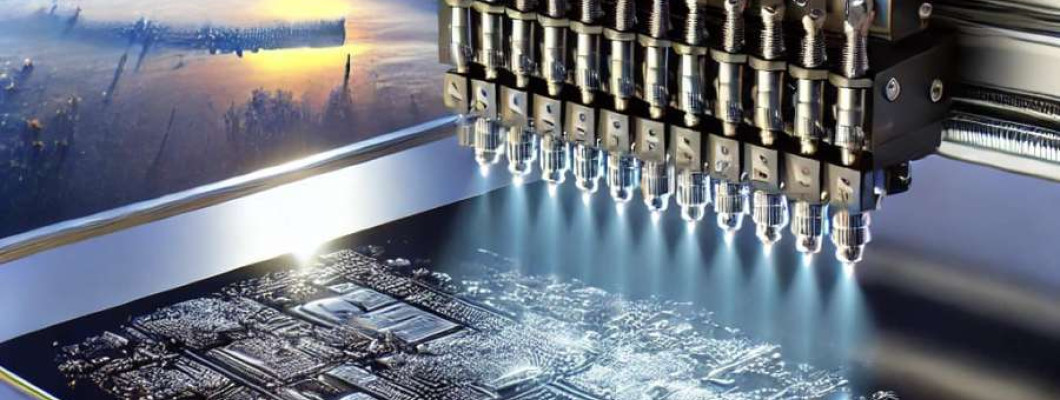
The Industrial Reality of Achieving High Fidelity Embossed Glossy Prints on A2 Plus UV Printers
High-end artisans targeting A2+ size UV printed outputs with embossed and glossy finishes face a conundrum that sharply divides consumer-grade or DIY equipment from truly industrial-grade hardware. The challenge lies not merely in surface decoration but in achieving consistent micron-level precision, repeatable gloss uniformity, and embossed texture depth—all while maintaining the complex interplay between UV-curable inks, substrate compatibility, and printhead mechanics. Outside industrial environments, operators are frequently confronted by hidden operational bottlenecks that cripple throughput, compromise color integrity, and generate costly waste due to misalignment and incomplete curing.
Consider a scenario where a boutique studio attempts to replicate embossing effects on acrylic substrates repeatedly at A2+ sizes (approximate 594 mm x 420 mm). The uncalibrated printhead droplet sizes (typically ranging between 5-10 pl in consumer models) offer limited control over ink layering and texture depth. Coupled with inconsistent UV lamp outputs (fluctuating between 150-250 mW/cm2), the resulting prints present uneven gloss levels and irregular tactile embossing. These challenges escalate if the printhead fails to maintain precise nozzle health due to daily uptime realities or suboptimal ink chemistry.
Such bottlenecks underline the critical divide where only industrial-grade printers, engineered with asset longevity, controlled thermal environments, and robust ink delivery systems, can maintain consistent embossing precision across thousands of print cycles. This divide also emphasizes the essential human factor engineering needed for high-precision outputs, ensuring operators can execute complex media processes without incremental errors or fatigue.
Technical Deep Dive into Embossed Glossy Printing on A2 Plus UV Printers
Printhead Technology and Droplet Precision
The printer’s success hinges on its printhead’s ability to jet UV curable ink droplets in volumes as low as 3 pl, ensuring layer-by-layer buildup critical for embossing effects. Industrial solutions employ piezoelectric heads capable of maintaining a dpi resolution of up to 1440 x 1440, facilitating micron-level layering. By contrast, lower-tier devices stagnate at 600 dpi, where minimum droplet volume and velocity variation generate discrepancies in embossed depth.
UV Curing Systems and Power Stability
Consistent curing is achieved through dual UV-LED arrays delivering stable output power between 1.5 and 2.0 W/cm2 over the substrate surface, maintaining thermal limits under 45°C to avoid substrate warping. Mathematical models correlate curing intensity (I, in Watts/cm2) and exposure time (t, in seconds) to polymerization depth (d) via d = k x (I x t)^(1/2), where k depends on ink chemistry. Fluctuations in I undermine embossed texture integrity, a vulnerability seen in less stable lamp designs.
Substrate Compatibility and Media Handling
The A2+ format demands rigorous substrate flatness and dimensional stability, especially for acrylic, polycarbonate, and treated metals. Industrial systems integrate vacuum tables with sub-0.1 mm deviation tolerance, supporting precise layer deposition and embossing effect replication. Additionally, advanced media transport systems synchronize with printhead kinetics to minimize micro-shifts under 10 µm per pass, essential for multi-pass embossing techniques.
Ink Chemistry and Layering Dynamics
UV inks with high polymer cross-link density and tailored rheology enable glossy surfaces combined with embossed texture resilience. For instance, inks with viscosity between 20-35 mPa·s at 25°C and a surface energy of circa 42 mN/m provide optimized wetting and adhesion. Layering dynamics consider curing-on-the-fly, where sequential layering with intermediate curing steps prevents ink bleeding, preserving sharp embossing edges and gloss contrast.
Thermal and Environmental Controls for Print Stability
Maintaining an operational environment with ambient temperature between 20-25°C and humidity at 40-50% is crucial to stabilize ink viscosity and curing rates. Thermal management systems inside the printer cabinet dissipate up to 150 Watts of heat generated by LED arrays and printhead drivers, stabilizing hardware and prolonging component lifespan.
| Specification | Industrial-Grade A2+ UV Printer | Consumer/DIY A2+ UV Printer |
|---|---|---|
| Printhead Resolution | 1440 x 1440 dpi (3 pl droplets) | 600 x 600 dpi (5-10 pl droplets) |
| UV Lamp Power Stability | 1.5 - 2.0 W/cm2 ±2% | 150 - 250 mW/cm2 ±10% |
| Substrate Flatness Control | Vacuum hold with ±0.1 mm tolerance | Manual clamp, ±0.5 mm deviation |
| Media Transport Precision | Micro-shift <10 µm/pass | Micro-shift >50 µm/pass |
| Ink Viscosity Range | 20-35 mPa·s at 25°C | 40-60 mPa·s at 25°C |
Scenario Analysis Highlighting Industrial-Grade Impact for Artisan Applications
Scenario one involves a high-end glassware studio needing embossed UV prints on large acrylic plaques for luxury branding. The printer's ability to maintain micron precision and consistent curing translates directly to superior tactile finish and repeatability, critical for brand reputation. Lower-grade devices introduce blotchy finishes and inconsistent embossing, leading to rejects and higher material costs.
Scenario two considers a boutique packaging developer producing limited runs of embossed glossy labels on flexible films. The printer’s controlled ink rheology and thermal stability ensure multi-pass layering without edge bleeding, allowing richly textured, high-gloss labels that resist abrasion and fading—a competitive differentiator versus flat printed alternatives. Non-industrial printers lack precision media transport and consistent UV curing necessary for this quality.
Scenario three focuses on a specialized fine art printmaker requiring precise layering for dimensional depth on metal substrates. The industrial UV printer’s stable vacuum bed and tightly controlled printhead firing ensure absolute registration across passes, enabling complex embossing effects integrated with high color gamut printing—impossible on consumer-level devices prone to misalignment and inconsistent ink deposition.
Expert FAQ on Industrial A2 Plus UV Printers for Embossed Glossy Printing
Q1: How does droplet size variation affect embossing consistency?
A1: Smaller droplets (3 pl) enable fine layering, critical for embossing depth resolution. Size variation above ±10% results in uneven embossing layers and gloss inconsistency.
Q2: What role does UV lamp wavelength uniformity play?
A2: Peak emission at 395 nm with ±5 nm variation ensures optimal ink polymerization. Deviations slow curing, causing embossing flattening or incomplete adhesion.
Q3: How do substrate surface energies interact with ink adhesion?
A3: Substrate energies near 40-45 mN/m promote strong wetting without spreading, preserving embossed texture sharpness. Surfaces with altered energies cause bleeding or poor definition.
Q4: Can ambient fluctuations impact printhead performance?
A4: Yes, temperature drift beyond ±3°C impacts viscosity and jetting frequency, increasing nozzle clog risk and downtime.
Q5: What maintenance cycles ensure optimal embossed output?
A5: Daily nozzle tests, weekly printhead cleaning with solvent flushing, and monthly UV lamp intensity calibration maintain consistent embossed results.
Strategic Verdict and Recommendation for A2 Plus UV Printer Embossed Glossy Printing
The technological gap between DIY solutions and industrial-grade A2+ UV printers profoundly impacts embossed glossy printing quality, precision, and operational reliability for high-end artisans. This printer’s engineering emphasis on printhead accuracy, stable UV curing, substrate accommodation, and environmental controls positions it as the definitive solution for demanding tactile and visual finishes on large-format media. Professional workshops and boutique manufacturers seeking micron-level embossing consistency and scalable quality should prioritize integrating such a system.
We recommend the A2+ Size UV Printer Embossed Glossy Printing platform for enterprises focused on long-term asset longevity and unmatched print quality. Its robust design mitigates hidden bottlenecks, dramatically reducing waste and operator fatigue while maximizing throughput for niche artisan applications where precision and finish define brand differentiation.