
The Gap Between DIY and Industrial Grade in A2+ Size UV Printer Embossed Glossy Printing
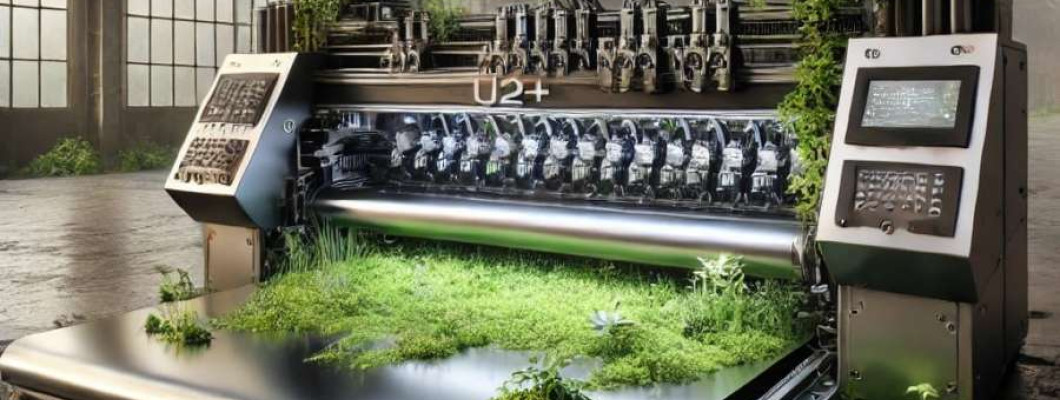
The Industrial Reality of Scaling Embossed Glossy Printing
In industrial printing environments, the transition from artisanal or DIY UV printing systems to fully industrial-grade A2+ size UV printers with embossed glossy capabilities presents a series of nuanced technical challenges. These challenges extend far beyond print resolution or ink quality and encompass the integration of precision hardware, consistent workflow throughput, and material handling that can withstand continuous operation cycles. A common scenario involves small-scale print shops attempting to scale up production volume or quality fidelity for niche market segments such as luxury packaging, signage, or promotional high-gloss materials.
Unlike desktop or smaller format UV printers, industrial-grade systems must maintain micron-level positioning repeatability in X, Y, and Z axes, as well as provide embossed texture consistency across the entire A2+ substrate surface area (420 mm x 594 mm). This necessitates rigid chassis construction with thermal stability, advanced printhead technology capable of variable droplet sizes (down to 6pl), and multi-channel height sensing to ensure flawless embossed layering.
Operationally, the gap widens when considering the industrial imperative of uptime and maintainability. DIY solutions often lack automated maintenance cycles, fail-safe ink recirculation systems, and dynamic printhead health monitoring, leading to bottlenecks in production scheduling and variable product quality. In contrast, industrial-grade embossing UV printers must integrate sophisticated firmware that dynamically adjusts for environmental factors, substrate thickness irregularities, and ink viscosity variations.
The challenge intensifies when glossy finishes are combined with embossing. Embossed glossy prints require precise layering of UV-curable inks with synchronous photopolymerization to create raised, durable textures without gloss-level degradation or surface defects such as wrinkling or inconsistent reflectivity. Achieving this demands highly controlled UV LED arrays calibrated to specific wavelengths and intensities, along with advanced motion control to prevent micro-vibrations during print cycles.
Technical Aspects Defining Industrial-Grade UV Printing
1. Printhead and Ink Drop Volume Precision
Industrial-grade A2+ UV printers typically employ piezoelectric printheads capable of ejecting droplets at volumes ranging from 6pl to 30pl. This droplet control enables variable dot gain and layering, critical for embossing where multiple ink layers form texture. The 6pl droplet size supports ultra-fine image detail at resolutions exceeding 1200 dpi, essential for high-definition glossy prints with embossed features.
2. Substrate Handling and Precision Motion Systems
Handling A2+ substrates with thickness variation between 0.2 mm to 2.0 mm demands a transport mechanism with micron-level registration accuracy and vertical accommodation. Industrial UV printers use linear motors paired with high-resolution optical encoders and capacitive sensors for height tracking, ensuring the printhead maintains optimal nozzle-to-substrate distance to avoid physical contact or ink misplacement.
3. UV Curing System Engineering
UV LED modules in industrial printers are tuned to emit narrow spectral bands, commonly centered around 395 nm to 405 nm, enabling rapid ink curing with minimal heat output. For embossed glossy printing, multiple UV arrays are deployed in synchronized phases: initial curing to fix base layers followed by modulated intensity bursts for embossing layers. This staged curing prevents deformation and maintains gloss uniformity.
4. Firmware and Environmental Compensation Algorithms
Advanced printer controllers integrate real-time feedback loops analyzing print quality parameters such as droplet placement accuracy, curing depth, and surface gloss metrics. Environmental sensors measuring ambient temperature, humidity, and UV LED aging feed data into adaptive control algorithms, which adjust printhead firing voltages and curing lamp intensities dynamically to sustain consistent print results despite changing conditions.
5. Maintenance and Uptime Optimization
Predictive maintenance is a cornerstone of industrial-grade printing. Systems incorporate automated printhead cleaning stations and ink circulation paths with continuous agitation to prevent nozzle clogging, a frequent failure mode in high-UV ink usage. Diagnostic suites routinely analyze nozzle health via electrical impedance and ink flow, triggering alerts for scheduled part replacements before failure impacts throughput.
Comparing Industrial A2+ UV Embossed Printers Against DIY Alternatives
| Feature | Industrial A2+ UV Printer | DIY/Entry-Level UV Printer |
|---|---|---|
| Maximum Printable Area (mm) | 420 x 594 (A2+) | Up to 300 x 400 |
| Printhead Droplet Volume (pl) | 6–30 with variable control | 10–25 fixed |
| Embossing Capability | Dynamic multi-layer embossing with precise UV curing | Limited or none |
| Substrate Thickness Handling (mm) | 0.2 to 2.0 with adaptive height sensing | Fixed or manual adjustment |
| Uptime and Maintenance | Predictive maintenance, auto-cleaning | Manual cleaning, high downtime |
| Print Resolution (dpi) | Up to 1200+ | Up to 720 |
| Environmental Compensation | Integrated sensors and firmware adaptation | None or minimal |
Scenario Analysis for Business Use Cases
Use Case 1 Luxury Packaging Production Facility
A high-end packaging manufacturer requires consistent embossed glossy prints on specialty cardstock with thickness 0.7 mm to 1.2 mm. The industrial-grade printer’s unwavering micron precision and adaptive curing system directly impact product quality by preventing embossing defects and preserving gloss uniformity, yielding premium tactile and visual experiences. The ability to maintain throughput during 24/7 operation without frequent downtime ensures production schedules align with tight delivery windows.
Use Case 2 Mid-Size Print Shop Expanding Portfolio
A print shop transitioning from standard UV prints to embossed glossy marketing collateral benefits significantly from the industrial printer’s integrated predictive maintenance and environmental compensation. This reduces operator intervention time and material waste due to reprints caused by inconsistent embossing. The large A2+ printable area allows expanded product offerings such as short-run signage and promotional displays while maintaining competitive lead times.
Use Case 3 Custom Artisans and Prototype Developers
Although small-scale artisans might consider DIY options, the industrial-grade printer offers stability in print output crucial for prototyping textured patterns with exact repeatability. The fine droplet control and substrate handling flexibility enable testing different materials without recalibration delays. The high upfront capital is offset by reduced trial costs and faster iteration cycles.
Expert FAQ on Industrial A2+ UV Embossed Glossy Printing
Q1 How does droplet volume variation affect embossed texture fidelity?
The ability to modulate droplet volumes from 6pl upward enables layering of ink with graduated thickness, essential for creating smooth embossed gradients. Larger droplets deposit more material per pass, but with decreased resolution, while smaller droplets build detailed contours. Precise droplet control ensures embossed textures are both visually sharp and tactilely consistent.
Q2 What materials are optimal for embossed glossy printing in this format?
Substrates with stable surface chemistry and thickness tolerance such as coated cardstock, polycarbonate sheets, and synthetic papers perform best. Materials must tolerate UV curing heat without warping and provide adhesion for multiple ink layers required in embossing.
Q3 How critical is the UV LED wavelength uniformity?
Highly critical. Wavelength shifts can alter curing rates, potentially causing undercured or overcured layers, which affect gloss and embossing durability. Industrial-grade printers use tightly controlled LED arrays centered on ~405 nm with less than ±2 nm variance.
Q4 What firmware features mitigate print defects in varying climates?
Firmware integrates data from temperature and humidity sensors, adjusting ink firing parameters and curing durations dynamically. This prevents droplet misplacement and curing inconsistencies caused by environmental fluctuations.
Q5 How does predictive maintenance impact operational costs?
By anticipating nozzle clogging and printhead degradation, predictive maintenance minimizes unscheduled downtime and reduces manual intervention frequency. This lowers service labor costs and prevents scrap material, thus optimizing total cost of ownership despite higher initial capital expenditure.
Strategic Verdict and Recommendation on Industrial-Grade UV Printers
The industrial gap between DIY or entry-level UV printers and an advanced A2+ size UV printer with embossed glossy printing capabilities is broad and highly consequential for operational scalability, print fidelity, and asset longevity. After critical technical examination, it is evident that the machine’s advanced piezoelectric printhead technology, adaptive firmware intelligence, multi-layer UV curing system, and comprehensive maintenance features qualify the A2+ Size UV Printer Embossed Glossy Printing as a definitive industrial-grade solution. Its precision engineering reduces bottlenecks related to print defects and maintenance downtime that typically restrict throughput in high-value production lines. Therefore, for scalable businesses, luxury manufacturers, and prototype developers prioritizing consistency, throughput, and low lifecycle costs, this printer represents a strategic asset that delivers measurable ROI and superior product quality.