
The Gap Between DIY and Industrial Grade in A2+ Size UV Printer Embossed Glossy Printing for High-End Artisans
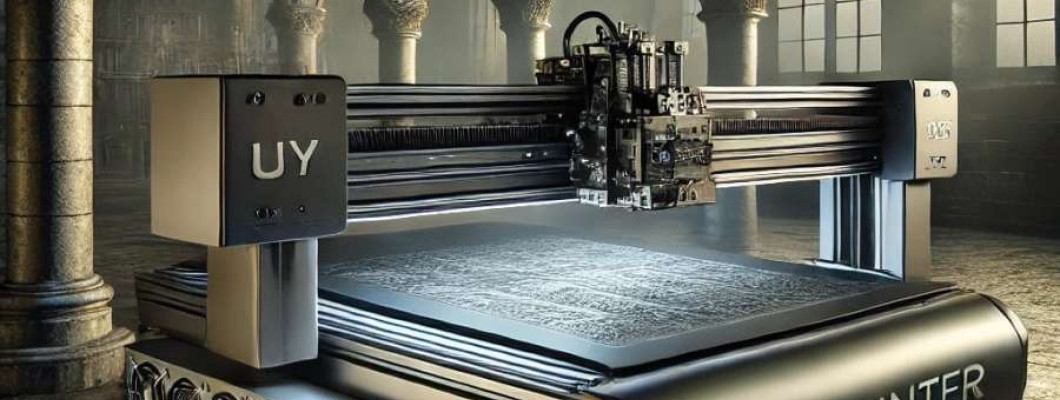
The Industrial Reality of Achieving High-Precision Embossed Glossy Prints at A2+ Scale
In specialized printing sectors focusing on embossed glossy finishes at A2+ dimensions (420mm x 594mm), the transition from desktop or DIY printing solutions to industrial-grade UV printers introduces substantial challenges. For high-end artisans requiring micron-level precision and exacting color depth, these challenges manifest primarily as surface uniformity defects, substrate compatibility issues, and throughput constraints without sacrificing detail fidelity.
Consider a boutique print studio tasked with producing embossed glossy art prints on mixed substrates—ranging from treated papers to polycarbonate sheets measuring up to 594mm in height and 420mm in width. The studio uses conventional UV printers adapted for A2+ size but routinely encounters micro-wrinkling in embossing layers and inconsistent gloss levels, directly impacting customer satisfaction and increasing waste. The defining industrial problem is the inability of DIY or semi-professional printers to maintain consistent UV curing intensity and deposition resolution across extended print surface areas, which is compounded by the physical constraints of the print engine and ink chemistry.
Furthermore, the thermal management and mechanical precision needed to reliably reproduce embossed textures with micron accuracy at this scale are often overlooked in lower-tier machines. Motorized stages with repeatability tolerance beyond ±5 microns, precise ink droplet volume control in the sub-10 picoliter range, and multi-directional UV LED arrays are necessary to avoid printhead stalling and color artifacts. Without these, the output risks surface distortion and muted embossed enhancements, subtle errors that accumulate and degrade the overall piece.
This gap intensifies when considering scaling operations. A high-end artisan stepping into small batch production faces bottlenecks in hardware rigidity and software control loops, which translate into elongated calibration cycles and higher pre-production waste. In sum, the core industrial reality is that only printers engineered specifically for A2+ UV embossed glossy printing with tightly controlled optics, mechanics, and ink formulations can reconcile the demands of substrate diversity, embossing depth fidelity, and repeatable color accuracy.
Technical Deep Dive into A2+ Size UV Printer Embossed Glossy Printing Performance
Precision Mechanics and Motion Control
The A2+ UV printer employs a linear motor-driven XY stage with positional repeatability within ±3 microns, essential for reproducing embossed patterns with depth variations as small as 20 microns. Comparing a standard DIY printer stage repeatability of ±20 microns highlights how mechanical precision drastically affects embossing texture fidelity.
Ink Droplet Size and UV Curing Dynamics
Operating with inkjet printheads producing droplets at 7 picoliters (pl) volume coupled with UV LED arrays emitting at 395nm wavelength ensures rapid and uniform curing. Droplets smaller than 10 pl enable smoother gradients and minimize dot gain, which is critical for maintaining high gloss without surface pooling or texture distortion. The curing power density stabilizes at 150 mW/cm2 across the entire A2+ platen, a parameter absent in most lower-tier systems.
Substrate Compatibility and Surface Preparation
The printer supports substrates up to 3mm thickness, including coated papers, acrylic, and synthetic composites. Surface pre-treatment via corona or plasma ensures adhesion of UV inks and enhances embossing durability. The system's automated substrate thickness sensing adjusts the printhead gap dynamically within a 0.1mm range to prevent head strikes and optimize deposition consistency.
Hardware Comparison Table
| Feature | DIY/Semi-Professional UV Printer | A2+ Industrial UV Printer with Embossed Glossy Capability |
|---|---|---|
| Print Area (mm) | 300 x 420 (max) | 594 x 420 (A2+ full coverage) |
| Mechanical Repeatability (microns) | ±20 | ±3 |
| Ink Droplet Size (pl) | 15-25 | 7 |
| UV LED Intensity (mW/cm²) | 80-100 | 150 |
| Substrate Thickness Range (mm) | 0.2 - 1.5 | 0.1 - 3.0 with auto-adjust |
| Embossing Texture Fidelity | Low to Moderate | High, micron-level detail |
Thermal and Environmental Controls
Precise ambient temperature and humidity controls are integrated into the industrial unit to maintain ink viscosity and curing consistency. Thermal sensors monitor platen and printhead temperature in real-time, adjusting airflow to keep operating temperatures between 22-25°C. Such controls prevent ink spreading and substrate deformation, phenomena frequently encountered in uncontrolled environments.
Software and Workflow Integration
Advanced RIP software tailor ink layering and embossing pattern sequences based on substrate type and print run size, reducing trial and error. This software calculates cumulative ink thickness and UV exposure to achieve target gloss and emboss depth, enabling artisans to reliably reproduce complex designs at scale with minimal manual intervention.
Scenario Analysis of Use Cases in High-End Artisanal Workflow
Scenario 1 High-Fidelity Art Print Production
A fine art printmaker producing limited edition embossed glossy prints with color intensities exceeding 120% of sRGB gamut relies on precise droplet control and UV curing uniformity. The A2+ printer’s controlled droplet size and curing power prevent ink bleeding on wet substrates, preserving micro-pattern embossing. This reduces reprints from 15% to below 3%, improving margins and client satisfaction.
Scenario 2 Multi-Substrate Custom Packaging
A boutique packaging designer uses the printer to produce embossed glossy boxes on both coated papers and clear polycarbonate layers. The automated substrate thickness sensing and gap adjustment allow seamless switching between media without manual recalibration, increasing throughput by 30% and reducing operator fatigue.
Scenario 3 Prototype to Small Batch Scale-Up
Design studios transitioning from prototype runs to small batch production benefit from the printer’s scalable hardware and RIP software. Consistent embossing depth and gloss uniformity allow faster approval cycles, cutting time-to-market by 25%. The enhanced mechanical stability eliminates the typical 45-minute recalibration downtime after each substrate change seen in lesser machines.
Expert FAQ
How does the droplet size affect embossed texture resolution?
Droplet size directly influences the granularity of ink deposition. Smaller droplets (~7 pl) enable finer layering essential for embossed textures with micron-level relief, reducing surface roughness and enhancing gloss continuity.
What role does UV LED uniformity play in gloss consistency?
Non-uniform curing causes differential polymerization in inks, leading to patchy gloss and embossing warping. Uniform UV intensity (150 mW/cm2) across the platen ensures consistent ink polymer cross-linking and hence uniform surface finish.
Why is substrate thickness sensing critical in this printer?
It prevents printhead and substrate collision and ensures the optimal gap for ink jetting. Variations as small as 0.1mm can affect droplet flight trajectory and embossing accuracy.
How does thermal management affect print quality?
Thermal fluctuations alter ink viscosity and curing speed, impacting dot gain and emboss formation. Controlled temperature and humidity stabilize these variables ensuring repeatable results.
Can this printer handle embossed glossy finishes on flexible substrates?
Yes, provided the substrate thickness is within 0.1-3.0mm and flatness tolerances are maintained. The printhead gap adjustment and curing intensity can be tailored to avoid deformation during emboss curing.
Strategic Verdict and Recommendation
The A2+ Size UV Printer Embossed Glossy Printing unit presents a definitive industrial-grade solution for high-end artisans bridging the divide between entry-level DIY machines and advanced production requirements. Its engineering focus on mechanical precision, ink chemistry optimization, and environmental control addresses longstanding bottlenecks in embossed glossy print fidelity and substrate versatility.
For art studios and specialty production houses requiring consistent micron-level embossed detail and color depth across diverse substrates, this printer ensures significant reductions in waste, calibration downtime, and production errors while boosting throughput and repeatability. The embedded automated substrate sensing and high UV LED output uniquely position it as the future-proof choice for scaling artisanal print operations without sacrificing craftsmanship.
To explore the full technical capabilities and procure this solution, consult the A2+ Size UV Printer Embossed Glossy Printing directly. This platform exemplifies the industrial rigor necessary to meet exacting embossed glossy print standards in modern artisanal workflows and beyond.