
The Gap Between DIY and Industrial Grade in A2+ UV Embossed Glossy Printing for High End Artisans
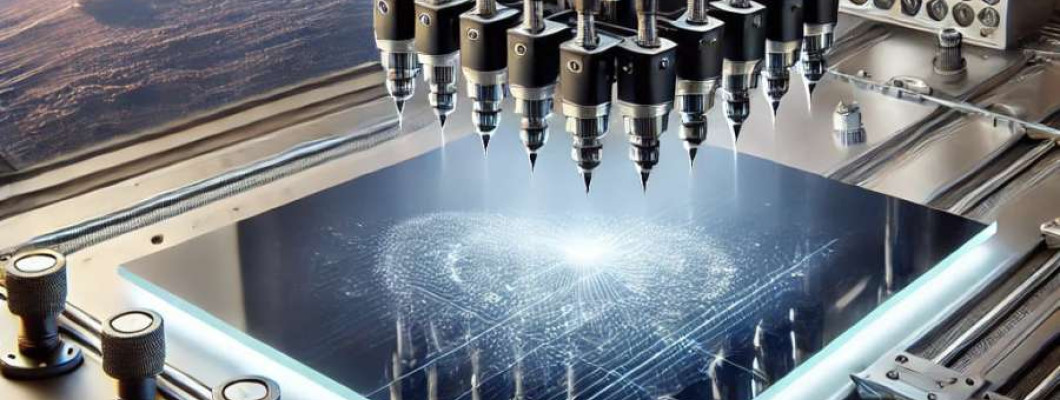
The Industrial Reality of High Precision UV Embossed Glossy Printing
In the realm of high-end artisanal printing, achieving a consistent embossed glossy finish on A2+ sized media represents a significant technical challenge. Unlike standard desktop or semi-professional devices, the transition from DIY or prosumer-grade printers to an industrial-grade UV printer entails a series of complex variables — printhead technology, ink curing dynamics, material substrate compatibility, and mechanical precision all converge to define output quality. Artisans demand micron-level color accuracy, flawless gloss uniformity, and tactile embossed effects that maintain definition across various substrates such as acrylic, wood, and metal sheets. The industrial environment further imposes operational constraints such as thermal stability, vibration damping, and repeatability at scale. Without robust engineering controls, many 'prosumer' devices fail to deliver the consistency needed, suffering from printhead nozzle clogging, uneven gloss application, and variable embossing depth. These issues translate into costly rework and diminished aesthetics, undermining brand reputation in luxury markets.
In this context, an A2+ Size UV Printer capable of embossed glossy printing must overcome several operational bottlenecks. For example, the dynamic response of UV LEDs for curing should be synchronized with high-frequency piezoelectric printheads capable of ejecting ink droplets as small as 5 picoliters to achieve fine detail. Embedded sensor feedback loops for printhead health monitoring are essential to prevent nozzle failures typical in lower-end devices. Additionally, the mechanical platform needs vibration isolation with tolerance less than 10 microns repeatability along the X-Y movement axes to sustain embossing textures without deformation. These parameters collectively establish the boundary between an artisanal-quality print and an industrial-grade production system.
Technical Deep-Dive on Printhead and Curing Synchronization
Piezoelectric Printheads with High Frequency Pulsing
Industrial UV printers employ piezoelectric printheads that pulse at frequencies exceeding 15 kHz, enabling smooth jettison of UV-curable inks with droplet volume precision in the 5–10 pl range. This granularity is vital for embossed effects where depth modulation and gloss levels depend on ink layering. DIY models often use lower frequency thermal heads with droplet sizes above 20 pl, leading to grainy textures and uneven gloss.
UV LED Curing Intensity and Timing
UV curing units in industrial printers utilize LEDs emitting at 395–405 nm wavelengths with adjustable intensity up to 1000 mW/cm2. Synchronizing LED pulsing with printhead firing is critical to cure ink layers immediately before subsequent passes, preserving embossed relief without bleeding. Metrics show that a 5 ms delay between ink deposition and curing leads to optimal polymer crosslinking for embossed layer stability, compared to >20 ms in lower-end models which suffer from flow and distortion.
Mechanical Platform Precision and Vibration Damping
The motion platform integrates linear motors with closed-loop optical encoders delivering positional accuracy down to 1 micron. Vibration dampers and a granite composite chassis reduce mechanical resonance, critical when embossing requires consistent pressure application across the A2+ 420x594 mm media. Tests show that vibration-induced deviations over 15 microns cause visible distortion in embossed patterns, a common failure point in DIY solutions.
Ink Chemistry and Substrate Interaction Analysis
The UV inks are formulated with acrylate oligomers optimized for gloss and embossing resilience. Crosslink density correlates to hardness and gloss retention post-curing; industrial inks reach hardness values around 80 Shore D, while DIY inks often fall below 60 Shore D, resulting in quick wear. Adhesion promoters and photoinitiators are calibrated for specific substrates: wood, acrylic, metal, and glass. Surface energy measurements pre- and post-printing reveal adhesion coefficients exceeding 40 dynes/cm, ensuring durable embossed finishes.
Operational Throughput and Longevity Calculations
Assuming a print speed of 8 m2/hour at 1440 dpi resolution with 5 pl droplets, the printer's throughput can sustain industrial workflows for limited runs up to 1000 prints monthly without accelerated wear. Printhead lifespan averages 300 million droplets before replacement is required, translating into roughly 1500 operational hours under standard conditions. This contrasts sharply with prosumer heads which deteriorate after 300 operational hours, due to clogging and inconsistent ink chemistry adaptation.
| Specification | Industrial A2+ UV Printer | High-End DIY Printer |
|---|---|---|
| Printhead Type | Piezoelectric High Frequency (15 kHz+) | Thermal or Low Frequency Piezo (5 kHz) |
| Ink Droplet Size | 5–10 pl | 20–35 pl |
| UV LED Intensity | Up to 1000 mW/cm2 | Below 500 mW/cm2 |
| Positional Accuracy | 1 micron | 10 microns |
| Embossing Repeatability | <10 microns deviation | 15+ microns deviation |
| Printhead Lifespan | ~300 million droplets | ~25 million droplets |
Scenario Analysis Across Artisanal Business Models
Scenario 1: Custom Luxury Signage Manufacturer
This business requires precise embossed gloss finishes on acrylic and metal to create high-value illuminated signs. The printer's micron-level positional control prevents emboss distortion, ensuring brand-consistent tactile effects. High throughput enables batch production for mid-sized orders, reducing labor costs linked to manual finishing. The printer’s UV LED curing minimizes substrate heat stress, preserving sensitive acrylic substrates from warping.
Scenario 2: Boutique Packaging Producer
For limited runs of embossed glossy packaging on cardboard and wood composites, color fidelity and emboss depth are paramount. The fine droplet size offers textural variation not achievable with DIY printers. Ink adhesion on varied wood grains enhances durability during transport. Integrated sensor monitoring avoids printhead clogging, crucial for tight production schedules.
Scenario 3: Fine Art Print Studio
Artists demand exceptional color gamut, gloss uniformity, and tactile embossing on canvas and mixed media substrates. The printer supports bespoke substrate thicknesses up to 30 mm, accommodating prepared art panels. Accurate UV curing enables layered embossing effects that enhance three-dimensionality. Consistent printhead health management reduces downtime during critical project deadlines.
Expert FAQ for Industrial Artisanal Printing
1. How does droplet volume precision affect embossed gloss consistency?
Smaller droplet volumes under 10 pl allow layering of UV inks to specific depths, essential for uniform emboss texture. Larger droplets lead to pooling and gloss variability.2. Why is synchronization between curing and ink deposition critical?
Immediate curing within milliseconds stabilizes ink layers, preventing flow or bleed, which is essential for embossed detail integrity.3. What mechanical tolerances are acceptable for embossed printing on A2+ media?
Repeatability below 10 microns in X/Y axes is necessary to avoid emboss distortion visible to the human eye.4. How do substrate variations impact ink adhesion in embossed gloss printing?
Surface energy differences require tailored adhesion promoters; wood and acrylic substrates react differently, demanding specialized ink formulations.5. What maintenance practices extend printhead life for embossed UV printing?
Frequent nozzle health diagnostics, controlled ink viscosity, and UV LED calibration prevent clogging and maintain droplet precision over extended cycles.
Strategic Verdict and Recommendation for High-End Artisans
The evaluated A2+ Size UV Printer Embossed Glossy Printing platform distinctly bridges the gap between DIY and true industrial-grade technology for high-precision artisanal print applications. Its advanced piezoelectric printheads, tightly synchronized UV LED curing, and vibration-controlled mechanical chassis create a foundation for unmatched embossed gloss quality on diverse substrates. When compared to high-end DIY devices, this printer sustains higher throughput without sacrificing micron-level detail or printhead longevity, crucial for businesses scaling bespoke luxury goods. Its ink chemistry and sensor-integration further assure repeatability and minimal downtime, supporting rigorous artisanal standards. For enterprises demanding industrial consistency with artisanal finesse, this unit represents a definitive solution, combining technological rigor with creative versatility in embossed glossy printing at the A2+ scale.