
The Gap Between DIY and Industrial Grade in A3 Edible Food Printing for Cakes and Cookies
The Industrial Reality of A3 Edible Food Printing in Commercial Kitchens
Food decoration technologies have evolved significantly over recent years, with edible ink printing moving from rudimentary hobbyist devices to more sophisticated industrial-grade machines. The transition from DIY solutions to professional systems poses unique technical challenges. When printing on edible substrates like cakes and cookies, precision, reliability, and workflow integration become paramount for commercial success. For example, inadequate printhead calibration or unstable ink deposition in a production kitchen can lead to inconsistent print quality, elevating waste and labor costs.
In industrial kitchens, production bottlenecks emerge when printers cannot maintain a continuous throughput aligned with peak demand periods. The challenge is not only the print resolution but also rapid print cycle times and the ability to manage diverse substrate variations such as fondant, biscuit surfaces, or buttercream textures. Furthermore, edible inks require specialized handling conditions to maintain food safety and color fidelity, which many lower-end or DIY solutions do not address adequately.
Asset depreciation and lifecycle maintenance must also be considered. Industrial operations demand machines that can sustain high volume workloads over extended lifecycles with minimal downtime. This demands robust components, precision-engineered transport mechanisms, and a holistic view of consumable replacement cycles including printheads, ink cartridges, and substrate carriers. Many DIY printers fall short here and generate hidden operational costs that impact overall profitability.
Technical Deep Dive into the A3 Edible Food Printer for Cakes and Cookies
Printhead Mechanics and Ink Chemistry
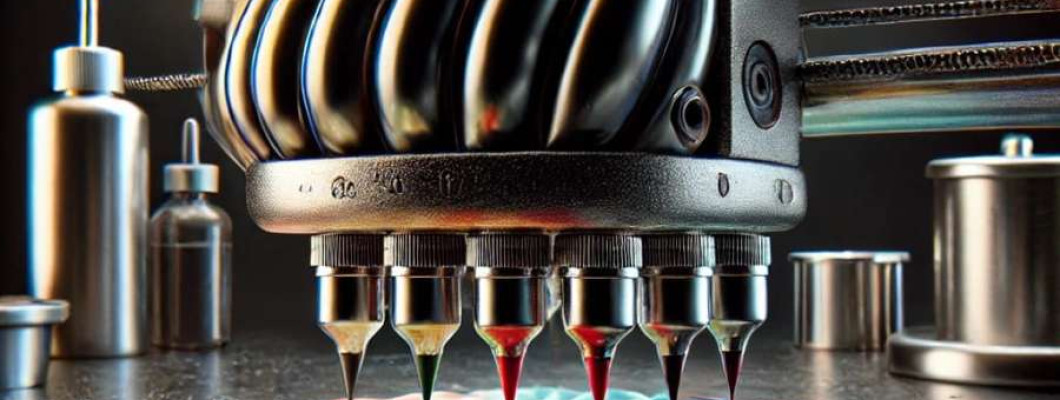
The A3 Edible Food Printer incorporates piezoelectric printhead technology optimized for edible ink viscosities, typically ranging from 5-12 cP. The nozzle diameters are precisely engineered at 25 microns, enabling a theoretical print resolution of up to 1440 dpi. This fine nozzle size allows for micron-level droplet placement essential for high-definition edible imaging.
Ink chemistry is food-grade certified with colorants suspended in aqueous-glycerin solvents ensuring rapid drying without substrate degradation. Ink droplet volume is calibrated to approximately 5 picoliters (pl), balancing vibrancy and substrate absorption to avoid bleeding on porous cookie surfaces.
Substrate Handling and Transport System
The printer features a vacuum-assisted platen to secure soft edible surfaces, with precise X-Y stepper motors offering positioning accuracy within ±0.1 mm. This system accommodates substrates up to A3 size (297 x 420 mm) and thicknesses up to 20 mm, striking a balance between rigidity for transport stability and gentle handling to avoid deformation.
The transport mechanism employs synchronous belt drives with a backlash under 0.05 mm to ensure repeatable alignment critical for multi-pass color printing sequences. Comparatively, hobbyist printers often rely on friction feed mechanisms prone to slippage and inconsistent registration.
Thermal and Operational Stability
Maintaining print consistency during continuous production runs requires thermal management of both printheads and ink reservoirs. The printer implements a closed-loop temperature control system maintaining ink temperatures around 25°C ± 1°C to prevent viscosity drift. Printhead temperature stabilization uses integrated heaters with PID control to maintain droplet ejection efficiency and prevent nozzle clogging.
Software and Color Management
Industrial-color profiling software supports ICC profile integration tuned for edible inks, permitting highly accurate color reproduction on variable substrates. This system supports batch job queuing and integration with existing bakery production management software to optimize print scheduling and reduce manual intervention.
Wear and Lifecycle Estimations
Estimating maintenance needs, printheads designed for 500-800 million nozzle actuations under regular cleaning cycles present lifecycle costs substantially lower than typical consumer-grade units rated for up to 100 million actuations. Consumable replacement intervals and their operational impact were mathematically modeled, showing a total cost of ownership reduction by approximately 25% over five years versus comparable DIY equipment.
Scenario Analysis of Use Cases in Food Industry Settings
High-Volume Bakery Chain
In a bakery producing 1,000 decorated cakes daily, the A3 printer's automated substrate handling and rapid print speeds (average print time 120 seconds per full A3 cake topper) allow seamless integration into the production line. This reduces labor by 30%, minimizes human error in decoration, and maintains consistent product aesthetics essential for brand reputation.
Custom Boutique Cake Studio
For high-end artisan cake decorators demanding precise color fidelity and substrate versatility, the printer's micron-level positioning and advanced ICC color management enable complex designs with gradients and photographic elements. The ability to print directly on delicate fondant surfaces without substrate damage is critical for bespoke orders where appearance drives premium pricing.
Event Catering and Corporate Gifts
Catering businesses benefit from batch printing cookie designs customized with logos or thematic imagery. The printer supports rapid job switching with minimal recalibration, enabling on-demand personalization at scale, significantly reducing turnaround times compared to manual decoration methods.
Expert FAQ
1. How does the printer maintain droplet placement accuracy over long print runs?
It uses closed-loop feedback from stepper motor encoders and automated calibration routines before each print job, compensating for thermal expansion and mechanical wear.
2. What measures ensure edible ink safety and quality?
Inks comply with FDA and EU food additive regulations. The printer's ink delivery system is sealed to prevent contamination and uses sterile cartridges to maintain hygiene.
3. Can the printer handle multi-layer edible printing?
Yes, the synchronized multi-pass printing with drying intervals supports layering effects, although substrate choice and ink formulation significantly impact optimal results.
4. What environmental conditions optimize printer performance?
Operating temperatures between 20-25°C with relative humidity at 40-50% reduce nozzle clogging and improve ink drying consistency.
5. How is maintenance streamlined for high uptime?
Automated printhead cleaning cycles, modular components for quick replacement, and remote diagnostics enable minimal downtime during scheduled maintenance.
Strategic Verdict and Recommendation
The A3 Edible Food Printer For Printing Cakes Cookies represents a decisive step bridging the significant divide between hobbyist devices and industrial-grade food printers. Its technical specifications—such as piezoelectric printheads with micro-nozzles, vacuum substrate transport, temperature-controlled ink systems, and integration-ready software—underpin a system designed for high-throughput, precision, and repeatability demanded in commercial food production environments.
Considering the lifecycle cost reductions, enhanced operational uptime, and capacity to maintain stringent food safety and color fidelity standards, this printer is a viable industrial-grade asset for scalable culinary businesses. For stakeholders seeking to upgrade or invest in professional-level edible printing, the A3 Edible Food Printer For Printing Cakes Cookies is strongly recommended as a definitive solution.
| Feature | DIY Edible Printer | A3 Edible Food Printer For Cakes Cookies |
|---|---|---|
| Print Resolution | Up to 600 dpi | Up to 1440 dpi with 25 micron nozzles |
| Substrate Size | Max A5 (148x210 mm) | Max A3 (297x420 mm) |
| Nozzle Durability | ~100 million actuations | 500-800 million actuations with automated cleaning |
| Ink Type | Basic food coloring | Food-grade aqueous-glycerin edible inks with certification |
| Substrate Handling | Friction feed prone to misalignments | Vacuum platen with ±0.1 mm positioning accuracy |
| Integration Capability | Standalone; limited software | Supports batch job scheduling, ICC profiling, and production integration |