
The Gap Between DIY and Industrial Grade in A3 Roll DTF Printer T shirt Printing Machine
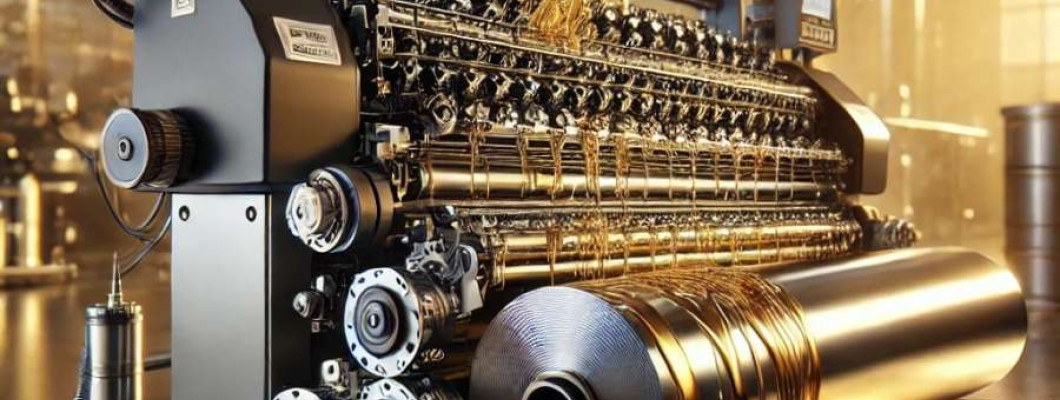
The Industrial Reality of Bridging DIY and Industrial DTF Printing
The transition from DIY desktop Direct to Film (DTF) printers to industrial-grade A3 roll DTF printer T-shirt printing machines unveils a complex set of technical and operational challenges. Small-scale operators often encounter significant limitations when scaling output due to bottlenecks in throughput, precision, and maintenance. An industrial environment demands continuous operation, precise color consistency, and rapid job turnover with minimized operator intervention.
An industrial-scale A3 roll DTF printer must handle continuous media rolls with reliable tension control, sophisticated ink deposition, and robust substrate handling mechanisms. Contrast this with DIY printers that typically operate on sheet-fed inputs with limited print speeds and less rigorous quality control. The industrial gap becomes evident when considering lifecycle durability of print heads, ink chemistry stability, and integration into production workflows designed for hundreds or thousands of t-shirts per day.
Moreover, achieving micron-level accuracy and registration consistency across large print runs requires engineered mechanical stability, advanced thermal management of print heads, and precise firmware algorithms—not usually present in DIY systems. Operationally, industrial printers must provide clear diagnostic feedback, modular repairability, and maintain tight environmental and safety compliance to sustain high uptime.
Understanding these requirements highlights why lightweight DIY machines cannot simply be scaled linearly. The industrial environment also demands more rigorous supply chain sourcing for consumables and spare parts, making the choice of an industrial-grade A3 roll DTF printer critical for businesses aiming to compete on speed, quality, and cost-efficiency.
Technical Deep Dive on Industrial-Grade A3 Roll DTF Printer Components and Performance
1. Printhead Mechanics and Ink Chemistry
Industrial-grade printheads in A3 roll DTF printers employ piezoelectric technology optimized for high-frequency droplet ejection. Typical droplet size ranges from 4 picoliters (pl) to 8 pl, enabling fine detail with resolution up to 1440 dpi. The ink chemistry is carefully formulated pigment dispersion with temperature and viscosity stability between 25°C and 35°C to ensure consistent droplet formation and adhesion on PET films used in DTF.
The printhead life expectancy in industrial setups exceeds 2000 operational hours with scheduled maintenance, far beyond DIY equivalents which average 500–800 hours. This is achieved by advanced nozzles with self-cleaning and anti-clogging mechanisms, reducing print defects and downtime.
2. Media Handling and Roll-to-Roll Transport Systems
Industrial A3 roll printers feature tension-controlled, servo-motor-driven roll-to-roll feeders capable of precise media advance with tolerances within 0.1 mm per meter. This ensures consistent media alignment critical for accurate multi-layer ink deposition, especially in white ink layers for t-shirt prints.
Such mechanisms incorporate closed-loop feedback sensors to adjust for media stretch, ensuring print registration stability across runs of several hundred meters. In contrast, DIY systems lack these sophisticated transport controls, increasing misregistration risk and print failure rates.
3. Thermal Management and Environmental Controls
Maintaining optimal printhead temperature critically influences droplet size accuracy and ink viscosity. Industrial systems integrate thermoelectric coolers and environmental enclosures that keep ambient humidity in the range of 40%-60% and temperature at 22°C–27°C. This minimizes color variation and prevents premature ink curing or drying inside the nozzles.
Power consumption typically ranges between 350 and 450 Watts per printer unit with active cooling subsystems consuming an additional 50-70 Watts. Effective thermal management extends printhead life and reduces unscheduled maintenance.
4. Firmware, Image Processing, and Workflow Integration
Industrial printers utilize dedicated RIP (Raster Image Processor) engines optimized for DTF color profiles, incorporating ICC color management, halftone algorithms, and white underbase generation. Firmware supports job queuing, auto-calibration routines, and remote diagnostics via Ethernet connectivity.
Compared to DIY printers with limited software support, industrial systems can seamlessly integrate into existing production MES (Manufacturing Execution Systems) and ERP (Enterprise Resource Planning) for real-time tracking and automation.
5. Maintenance and Lifecycle Cost Considerations
Lifecycle maintenance costs depend heavily on consumable quality, frequency of head cleaning cycles, and availability of modular spare parts. Industrial-grade printheads feature quick-release cartridges and automated maintenance wipers that reduce operator intervention. The expected amortization period is typically 3 to 5 years for capital assets, with preventative maintenance every 500 operational hours.
A comparative table below highlights key differences between DIY and Industrial A3 Roll DTF printers:
| Specification | DIY DTF Printer | Industrial A3 Roll DTF Printer |
|---|---|---|
| Print Resolution (dpi) | 600-1200 | 1200-1440 |
| Printhead Life (hours) | 500-800 | 2000+ |
| Roll Media Width (mm) | Max 210 | 320-350 |
| Media Transport Accuracy (mm) | 1-3 | 0.1 |
| Ink Chemistry Stability | Basic pigment dispersion | Engineered pigment dispersion with temperature control |
| Software & Workflow Integration | Basic drivers, manual job setup | Advanced RIP, MES/ERP integration |
| Maintenance Frequency | Daily Manual | Preventative every 500 hours with automation |
Scenario Analysis of Industrial A3 Roll DTF Printer Impact on Business Use-cases
Scenario One Small-Scale Apparel Start-Up Expanding Print Volume
A start-up moving from manual heat press and DIY printers to an industrial A3 roll DTF printer scales production from 50 to 500 t-shirts daily. The printer's roll-to-roll capability and reliable ink layering reduce changeover times by 60%, while consistent white ink layering ensures premium print quality and color fidelity. This leads to improved customer satisfaction and faster turnaround.
Scenario Two Mid-Tier Print Shop Integrating Automated Workflow
A print shop automates job scheduling by integrating the A3 roll DTF printer with ERP systems. Automated diagnostics reduce downtime by 30%, and thermal control systems enhance color consistency across varied environmental conditions. The shop optimizes labor costs by reallocating operators to finishing processes rather than constant printer management.
Scenario Three Large-Scale Industrial Manufacturer Ensuring Compliance and Uptime
A high-throughput manufacturer uses multiple A3 roll DTF printers in a climate-controlled environment. Lifecycle maintenance routines extend printhead life, and modular parts allow rapid repairs. Power consumption and environmental sensors maintain safety standards. This results in over 99% uptime, meeting tight production deadlines for large orders with minimal scrap.
Expert FAQ on Industrial A3 Roll DTF Printer Technology
What mechanisms prevent nozzle clogging in long print runs
Industrial printers deploy ultrasonic vibration and automated cleaning wipers combined with periodic purge cycles to maintain nozzle integrity and prevent ink sediment buildup.
How does the printer manage white ink layering differently than color inks
White ink, being heavier and prone to settling, is circulated continuously within the printhead and printed in multiple layers with precise curing between passes to prevent cracking and ensure opacity.
What thermal parameters define stable printhead operation
Maintaining printhead temperature between 28°C and 32°C stabilizes ink viscosity, while ambient humidity between 40%-60% prevents static charge buildup and evaporation inconsistencies.
How is media stretch compensated in roll-to-roll transport
Closed-loop servo motors with optical sensors detect real-time media position and adjust feed tension dynamically to counteract elongation and maintains positional accuracy within 0.1 mm/meter.
What are the typical failure modes and their mitigations in industrial DTF printers
Common failure modes include printhead clogging, media misalignment, and ink drying in nozzles. Mitigation involves scheduled maintenance, real-time fault detection, modular replaceable components, and controlled environmental enclosures.
Strategic Verdict and Recommendation
The A3 Roll DTF Printer T-shirt Printing Machine stands as a definitive solution bridging the significant gap between DIY and industrial-grade textile printing. Through its engineered mechanical precision, advanced ink chemistry, robust thermal and environmental controls, and seamless workflow integration, it delivers industrial reliability and print fidelity critical for scalable apparel production.
For businesses aiming to elevate throughput while maintaining color accuracy and minimizing downtime, this printer offers a credible investment with predictable lifecycle costs and superior operational metrics. Its modular design, maintenance automation, and regulatory compliance assure longevity and adaptability in complex production environments.
More information and specifications can be examined directly from the manufacturer at A3 Roll DTF Printer T-shirt Printing Machine. Industrial print operations seeking growth should consider this technology standard for enterprise-grade DTF printing solutions.