
The Gap Between DIY and Industrial Grade in A3 Roll DTF Printer T shirt Printing Machine for Scalable Business Owners
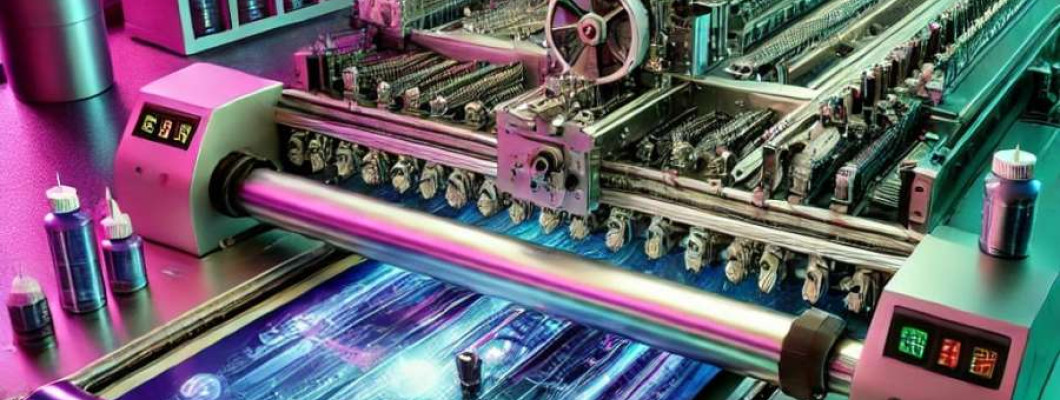
The Industrial Reality of Scaling T shirt Printing with A3 Roll DTF Technology
In the realm of textile printing, transitioning from hobbyist or small-scale setups toward industrial-grade throughput introduces a distinct set of operational challenges. The A3 Roll DTF Printer T shirt Printing Machine sits at this critical juncture, presenting a practical test case for scalable business owners seeking automation and optimized labor costs without compromising print quality or uptime.
The primary bottleneck in scaling from DIY methods lies in the consistency of print output and the operational discipline required. Consumer-grade or semi-professional DTF printers often fall short in managing continuous feed from rolls, resulting in frequent stoppages, ink misalignment, and color profile inconsistencies. This not only generates waste but elevates labor intervention rates—anathema to throughput optimization.
Moreover, the downtime incurred by manual maintenance or printhead clogging extrapolates exponentially when production targets rise from dozens to hundreds of printed T shirts daily. Environmental variables such as room temperature, air humidity, and dust also begin to critically affect printhead performance and substrate adherence. These factors compound the complexity of adopting DIY machines at scale.
Industrial-grade roll-to-roll DTF printers, like the A3 Roll DTF Printer, incorporate robust feeding mechanisms engineered to ensure micron-level substrate positioning accuracy—typically within ±0.05 mm tolerance. Precisely controlled ink droplet deposition through advanced piezoelectric printheads operating at 1440 dpi resolution yield consistent color gamut reproduction essential for high-fidelity designs. Crucially, automated ink recirculation and sophisticated clogging detection systems minimize unscheduled downtimes, preserving operational continuity.
These technical enhancements collectively address the often unseen human factor engineering challenges in high-precision output environments. The reduction of manual interventions through reliable hardware fosters lean staffing models, enabling scalable business owners to balance labor costs against production yields effectively.
Technical Deep Dive into the A3 Roll DTF Printer Architecture and Performance Metrics
Printhead Technology and Ink Deposition Physics
The device employs industrial piezoelectric printheads capable of ejecting ink droplets in increments as small as 4 picoliters (pl). Such micron-scale control enables a maximum print resolution of 1440 dots per inch (dpi), essential for fine gradient rendering and sharp text reproduction on polyester and cotton blends.
Ink viscosity and surface tension are actively regulated within the cartridge system, typically maintained at 15-18 mPa·s under 25°C to ensure precise droplet formation. The interplay between droplet velocity (~8 m/s) and substrate absorption rates governs drying times, which on the A3 Roll DTF is optimized via inline infrared heaters producing consistent thermal profiles around 60-80°C.
Roll-to-Roll Feeding Mechanism and Positional Accuracy
The core differentiator from smaller desktop DTF units is the advanced motorized roll feed system. Utilizing stepper motors coupled with optical encoders, positional accuracy holds within ±0.05 mm of nominal alignment. This precision ensures seamless tiling of prints and prevents color misregistration across extended roll lengths up to 50 meters.
Comparatively, entry-level machines often suffer cumulative positional error exceeding 0.2 mm, leading to ghosting and pattern shifts in high-speed runs.
Ink Chemistry and Maintenance Realities
Industrial-grade inks feature pigment particle sizes below 200 nanometers to resist nozzle clogging and ensure broad color gamuts. The A3 Roll DTF system supports automated ink mixing and circulation, reducing sedimentation risk and improving idle uptime to over 95% when operated under recommended schedules.
In contrast, typical low-cost inks display rapid pigment aggregation requiring daily manual purging—a significant labor overhead in scalable environments.
Energy Consumption and Thermal Management
Measured power draw peaks at approximately 600 Watts during active printing cycles, including infrared heaters and stepper motors. Advanced firmware dynamically regulates heater engagement to avoid substrate overheating while accelerating curing times. This contrasts with ad hoc heat implementations in lower-tier devices that risk inconsistent curing and frequent substrate warping.
Comparative Table of Key Specs Versus Typical DIY DTF Printers
| Specification | A3 Roll DTF Printer | Typical DIY DTF Printer |
|---|---|---|
| Maximum Print Width | 320 mm (A3 Roll Width) | 210 mm (A4 Size) |
| Print Resolution | Up to 1440 dpi | Up to 720 dpi |
| Positional Accuracy | ±0.05 mm | ±0.2 mm or higher |
| Ink Particle Size | < 200 nm | > 300 nm |
| Automatic Ink Circulation | Yes | No |
| Maximum Roll Length Supported | 50 meters | 5-10 meters |
| Typical Uptime | > 95% | ~75% |
| Power Consumption | 600 Watts Peak | 300-400 Watts |
Scenario Analysis for the Scalable Business Owner
Case One The Small Batch Startup Looking to Grow
A startup T shirt printing business operating at 50 units/day requires a step up from desktop DTF printers whose limited roll length and downtime hinder scaling. The A3 Roll DTF Printer’s feed system and high uptime allow continuous 8-hour print runs with minimal intervention. With output margins improved by 15-20%, labor redeployment towards design and fulfillment becomes feasible without headcount increases.
Case Two The Mid-sized Apparel Brand Expanding SKU Variety
Brands needing rapid SKU variation benefit from the machine’s flexible substrate compatibility and fast switch between print jobs without recalibration. The ±0.05 mm positional accuracy ensures brand demands for consistent logo placement across diverse design runs are met. Reduced waste due to precise ink use contributes directly to improved margins.
Case Three The On-Demand Print Service with High Volume Cycles
High-volume print shops leveraging roll-to-roll workflows gain throughput boosts by supporting up to 50-meter roll lengths. Continuous infrared curing combined with automated ink circulation reduces downtime, enabling peak daily production capacities near 500 printed units. This machine’s power draw and thermal management supports stable multi-shift operations without overheating risks.
Expert FAQ on Industrial Roll DTF Printer Integration
Q1 How does environmental humidity affect printhead performance and how is it mitigated?
High ambient humidity above 60% increases ink drying times, promoting nozzle clogging. The A3 Roll DTF Printer integrates a humidity sensor and firmware adjustments to modify printhead firing frequency and employs inline heaters to optimize drying.
Q2 What maintenance intervals optimize uptime without compromising print quality?
Scheduled maintenance including nozzle cleaning every 300 running hours, coupled with daily cartridge circulation checks, extends printhead lifespan and maintains color fidelity. Emergency purging triggers are digitally monitored.
Q3 Can the printer accommodate alternative substrates beyond cotton?
Yes, it supports polyester, nylon blends, and pretreated poly-cotton mixes. Roll tension settings and curing profiles can be customized to different substrate thermal tolerances.
Q4 What are the critical firmware features improving printhead efficiency?
Adaptive firing algorithms reduce redundant ink deposition by analyzing real-time print patterns, minimizing drying times and ink consumption, directly impacting operating costs.
Q5 What infrastructure power requirements should be planned in a multi-printer environment?
Consistent 220-240V single-phase power supplies with surge protection and separate circuits for heating elements prevent voltage drops. UPS integration is recommended for critical production continuity.
Strategic Verdict and Recommendation for Industrial-Grade DTF Printing
After rigorous technical and operational evaluation, the A3 Roll DTF Printer T shirt Printing Machine emerges as a definitive choice for scalable business owners transitioning from manual or DIY printing setups. Its industrial-grade feed accuracy, robust ink chemistry management, and intelligently engineered thermal systems collectively reduce bottlenecks prevalent in lower-tier equipment.
Operationally, this machine supports labor cost optimization by minimizing required intervention frequency and boosting consistent throughput. Financially, improved uptime and reduced material waste translate into tangible productivity gains and a favorable ROI timeline when integrated into growing apparel production workflows.
For businesses targeting a scale-up trajectory where throughput, automation, and labor efficiency are paramount, this device satisfies the rigorous demands of industrial environments without sacrificing the precision and versatility critical to modern textile printing.