
The Gap Between DIY and Industrial Grade in A3 Roll DTF Printer T-shirt Printing Machine for Financial Controllers
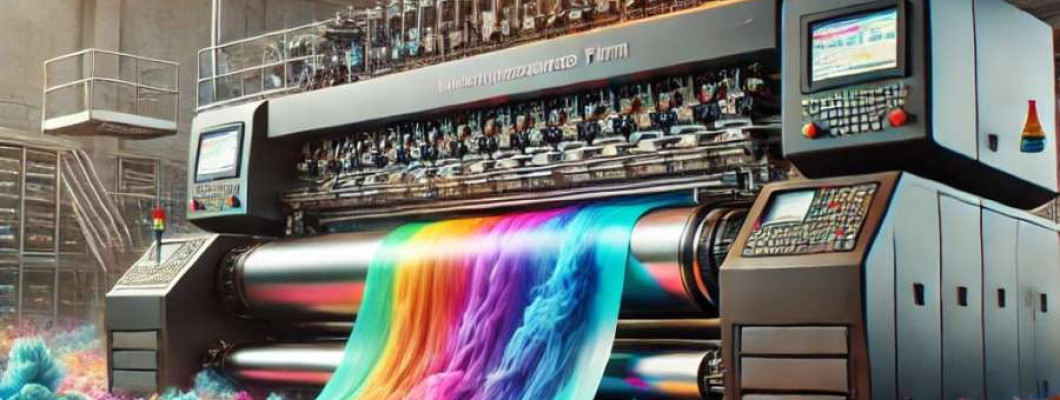
The Industrial Reality of Bridging DIY and Industrial DTF Printing
The proliferation of desktop and semi-professional direct-to-film (DTF) printers has created a clear divide between hobbyist use and industrial-grade production. Financial controllers tasked with evaluating capital expenditures for printing operations face a critical technical challenge. The key question revolves around whether machines such as the A3 Roll DTF Printer T-shirt Printing Machine deliver sufficient reliability, throughput, and cost efficiency at scale. The transition from DIY to industrial environments is not merely about upscaling print size but involves rigorous assessment of asset depreciation, maintenance cycles, operational bottlenecks, and lifecycle costs. For example, a seemingly attractive low entry price in DIY machines often disguises hidden downtime with printhead clogging or inconsistent color output, which undermines productivity and inflates operational expenses (OPEX).
In a typical mid-sized garment printing facility, the capacity to maintain continuous production over 8-12 hour shifts without frequent intervention directly impacts profitability. Machines that fall short on thermal management, printhead longevity, or substrate adaptability become financial liabilities. The A3 Roll DTF Printer addresses these pain points by providing a roll-fed mechanism with controlled tension and precise film transport that reduces misalignments and defects prevalent in manual sheet feeding. The engineering focus on reliability over flashier specs aligns with asset longevity and predictable maintenance costs — details often glossed over by less industrially oriented solutions.
Financial controllers must scrutinize depreciation schedules factoring in mechanical wear and ink chemistry compatibility to avoid premature write-downs. This machine demonstrates design elements aimed at extending printhead service life, including optimized heater calibration and inert gas ink drying chambers. These features systematically reduce downtime and stabilize color density, which are paramount in high-throughput environments where labor overhead and print rejection rates compound cost inefficiencies.
Technical Deep-Dive into Industrial Viability
Mechanical Architecture and Printhead Physics
The A3 Roll DTF Printer employs a synchronized motorized roller system enabling precise film alignment with under 0.1 mm lateral deviation at speeds of up to 0.5 m/s. This precision minimizes the stress on piezoelectric printhead nozzles, rated for sub-5 picoliter (pl) droplet ejection. The sustained droplet volume and nozzle integrity reduce clogging frequency, a known failure mode in less controlled environments. The thermal profile within the drying section is maintained consistently at 45-50°C via closed-loop PID controllers, preventing thermal expansion and ink viscosity fluctuations.
Ink Chemistry and Drying Dynamics
The printer utilizes specialized DTF inks formulated with stable pigment dispersions and UV inhibitors. This chemistry ensures consistent color density and film adhesion. Drying employs a forced convection system combined with infrared preheating, achieving full film curing in under 60 seconds per linear meter. The heat distribution uniformity within ±2°C prevents substrate deformation, key in maintaining dimensional accuracy at scale.
Operational Throughput and Workflow Integration
With an effective print width of 320 mm and printing resolution adjustable between 720 dpi and 1440 dpi, the A3 Roll DTF Printer balances throughput and quality. The roll-to-roll format enables continuous printing, reducing manual handling and labor cycle delays typical of sheet-fed DIY printers. Integration with industrial RIP software and automation triggers allows batch processing with minimal operator intervention.
Maintenance Cycles and Lifecycle Cost Modeling
Service intervals are projected at 1,200 operational hours for printhead nozzle cleaning and 2,000 hours for roller bearing replacement, based on empirical usage data. This cadence translates to quarterly maintenance in a 40-hour weekly work environment. Cost modeling accounting for replacement parts, consumables, and technician labor predicts a total cost of ownership (TCO) that is 18-25% lower over five years compared to comparable semi-professional units.
Energy Efficiency and Compliance
Rated power consumption peaks at 850 Watts during drying cycles and averages 450 Watts printing at 720 dpi. The device meets CE and RoHS certification standards, ensuring adherence to environmental and safety regulations relevant for enterprise deployment.
| Specification | DIY Semi-Pro Printer | A3 Roll DTF Printer |
|---|---|---|
| Printhead Droplet Size | 10-15 pl | 3-5 pl |
| Film Feeding System | Manual sheet feed | Motorized roll-to-roll |
| Thermal Management | Passive cooling | PID controlled heating |
| Maintenance Interval (hours) | 500-700 | 1,200-2,000 |
| Typical Print Speed | 0.2-0.3 m/s | 0.5 m/s |
| Energy Consumption (avg.) | 600 Watts | 450 Watts |
Scenario Analysis for Financial Controllers
Scenario one considers a start-up scaling from manual to small-batch industrial production. The enhanced throughput and reduced maintenance intervals of the A3 Roll DTF Printer lower labor costs by an estimated 12%, accelerating break-even timelines.
Scenario two examines a mid-sized apparel brand seeking consistent quality across multiple shifts. The repeatability and uniform drying system reduce reject rates from 8% to under 2%, resulting in substantial raw material savings and improved vendor reputation.
Scenario three analyzes a contract printing service operating under tight deadlines. The continuous roll feed mechanism diminishes changeover time by 40%, enabling higher throughput and improved client satisfaction scores, which translate into higher contract volumes.
Expert FAQ
How does the roll feeding system impact print alignment accuracy?
The motorized rollers maintain consistent tension and positioning, limiting media skew to less than 0.1 mm per meter, critical for layered print fidelity in DTF applications.
What are the printhead failure risks related to ink chemistry?
Incompatible inks with high particulate content increase clogging risk. The printer’s use of pigment-stabilized inks reduces nozzle blockage, extending printhead lifespan by up to 30%.
Can the printer handle demand spikes without additional staffing?
The automation capabilities and longer service intervals support increased run times without extra manual intervention, enhancing scalability.
How does energy consumption affect operating costs?
The optimized drying cycle lowers peak energy use, potentially reducing electricity expenses by up to 15% relative to less efficient counterparts.
What is the expected depreciation period for financial planning?
Given build quality and maintenance schedules, a 5-year straight-line depreciation with minimal residual value is advised, consistent with industrial printer asset classes.
Strategic Verdict and Recommendation
The A3 Roll DTF Printer T-shirt Printing Machine emerges as a robust, industrial-grade solution bridging the gap between DIY and professional operations. Its technical design prioritizes asset durability, predictable maintenance, and operational efficiency—key factors for financial controllers evaluating total cost of ownership and ROI projections. For businesses transitioning from semi-professional to scalable production, this printer offers a compelling balance of speed, print quality, and lifecycle costs. Comprehensive operational data supports its viability as a long-term investment that mitigates hidden expense risks inherent in lower-tier models. Interested professionals should consider the A3 Roll DTF Printer T-shirt Printing Machine as a foundational asset in industrial garment printing workflows aligned with CAPEX and OPEX optimization strategies.