
The Gap Between DIY and Industrial Grade in A3 Roll DTF Printer T-shirt Printing Machines for Scalable Productivity
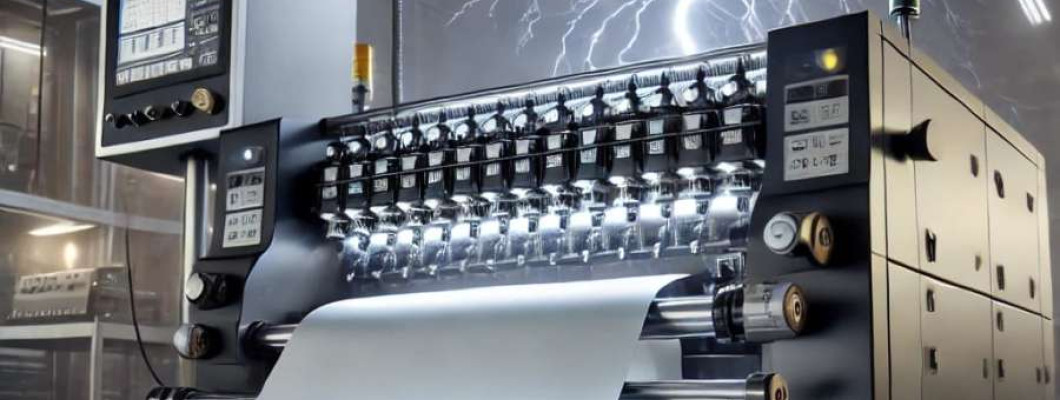
The Industrial Reality of Adopting A3 Roll DTF Printers in Scalable Businesses
Transitioning from small-scale printing setups to industrial-grade A3 Roll DTF Printer T-shirt Printing Machines presents a complex set of technical and operational challenges. Businesses striving to scale production face common pitfalls such as inconsistent print quality, throughput bottlenecks, and latent maintenance issues that are not immediately apparent in DIY or low-tier machines. These hurdles often manifest during peak demand cycles, when maintaining continuous production uptime and precision reliability becomes non-negotiable.
For scalable business owners managing labor costs and workflow automation, understanding these distinctions is critical. An A3 Roll DTF Printer configured for industrial environments must sustain high-speed output without compromising micron-level print details across diverse textile substrates. This demands robust mechanical design, advanced ink delivery systems, and integrated automation capabilities. In absence of such features, operators risk suboptimal asset utilization, increased labor overhead, and higher scrap rates.
Consider a mid-sized apparel printing facility aiming to ramp from 50 to 200 prints per day. Employing a DIY or semi-professional DTF printer with limited roll length, slower printhead speed, and frequent manual intervention introduces significant throughput limitations. The result is downtime-driven losses and deferred order fulfillment, impacting revenue and customer satisfaction.
By contrast, a true industrial-grade A3 Roll DTF Printer designed for continuous operation integrates roll-fed mechanisms capable of handling extended media lengths with minimal operator input. Heat management systems stabilize drying cycles, while precise motion control ensures uniform droplet placement at resolutions up to 1440 dpi with droplet sizes around 6 pl. These factors collectively close the gap between prototype-level craftsmanship and production-level efficiency.
Technical Deep-Dive into Industrial-Grade A3 Roll DTF Printers
Printhead Technology and Failure Modes
Industrial A3 Roll DTF printers typically utilize piezoelectric drop-on-demand printheads engineered for high-frequency operation. The piezo transducer generates precise pressure pulses that eject ink droplets as small as 6 picoliters. This enables sharp edge definition and smooth tonal gradients essential for detailed textile graphics.
Common failure points include clogging caused by pigment sedimentation, nozzle misalignment due to mechanical vibration, and thermal degradation from continuous operation. High-end models incorporate automated nozzle checks and periodic self-cleaning cycles, reducing downtime significantly compared to DIY units that depend on manual cleaning.
Ink Chemistry and Compatibility
The inks for roll-fed DTF printers incorporate uniquely formulated pigment dispersions suspended in polymerized binders optimized for hot-melt adhesion on fabrics. Industrial inks maintain stable viscosity (~8-12 cP at 25°C) to prevent nozzle blockage and ensure consistent color density (measured in Delta E < 2 tolerance).
Ink drying is managed by heated platen systems typically set between 40-60°C to accelerate solvent evaporation without compromising polymer cross-linking. Contrastingly, DIY printers often lack integrated heat management, which leads to ink run-off or uneven curing, especially on synthetic blends.
Roll Media Handling and Tension Control
The transition from sheet-fed to roll-fed printing introduces challenges in media tension regulation and alignment accuracy. Industrial A3 Roll DTF printers employ servo-driven rollers with feedback encoders maintaining tension within ±5 N to prevent media wrinkles or stretch.
These systems also synchronize media advance with printhead motion at microsecond precision to achieve registration errors under 0.15 mm. Lower-tier models without servo motors rely on stepper motors with less precise control, causing registration drift and print artifacts.
Thermal Management and Drying Integration
Consistent heat application is vital in drying the wet ink layer and enabling polymer adhesion to textile fibers. Industrial printers utilize infra-red heaters combined with forced convection fans that deliver a uniform temperature profile (±2°C variation over the print width) at power consumption levels of 1.2–1.5 kW per drying zone.
Mathematical modeling of heat transfer shows that a 60°C platen temperature maintains rapid solvent evaporation while preserving fabric integrity, minimizing shrinkage (<1.0%). This contrasts with open-air DIY setups prone to inconsistent drying leading to color bleeding or fabric damage.
Automation and Workflow Integration Capabilities
For scalable business owners, minimizing manual intervention translates directly to reduced labor costs and increased throughput. Industrial A3 Roll DTF printers feature programmable media loading, automatic head height adjustment, and on-the-fly color calibration using inline spectrophotometers.
These machines can be integrated into enterprise resource planning (ERP) systems via Ethernet or USB with print queue management software capable of batch processing hundreds of unique designs with optimized ink usage. This level of integration and automation is absent in smaller, non-industrial printers.
| Feature | Industrial A3 Roll DTF Printer | DIY/Semi-Professional DTF Printer |
|---|---|---|
| Print Resolution | Up to 1440 dpi, 6 pl droplet size | Up to 720 dpi, 10–12 pl droplet size |
| Media Handling | Servo-driven roll feed, tension control ±5 N | Manual roll feed, no tension control |
| Ink Drying | Integrated IR heaters, uniform temp ±2°C | No integrated drying, open-air drying |
| Automation | Auto head height, inline spectrophotometer | Manual adjustments, no color calibration |
| Throughput Capacity | 200+ prints/day continuous | 50–70 prints/day with frequent stops |
Scenario Analysis of A3 Roll DTF Printer Deployment
Scenario 1 Mid-sized Apparel Manufacturer Scaling Output
For an apparel manufacturer increasing daily orders from 50 to 150 T-shirts, deploying an industrial A3 Roll DTF printer reduces labor intensity by 30% due to automated media handling and drying. The precise droplet control limits ink waste to under 3%, and integrated software lowers setup times by 40%, facilitating just-in-time production.
Scenario 2 Boutique Custom Print Shop Focused on Substrate Variety
A print shop specializing in diverse substrates including cotton, polyester, and blends benefits from the industrial printer’s adjustable printhead height and tailored thermal drying. Quick changeover and repeatable color accuracy reduce scrap rates by 15%, enabling premium priced custom work at scale.
Scenario 3 Large Contract Printing Facility Requiring Continuous Operation
Large-scale contract printers require machines with robust uptime guarantees. The industrial-grade A3 Roll DTF printer’s self-cleaning printheads and modular components minimize unscheduled maintenance, achieving over 95% uptime and predictable maintenance windows. This supports high-volume contracts with strict delivery SLAs.
Expert FAQ on Industrial A3 Roll DTF Printer T-shirt Machines
What is the expected printhead lifespan under continuous industrial use?
Typically, piezoelectric printheads in industrial DTF printers last around 2000 operational hours before performance degradation. Maintenance routines such as automated flushing extend lifespan by 15–20%.
How does media tension precision affect print quality?
Maintaining ±5 N tension prevents media stretching or slack, which directly influences droplet placement accuracy. Deviations beyond this range produce banding and registration shifts exceeding 0.2 mm.
What are the thermal limits for drying without fabric damage?
Heating up to 60°C with uniform distribution is optimal; higher temperatures can cause fabric shrinkage over 2% or ink polymer distortion, compromising durability.
How does ink viscosity impact nozzle clogging frequency?
Ink viscosities outside the 8–12 cP range at 25°C increase sedimentation risk, especially in stagnant printheads, leading to clogging and printhead failure.
Can these printers integrate with existing ERP systems?
Yes, industrial A3 Roll DTF printers support standard network protocols and APIs enabling seamless integration into print management and ERP systems for batch scheduling and inventory control.
Strategic Verdict and Recommendation
For scalable business owners committed to elevating throughput while managing labor costs, industrial-grade A3 Roll DTF Printer T-shirt Printing Machines represent a definitive solution. With engineered printhead reliability, precise ink chemistry control, and advanced automation, these units bridge the gap between artisanal setups and continuous mass production environments. Investing in such technology not only reduces operational bottlenecks but also preserves asset longevity through modular maintenance and integrated diagnostics.
This technology’s capacity to maintain micron-level precision at speeds exceeding 200 prints per day with consistent color fidelity justifies its capital allocation within expanding print enterprises. Industry operators willing to transition from low-tier devices will realize superior ROI through decreased waste, minimized downtime, and scalable workflow integration.
For further technical details and procurement options, the A3 Roll DTF Printer T-shirt Printing Machine stands as the recommended hardware platform for industrial-scale textile printing.