
The Gap Between DIY and Industrial Grade in A3 Roll DTF Printers for Scalable Businesses
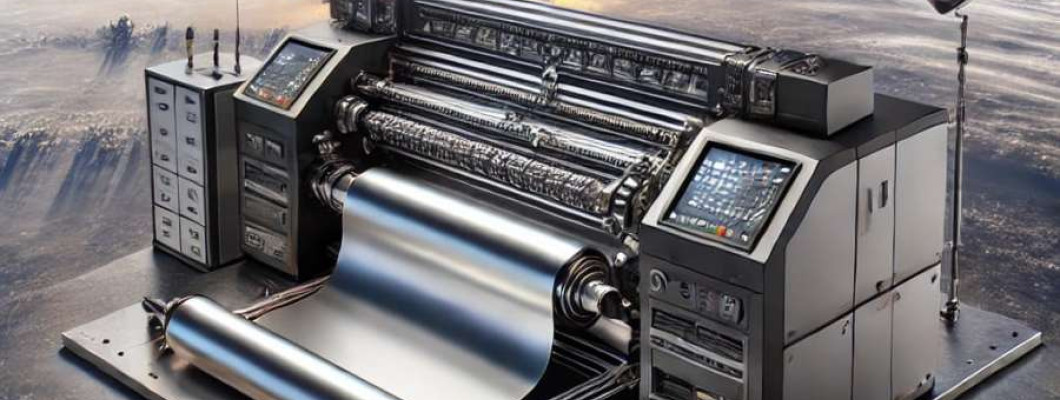
The Industrial Reality of Scaling Print Operations with A3 Roll DTF Technology
In the realm of direct-to-film (DTF) printing, particularly when deploying A3 roll printers, the divide between consumer-grade or DIY equipment and truly industrial solutions becomes starkly apparent. For scalable business owners targeting sustained throughput, automation, and labor optimization, this gap represents a critical inflection point. A typical scenario involves a mid-level apparel customization enterprise attempting to meet rising order volumes without escalating workforce costs or sacrificing print consistency. DIY DTF printers, often marketed on affordability and simplicity, frequently fail under such operational rigor — suffering from printhead misalignment, inconsistent ink deposition, and lengthier downtime due to manual intervention. The repercussions include diminished yield, increased reprint rates, and ultimately revenue loss.
Industrial-grade A3 roll DTF printers counter these challenges through robust engineering tailored to high-volume workflows. With enhanced mechanical stability, precision transport rollers, and closed-loop sensors that dynamically calibrate ink flow and tension, these machines maintain micron-level accuracy across extended runs. This reduces print artifacts like banding and ghosting that commonly plague lower-tier devices. Furthermore, their integration-ready controllers facilitate automation and compatibility with enterprise production management software, reducing operator dependency. Such attributes enable businesses to shift from reactive patchwork maintenance to proactive throughput optimization.
However, transitioning to industrial-grade machinery is not merely plug-and-play. It requires addressing infrastructure demands like dedicated electrical circuits, climate-controlled environments for ink chemistry stability, and scalable ink supply chains. Without addressing these, even premium printers can underperform. Hence, understanding this operational ecosystem is paramount when evaluating an A3 roll DTF system for scalable industrial use.
Technical Deep-Dive into A3 Roll DTF Printers Bridging DIY and Industrial Grade
Structural Framework for Print Accuracy
Industrial A3 roll DTF printers employ rigid steel chassis with vibration-dampening mounts to mitigate micro-movements during print cycles. In comparison, consumer models often use aluminum frames prone to flexing under mechanical stress. This difference directly impacts printhead alignment error margins. For instance, a ±15 micron deviation versus ±50 micron can translate into a 2x reduction in banding defects.
Printhead Configuration and Ink Deposition Control
Advanced printers incorporate piezoelectric heads with droplet size modulation in the 3-10 pl range, allowing precise layering of white and color inks. Closed-loop feedback sensors monitor droplet size consistency, dynamically adjusting voltage pulses to maintain uniformity. DIY printers typically use thermal heads with fixed droplet sizes, producing less consistent prints, especially on textured substrates.
Roller and Media Transport Mechanisms
Industrial printers utilize servo-driven pinch rollers combined with adjustable tension arms, maintaining constant substrate contact pressure. This ensures linear feed precision at speeds up to 1 meter/min without slippage. Conversely, DIY models rely on friction rollers with manual tension knobs, leading to inconsistent feed rates and potential registration misalignment over long runs.
Ink Chemistry Stability and Curing Systems
The industrial systems feature custom-engineered pigment dispersion inks optimized for high opacity and adhesion, paired with integrated infrared curing modules. These curing units regulate temperature profiles spatially to prevent substrate deformation. In contrast, less expensive printers often omit dedicated curing stages, increasing drying times and risking ink smudging during handling.
Integration-Ready Control Systems
State-of-the-art A3 roll DTF printers offer Ethernet and USB interfaces supporting RIP software integration and remote diagnostics. Automated maintenance cycles such as printhead cleaning and nozzle purging are programmable via embedded firmware. DIY alternatives generally depend on manual controls with limited firmware sophistication, increasing operator workload and downtime.
| Feature | DIY A3 Roll DTF Printer | Industrial-Grade A3 Roll DTF Printer |
|---|---|---|
| Printhead Type | Thermal, fixed droplet size ~15 pl | Piezoelectric, variable 3-10 pl droplet size |
| Frame Material | Aluminum, moderate rigidity | Steel with vibration damping |
| Media Transport | Friction rollers, manual tension | Servo-driven pinch rollers, automated tension control |
| Ink System | Basic pigment inks, no curing | High-opacity pigment inks with IR curing |
| Control Interfaces | USB, manual operation | Ethernet, RIP software integration, remote diagnostics |
Scenario Analysis of Business Use-Cases Impacted by Printer Specs
Case 1 Sales Volume Apparel Customization
A mid-sized apparel brand aiming for 1000 units/day requires repeatable color fidelity and minimal downtime. The industrial-grade A3 roll DTF printer's automated maintenance and precise media transport enable consistent throughput, whereas a DIY printer's frequent jams and manual adjustments cause delays, restricting batch sizes to 500 units/day.
Case 2 Automated On-Demand Printing Workflow
Enterprises integrating print production with ERP systems benefit from industrial printers supporting remote diagnostics and automated error reporting. This cuts labor costs associated with print monitoring by 40%. DIY solutions lack this capability, necessitating constant human oversight.
Case 3 Substrate Variety and Print Quality Requirements
High-end gift manufacturers require printing on varied synthetics and natural fibers. Industrial-grade ink formulations and curing systems deliver robust adhesion and vibrant colors across substrates. DIY printers struggle with ink adhesion inconsistencies, resulting in product rejects and increased waste.
Expert FAQ on Industrial A3 Roll DTF Printers for Scalable Businesses
What are the primary failure modes in DIY DTF printers compared to industrial models?
DIY printers typically fail due to mechanical flexure causing printhead misalignment, irregular ink droplet size, and substrate feed inconsistencies. Industrial models mitigate these through rigid chassis construction, closed-loop ink droplet control, and servo-driven media transport.
How does ink curing affect throughput and print durability?
Integrated curing modules in industrial printers enable immediate ink fixation, reducing drying time from hours to seconds and ensuring durability. Without curing, printed films are prone to smudging and require extended handling time, bottlenecking production.
Can industrial A3 roll DTF printers integrate with existing ERP and MIS systems?
Yes, they feature networked interfaces and programmable maintenance cycles that allow embedding into enterprise systems, facilitating automation workflows and predictive maintenance.
What infrastructure is necessary to support industrial A3 roll DTF operation?
Stable power supply with surge protection, climate control to maintain ink viscosity, and adequate ventilation for curing emissions are essential. These factors are often overlooked in DIY deployments.
How does printhead maintenance impact overall uptime?
Advanced industrial printers automate cleaning and nozzle purging, dramatically reducing downtime from hours to minutes. Manual maintenance common in DIY models increases operational disruption and print quality variability.
Strategic Verdict and Recommendation for Scalable Business Owners
For enterprises prioritizing throughput, automation, and labor efficiency, the technical and operational advantages of industrial-grade A3 roll DTF printers decisively outweigh DIY alternatives. The precision mechanics, advanced ink systems, and integrated controls translate into measurable ROI improvements through reduced reprints, minimal downtime, and enhanced substrate versatility. Investing in infrastructure to support these printers further optimizes lifecycle costs and print consistency. Businesses seeking scalable, repeatable print production should consider the A3 Roll DTF Printer as the definitive solution bridging the gap between amateur attempts and industrial throughput demands.