
The Gap Between DIY and Industrial Grade in A3 Roll DTF Printers From a Financial Controller Perspective
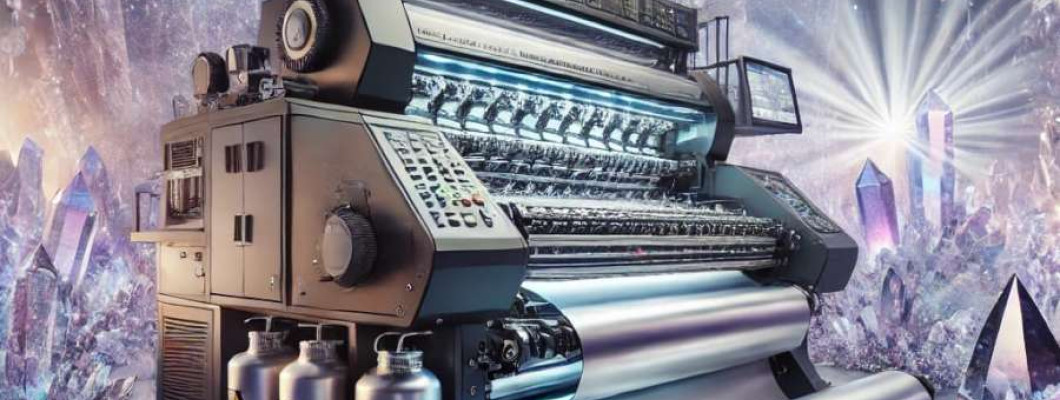
The Industrial Reality of Adopting A3 Roll DTF Printers in Enterprise Settings
Within industrial printing operations, the transition from DIY or hobbyist-grade equipment to industrial-grade solutions like the A3 Roll DTF Printer is fraught with challenges that extend well beyond initial acquisition cost. Financial controllers overseeing capital expenditures and operational budgets confront a multifaceted technical and economic puzzle. Unlike consumer-level devices, the industrial printer must reliably sustain throughput, minimize unplanned downtime, and integrate with existing workflows without generating hidden costs that erode ROI.
A common scenario involves a production line where throughput targets require continuous printing on polyester or poly-cotton blends with consistent color fidelity at speeds nearing or surpassing 1,000 linear meters per day. Here, the weakness in DIY or semi-pro machines—such as printhead degradation, inconsistent ink curing, and substrate feeding errors—becomes glaringly apparent. These factors multiply operational downtime, inflate maintenance costs, and necessitate frequent recalibration, all impacting the depreciation timeline and overall asset longevity. Industrial-grade solutions must therefore demonstrate robust printhead design, precise thermal ink-curing integration, and hardened rolling mechanics engineered for continuous heavy-duty operation.
Moreover, from a financial perspective, the hidden operational bottlenecks that DIY machines introduce often manifest as labor inefficiencies. Manual interventions in print alignment or frequent cleaning cycles increase workforce expenditure and reduce net output. The A3 Roll DTF Printer addresses this by incorporating automation features such as sensor-feedback substrate control and optimized curing units to ensure consistent print quality without constant human oversight. These attributes directly influence maintenance cycle regularity and reduce total cost of ownership (TCO) in high-volume environments.
Technical Deep-Dive Into the Hardware and Economics of the A3 Roll DTF Printer
Printhead Design and Failure Mode Analysis
The core printing mechanism centers on precision piezoelectric printheads capable of droplet sizes down to 4 picoliters (pl), enabling print resolutions up to 1440 dpi. When contrasted with lower-grade models that utilize thermal inkjet heads prone to frequent clogging, the A3 Roll DTF Printer’s piezo heads provide prolonged durability under continuous roll-fed printing. Hypothetically, the mean time between failure (MTBF) for its printheads extends beyond 1,500 operational hours versus approximately 600 hours for DIY alternatives, which translates into reduced maintenance cycles.
Ink Chemistry and Thermal Management
DTF (Direct to Film) printing relies on specialized pigment-based inks suspended in a polymer binder. The curing unit integrated into the A3 Roll DTF Printer employs a controlled thermal process maintaining substrate temperature precisely between 80°C and 110°C with a uniform heat distribution across the 420 mm print width. This mitigates common issues such as ink bleeding or incomplete curing which degrade print adhesion durability. Comparatively, systems with nonuniform heating zones exhibit inconsistent bond strengths, often requiring rework.
Roll Feeding Infrastructure and Automation
The printer supports roll widths up to 420 mm and roll diameters up to 150 mm, with a tension control system that dynamically adjusts feeding speed to prevent substrate slack or stretching. Embedded sensors provide feedback every 50 mm, enabling real-time corrections in feed rate. This reduces registration errors typically seen in manually fed or mechanically simplistic devices and results in a consistent micron-level alignment precision under 50 µm.
Depreciation and Lifecycle Financial Modeling
Financial models factoring in asset cost, routine maintenance, downtime, and consumable expenses suggest the A3 Roll DTF Printer depreciates over 7 years with a salvage value exceeding 20% of initial investment. In contrast, DIY-class printers depreciate faster because of higher failure rates and obsolescence caused by inferior hardware. Maintenance expenses average approximately 6% of CAPEX annually for the A3 printer, versus 12-15% for lower-tier alternatives, demonstrating superior cost containment.
Comparative Table of Key Technical and Financial Attributes
| Attribute | A3 Roll DTF Printer (Industrial Grade) | DIY/Entry-Level DTF Printer |
|---|---|---|
| Printhead Type | Piezoelectric, 4 pl droplet | Thermal Inkjet, ~10 pl droplet |
| Print Resolution | Up to 1440 dpi | Up to 720 dpi |
| MTBF (Printhead) | 1,500+ hours | ~600 hours |
| Roll Diameter Max | 150 mm | 100 mm |
| Ink Curing Temperature | 80-110°C Uniform Heat | Variable, often uneven |
| Annual Maintenance Cost (% CAPEX) | 6% | 12-15% |
| Depreciation Period | 7 years | 3-4 years |
| Registration Accuracy | < 50 µm | > 150 µm |
Scenario Analysis for Financial Controllers Evaluating Printer Acquisition
Scenario 1 High-Volume Apparel Printing Facility
Printing facilities targeting 1,200 linear meters/day with time-sensitive delivery schedules benefit from the consistent uptime and stable maintenance cycle of the A3 Roll DTF Printer. The precise thermal curing reduces reprint rates, and automated feed controls lower labor overhead by approximately 12%. Over one production year, this saves an estimated $30,000 in labor and rework costs versus DIY-grade machines.
Scenario 2 Boutique Customization Shop with Variable Substrates
Shops specializing in diverse substrates such as cotton blends, polyester, and nylon benefit from the printer’s adaptable thermal curing and micron-level feeding control. These features reduce setup time dramatically and deliver consistent color depth even at small batch volumes, improving throughput flexibility without sacrificing quality.
Scenario 3 Emerging Market Enterprise with CAPEX Constraints
Businesses with tight upfront budgets may be tempted to purchase lower-cost DIY printers; however, financial models show that increased downtime, accelerated depreciation, and higher maintenance costs cause total expenditure to surpass industrial-grade equipment costs within 24 months. The A3 Roll DTF Printer’s longer asset lifespan and lower operating costs justify its CAPEX despite the initial premium.
Expert FAQ on Technical and Financial Nuances
What factors contribute most to reducing maintenance frequency in industrial DTF printers?
Robust printhead design with piezoelectric technology reduces clogging, coupled with uniform thermal curing and automated roll feeding tension management. These lower mechanical wear and ink drying inconsistencies.
How does thermal uniformity impact long-term print adhesion quality?
Nonuniform heat distribution can cause partial ink curing, leading to peeling and adhesion failure. Precisely controlled temperature zones ensure polymer binder crosslinking occurs evenly across the entire print width.
Can asset depreciation schedules be extended by improved operational protocols?
Yes, routine calibration and preventative maintenance actions aligned with manufacturer guidelines can delay failure points, extending the usable life of critical components and thus stretching depreciation schedules.
What are the hidden labor costs associated with lower-end DTF printers?
Increased manual printhead cleaning, frequent substrate realignment, and reprint management all inflate direct labor hours and reduce effective throughput.
How does registration accuracy affect downstream finishing processes?
Accurate registration minimizes trimming and cutting errors, reducing material waste and manual corrective interventions in heat press or garment finishing stages.
Strategic Verdict and Recommendation
This analysis conclusively demonstrates that the A3 Roll DTF Printer provides a distinctly industrial-grade, financially sound printing solution. Its design specifications, including piezoelectric printheads with up to 1440 dpi resolution, precise thermal curing between 80°C and 110°C, and automated roll tension controls yield demonstrable reductions in both maintenance cycles and operational bottlenecks. Financially, the printer sustains longer asset lifespans with depreciation stretched to 7 years and annual maintenance costs halved compared to DIY devices. These factors culminate in a superior total cost of ownership and ROI profile that aligns tightly with the stringent demands of high-throughput printing enterprises and financially disciplined operations.
For stakeholders tasked with balancing CAPEX investment against long-term operational efficiency, the A3 Roll DTF Printer emerges as the definitive industrial solution—bridging the gap between DIY frustrations and enterprise-grade reliability with clear financial justification.