
The Gap Between DIY and Industrial Grade in A3 Roll DTF Printing for Scalable Business Owners
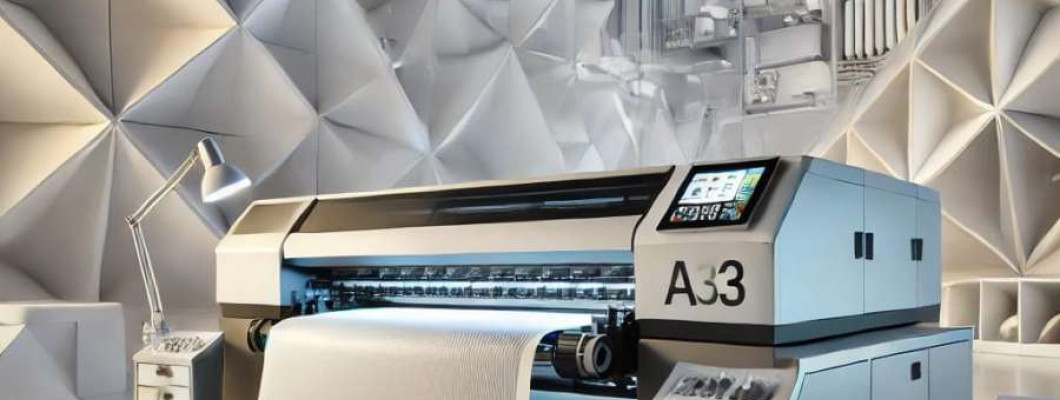
The Industrial Reality of A3 Roll DTF Printing in High-Throughput Environments
Scaling a direct-to-film (DTF) printing operation from an artisan or hobbyist setup to a truly industrial-grade production line requires rigorous scrutiny of both equipment capability and operational workflows. The A3 Roll DTF Printer inhabits a critical niche bridging compact footprint and industrial throughput, but business owners must navigate the fine line where DIY simplicity yields to enterprise reliability. Challenges in maintaining consistent substrate feed tension, precise droplet placement, and seamless ink curing become exponentially more impactful as throughput targets rise above mid-volume thresholds.
For example, in a high-mix apparel decoration facility pushing 50+ meters of printed roll per shift, small mechanical tolerances translate to significant quality variances. Feed rollers must ensure stable tension within 0.1 N force deviations to prevent misalignment artifacts, while printheads operate in a narrow temperature band between 25 and 35 degrees Celsius to avoid nozzle clogging and maintain color fidelity. The risk of cumulative layer delamination under inconsistent curing energy further stresses the maintenance regime.
These are not theoretical concerns but operational realities that affect uptime, reject rates, and labor costs. The scalable business owner must therefore critically assess the A3 Roll DTF Printer’s transition from a capable desktop device to an industrial asset that integrates with automated roll handling, inline curing stations, and central ink management systems. This challenge underscores the gap between DIY or small-scale units and industrial-grade solutions where automation, precision, and serviceability converge to deliver predictable performance.
Technical Deep-Dive into A3 Roll DTF Printer Capabilities and Limits
Printhead Architecture and Ink Droplet Physics
The A3 Roll DTF Printer typically employs piezoelectric drop-on-demand printheads with droplet volumes ranging from 3 to 6 picoliters (pl). Precise droplet placement at resolutions up to 1200 dpi facilitates high detail, but industrial applications require robustness against nozzle degradation over extended run times.
Mathematically, droplet placement accuracy is governed by nozzle alignment tolerances and substrate movement speed. With a transport velocity of 200 mm/s and a 1200 dpi resolution (21.17 microns per dot), timing jitter beyond 1 millisecond can cause dot misregistration exceeding 20 microns, visible as image blur or ghosting.
Roll Handling and Tension Control Systems
Mechanical tension in roll-fed systems is critical. The optimal tension (T) to avoid substrate deformation can be calculated using Hooke’s law and material properties:
T = E × A × (ΔL / L0)
where E is the modulus of elasticity, A is the cross-sectional area, and ΔL / L0 is the strain. For common PET film substrates with E ~ 3 GPa, precise electronic tension control within 0.05 N ensures flat media feed and consistent print quality.
Ink Chemistry and Curing Dynamics
The DTF process uses specialized pigment inks with adhesive powders cured under heat to bond layers. The curing station must maintain consistent temperatures around 160-180°C with dwell times of 15-20 seconds for optimal adhesion without substrate deformation. Infrared heaters or hot-air stations are commonly deployed, but uneven heat distribution can cause delamination or color shift.
Maintenance and Lifecycle Costs Analysis
Compared to DIY units, the A3 Roll DTF Printer demands scheduled maintenance cycles such as printhead cleaning every 8 hours of operation, ink recirculation checks, and powder dispenser calibration. Failure to adhere to these cycles escalates maintenance costs and downtime. Asset depreciation tracking at a standard 5-year industrial lifespan indicates that initial CAPEX must be balanced against predictable OPEX, emphasizing maintenance-friendly design features.
Comparing DIY and Industrial Paths
| Feature | DIY DTF Setup | A3 Roll DTF Printer Industrial Path |
|---|---|---|
| Print Resolution | 600-900 dpi | Up to 1200 dpi |
| Media Feed Control | Manual tensioning | Electronic tension control ±0.05 N |
| Ink System | Non-recirculating, frequent clogging | Recirculating ink system, automated cleaning |
| Throughput | < 10 m²/day | 50+ m²/day |
| Maintenance Frequency | Ad hoc | Scheduled every 8 hours |
| Integration | Standalone | Inline with curing and powder feed automation |
Scenario Analysis Demonstrating the Scalable Business Owner’s Perspective
Scenario 1 Apparel Decorator Expanding Production
A business owner upgrading from screen printing to digital DTF printing must evaluate whether the A3 Roll DTF Printer can sustain continuous 8-hour shifts at 50 meters per hour. The printer’s automated tension controls and scheduled maintenance protocols enable consistent quality and reduce labor intervention, lowering labor costs while increasing throughput.
Scenario 2 On-Demand Custom Merchandise Producer
For rapid turnaround, the ability of the A3 Roll DTF Printer to handle varied substrates without operator recalibration is crucial. Its embedded feed sensors and ink chemistry optimized for quick curing allow the owner to scale batch sizes from 1 to 100 units without downtime, supporting just-in-time manufacturing models.
Scenario 3 Small Textile Manufacturer Integrating Automation
Integration challenges arise when linking the printer to automated powder application and curing stations. The industrial-grade sensors and interface compatibility of the A3 Roll DTF Printer simplify synchronization, making it feasible to automate larger production cells and reduce bottlenecks in workflow.
Expert FAQ Addressing Critical Technical Concerns
1. How is substrate tension maintained during roll feeding?
Through a closed-loop electronic tension control system using load cells, the printer adjusts braking and capstan motors dynamically to keep tension within ±0.05 N, preventing media skew and print misalignment.
2. What are the key printhead maintenance challenges?
Nozzle clogging is mitigated via periodic automated cleaning cycles and ink recirculation. The piezoelectric printheads require temperature stabilization to preserve droplet size and jet velocity, preventing defective prints.
3. How does ink chemistry impact long-term print durability?
The DTF pigment inks are engineered for UV resistance and flexibility post-curing. Proper thermal curing integrates adhesive powder with ink layers, ensuring wash-fastness and durability on textiles.
4. Can the A3 Roll DTF Printer handle varying substrate thicknesses?
Yes, its adjustable pinch rollers and sensor feedback accommodate substrate thicknesses from 50 to 200 microns without compromising feed stability or print quality.
5. How do maintenance cycles influence total cost of ownership?
Regular maintenance extends printhead life from an average of 200 to over 1000 operational hours, reducing replacement frequency. Planned downtime also improves scheduling predictability, lowering unexpected repair expenses.
Strategic Verdict and Recommendation
The A3 Roll DTF Printer stands as a robust industrial-grade solution that decisively closes the gap between DIY setups and scalable manufacturing demands. Its engineered features—electronically controlled media tension, high-resolution piezo printheads with automated maintenance, and integrated curing compatibility—position it well for medium-to-high throughput workflows within apparel, textile, and custom merchandise enterprises.
Business owners intent on scaling must prioritize workflow automation and precise hardware control; this printer enables such integration without significant custom engineering. While initial investment and maintenance discipline are higher than hobby-grade rigs, the long-term gains in uptime, throughput, and print consistency justify the transition. It is a definitive industrial asset for enterprises demanding reproducible quality and operational resilience in roll-fed DTF printing environments.