
The Gap Between DIY and Industrial Grade in A3 Roll DTF Printing for Scalable Businesses
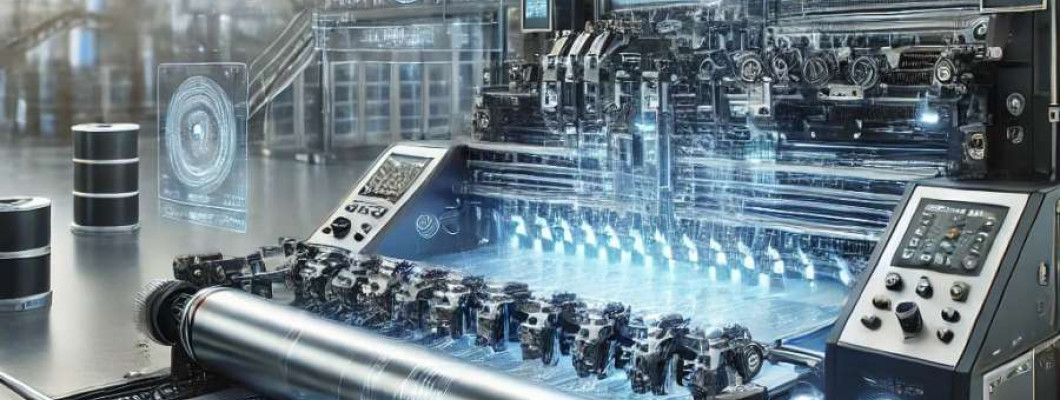
The Industrial Reality of Scaling A3 Roll DTF Printing
In an industrial setting where throughput and automation dictate competitive advantage, the transition from hobbyist or small-batch Direct to Film (DTF) printing solutions to scalable industrial-grade systems exposes critical operational challenges. Consider a textile printing facility ramping production from tens to hundreds of prints per day. A common bottleneck appears not just in print speed but in the reliability of continuous roll-to-roll feeding, consistent printhead performance over extended shifts, and the chemistry of inks interacting with varying substrates.
Small format printers usually falter in maintaining precise tension control on rolls exceeding 10 kg, causing registration errors and media wrinkles. This disrupts print alignment, increasing waste rates and causing costly downtime. Furthermore, DIY or consumer-grade DTF systems often lack advanced thermal management systems to stabilize ink viscosity and printhead temperature under continuous load, resulting in nozzle clogging and inconsistent droplet size—an unacceptable risk in high-throughput operations.
Labor overhead rises sharply when manual interventions become routine to clear jams or recalibrate tension mechanics. The scalability challenge intensifies in environments demanding color fidelity across thousands of prints, where micron-level droplet consistency is required to avoid color shifts. For scalable business owners evaluating A3 roll DTF printers, identifying industrial-grade characteristics that prevent bottlenecks in production lines is paramount to operational efficiency and long-term cost control.
Technical Deep-Dive into Industrial Specifications of A3 Roll DTF Printers
Printhead Technology and Reliability Metrics
Industrial-grade A3 roll DTF printers typically employ piezoelectric drop-on-demand printheads optimized for precise droplet ejection between 3-6 picoLiters (pl). This range facilitates high-resolution output reaching 1200 dpi with stable dot placement accuracy under continuous operation exceeding 24 hours. Unlike thermal inkjet heads prone to thermal fatigue during long runs, piezo heads maintain longevity by mechanically actuating nozzles.
Roll-to-Roll Feeding and Tension Control Systems
Automated tension systems use servo motors integrated with load cells and closed-loop feedback to maintain consistent tension within ±0.3 N. This precision prevents media distortion that can propagate registration errors exceeding 0.05 mm across the print width (320 mm). Roll weight capacity up to 15 kg and adjustable shaft diameters between 25-50 mm cater to diverse substrate rolls from polyester films to transfer papers without manual recalibration.
Ink Chemistry and Curing Dynamics
Specialized DTF inks are polymer-based with optimized rheology to maintain viscosity between 10-15 cP at operating temperatures of 40-45°C. This stabilizes droplet formation and prevents nozzle clogging. Curing mechanisms, often combined hot-air drying with UV-assisted instant polymerization, reduce ink bleed and ensure adhesion durability after heat-press transfer exceeding 160°C for 15 seconds.
Thermal Management Architectures
Industrial printers integrate multi-zone temperature controls featuring Peltier elements and ceramic heaters distributed across printheads and media trays. Thermal mapping ensures steady ink temp within ±2°C and prevents evaporation-induced viscosity shifts, which directly impact dot size uniformity. Real-time telemetry sensors alert operators to deviations exceeding predefined thresholds for preventive maintenance.
Comparative Table of Industrial vs. DIY A3 Roll DTF Systems
| Parameter | Industrial A3 Roll DTF | DIY/Consumer A3 Roll DTF |
|---|---|---|
| Printhead Type | Piezoelectric Drop-on-Demand, 3-6 pl | Thermal Inkjet, 10-20 pl |
| Roll Weight Capacity | Up to 15 kg with automated tension | Max 5 kg, manual tensioning |
| Tension Control Stability | ±0.3 N closed-loop servo feedback | Manual adjustment, ±1.0 N variance |
| Ink Viscosity Control | 10-15 cP at 40-45°C with thermal stabilization | No active viscosity control, variation up to 25 cP |
| Curing Method | Hot air + UV polymerization | Hot air only or manual curing |
| Maximum Continuous Runtime | 24+ hours with automated cleaning | 4-6 hours, frequent clogging |
Scenario Analysis of A3 Roll DTF Printing in Scalable Businesses
Scenario 1 Industrial Apparel Manufacturer
A mid-sized apparel manufacturer integrates A3 roll DTF printing as a direct color transfer method replacing screen printing. Here, the automation-friendly continuous feeding and robust ink curing ensure throughput of 500 garments daily without bottlenecks from print alignment or drying delays. The substrate versatility allows rapid switching between polyester blends and nylon meshes, reducing changeover time by 30% compared to previous equipment.
Scenario 2 Promotional Product Print Shop
For a company producing high volumes of customized merchandise, the printer's precise micron-level dot control enables vibrant color gradients on polyester transfer films. The automated tension system reduces labor interventions from 4 hours a day to under 1 hour, significantly cutting operational costs while maintaining consistent quality across 1000+ prints weekly.
Scenario 3 E-Commerce Textile Start-Up Scaling Production Lines
Scaling from prototype to mass production, the startup benefits from the advanced thermal management preventing printhead clogging during extended shifts. This reliability translates to a 25% increase in uptime and allows scheduling 24-hour production cycles maximizing machine utilization and reducing per-unit cost.
Expert FAQ on Industrial A3 Roll DTF Printers for Scalable Businesses
Q1: How does automated tension control improve print quality under variable roll diameters?
A1: Automated tension control dynamically adjusts torque based on feedback, keeping media flat and steady regardless of roll diameter shrinkage during unwinding. This prevents lateral shifting that causes misregistration and uneven ink deposition.
Q2: What are the implications of ink viscosity variances on printhead nozzle performance?
A2: Viscosity fluctuations alter droplet volume and velocity, affecting dot placement precision and leading to clogging or satellite droplets. Maintaining ink viscosity within narrow ranges ensures uniform droplet formation and minimizes nozzle wear.
Q3: Why is piezoelectric printhead technology preferred over thermal inkjet in industrial DTF applications?
A3: Piezoelectric heads mechanically actuate droplets without thermal stress, yielding longer lifespans, finer droplet control, and better chemical compatibility with pigment-based DTF inks.
Q4: How do multi-zone thermal management systems prevent downtime in long print runs?
A4: By monitoring and controlling temperature at discrete points, these systems maintain consistent ink properties and prevent nozzle clogging. Alerts allow preemptive cleaning cycles rather than unplanned stoppages.
Q5: What maintenance cycles are optimal for maximizing printhead longevity in continuous operations?
A5: Scheduled automated cleaning every 12 hours, combined with weekly deep maintenance involving nozzle checks and ink channel flushing, balances uptime and prolongs printhead lifespan, minimizing replacement costs.
Strategic Verdict and Recommendation for Scalable Business Owners
Based on a rigorous assessment of industrial-grade features against the operational realities of scalable textile printing, the A3 Roll DTF Printer stands as a definitive solution for businesses targeting throughput optimization with minimal downtime. Its engineering focus on automated roll handling, precise tension control, piezoelectric printheads, and advanced ink curing systems addresses the critical pain points where DIY or consumer-grade solutions fall short.
For scalable business owners, the printer’s robust thermal management and maintenance-friendly design translate directly into lower labor costs and improved yield consistency. These factors combine to realize a faster asset depreciation curve through continuous operation while maintaining print quality standards required for industrial apparel, promotional merchandising, and growing e-commerce textile enterprises.
In conclusion, industrial-grade A3 roll DTF printing is not only a viable but a strategically superior option for scaling production lines. Its design and operational benefits justify immediate investment over consumer-grade alternatives for businesses prioritizing throughput, automation, and long-term operational cost efficiencies.