
The Gap Between DIY and Industrial Grade in A3 Spot UV Printing with ROI and Maintenance Weighing Heavy
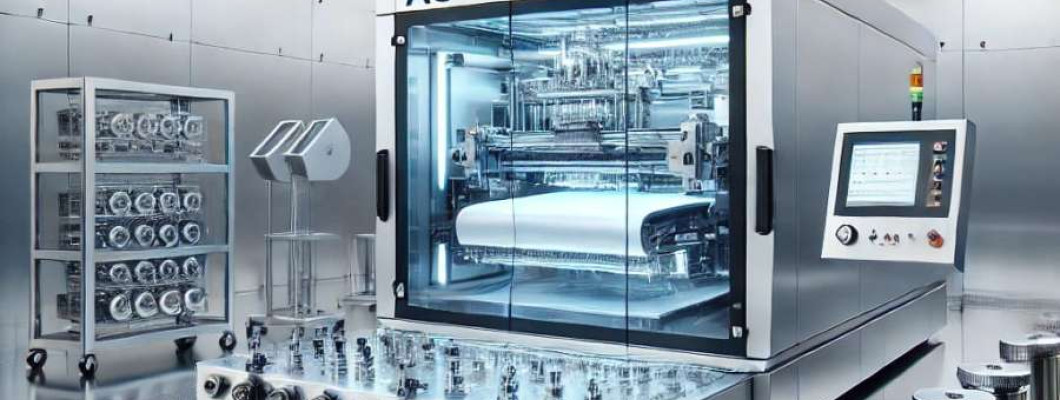
The Industrial Reality of Integrating A3 Spot UV Printing Machines into Production Lines
Translating fine UV coating techniques from a small-scale or DIY scenario into a robust, industrial-grade manufacturing environment often exposes critical operational challenges. The transition involves more than scaling print size; it demands rigorous asset management, precise calibration under continuous heavy-duty cycles, and predictable lifecycle maintenance. For production managers tasked with integrating an A3 Spot UV Printing Machine UV Coating Printer, one faces a complex matrix of cost controls, output fidelity, and throughput reliability.
Spot UV printing is prized for its selective gloss and texture enhancements on substrates like paperboard, plastics, and specialty films. However, in a high-volume environment, downtime or precision deviations can cascade into lost revenue and costly quality rejections. This technology requires balancing the mechanical wear of precision UV lamp modules and printheads, the chemical stability of UV inks and coatings, and workflow compatibility with existing industrial systems. Missing this balance shifts a solution from an asset into an operational bottleneck. For example, repeated printhead clogging or uneven UV curing can trigger maintenance windows that reduce effective uptime below 85%. This impact is magnified in just-in-time production schedules.
Furthermore, asset depreciation over a typical 5-year cycle for industrial UV printers involves factoring in both mechanical component fatigue and obsolescence risk. Unlike entry-level hobbyist printers, these machines demand predictive maintenance supported by real-time diagnostic analytics and modular component replacement strategies to minimize capital lock-in and maximize operational availability.
Technical Deep-Dive on Industrial-Grade A3 Spot UV Printing Technology
1. Printhead Dynamics and UV Ink Chemistry
The core printhead assembly in A3 UV spot printers employs piezoelectric or thermal inkjet technology calibrated for UV-curable inks. These inks consist of oligomers, monomers, photoinitiators, and pigments requiring rapid, uniform polymerization under UV light typically emitting at 365-405 nm. The physics governing droplet formation include nozzle orifice diameter (20-50 microns), ink viscosity (5-15 cP), and firing frequency (up to 25 kHz). The conversion efficiency of UV light to cure rate must be carefully matched with ink formulation; failure to do so results in tacky surfaces or uneven gloss.
2. UV Lamp System and Thermal Management
UV curing units can be mercury vapor, LED, or metal halide lamps providing irradiance levels from 2000 to 8000 mW/cm². LED systems, while energy efficient with higher lifetime (>10,000 hours), demand optimal thermal dissipation via heat sinks and air or liquid cooling to maintain stable wavelength output. Thermal runaway poses a risk of premature diode failure reducing both uptime and print consistency.
3. Precision Motion Control and Substrate Handling
Industrial throughput depends on synchronization of multi-axis servo motors achieving repeatable XY positioning within 10-20 microns. Substrate rollers and vacuum tables must accommodate variable thicknesses from 0.1 to 1.5 mm without warping, ensuring uniform printhead-to-substrate distance remains within ±0.05 mm to preserve spot UV accuracy.
4. Hardware Comparison of Industrial vs. Hobbyist Models
| Parameter | Industrial A3 Spot UV Printer | Hobbyist/DIY Models |
|---|---|---|
| Print Area | 320x450 mm | 200x300 mm |
| Printhead Longevity | >2000 operational hours | 500-800 operational hours |
| UV Lamp Type | High-power LED with cooling | Low-output mercury vapor |
| Thermal Management | Active liquid cooling + airflow | Passive air cooling |
| Control Software | Industrial-grade with diagnostics | Basic firmware, limited monitoring |
5. Predictive Maintenance and Lifecycle Cost Modeling
Predictive maintenance uses embedded sensors monitoring printhead resistance, UV output intensity, and substrate feed tension. Applying statistical process control, replacement of consumables is scheduled before catastrophic failure, lowering unplanned downtime below 5%. Lifecycle cost models reveal that machines correctly maintained improve total cost of ownership by 15-18% relative to periodic scheduled maintenance, owing to reduced consumable waste and labor hours.
Scenario Analysis for Business Impact of A3 Spot UV Printing
Scenario 1: Mid-Scale Packaging Company
Printing high-visibility spot gloss on folding cartons requires throughput >3000 A3 sheets/day with <2% defect rate. The industrial-grade A3 Spot UV Printing Machine UV Coating Printer supports this via 24/7 operation capability, automated head cleaning, and inline quality sensors reducing operator intervention and scrap.
Scenario 2: Luxury Book Publisher
Demanding micron-level precision for spot UV accents on covers with variable substrates (300-500 gsm paper stock), the printer's fine droplet control and substrate vacuum system preserve image integrity. The robust printhead and stable UV curing ensure repeatability across print runs critical for brand consistency.
Scenario 3: Promotional Product Manufacturer
Batch runs of varied substrates including plastics and synthetics benefit from quick-change UV lamp modules and adjustable curing intensity. Integration with automated conveyors reduces labor hours and increases operational efficiency by more than 25% compared to semi-automatic setups.
Expert FAQ
Q1: How does ink viscosity influence the resolution and UV curing speed in industrial printers?
Ink viscosity affects droplet formation and flight stability; optimal viscosity balances between nozzle clogging risk and droplet size uniformity, directly impacting resolution and requiring UV output adjustments to ensure full cure within milliseconds.Q2: What are the challenges in thermal management for continuous LED UV lamp operation?
High-intensity LEDs generate localized heat that, if not properly dissipated, shifts emission spectra and reduces curing effectiveness. Active cooling with precise temperature control maintains consistent UV output and extends diode lifespan.Q3: Can the printhead maintenance cycles be predicted using embedded sensor data?
Yes, monitoring electrical resistance changes, nozzle firing response, and ink flow rates enables sophisticated algorithms to forecast maintenance, optimizing uptime and reducing unnecessary consumable replacements.Q4: How does substrate variability affect spot UV consistency?
Differences in substrate porosity, texture, and thickness can alter ink adhesion and UV penetration. Industrial-grade machines compensate via adjustable gap control and curing intensity modulation.Q5: What impact does UV lamp wavelength stability have on curing performance?
Stable wavelength ensures consistent photoinitiator activation; drift results in incomplete polymerization, leading to surface tackiness, adhesion failures, and print defects.
Strategic Verdict and Recommendation for Industrial Scale Spot UV Printing
The integration of the A3 Spot UV Printing Machine UV Coating Printer presents a definitive industrial-grade solution bridging the often problematic divide between DIY UV coating attempts and enterprise manufacturing demands. Its engineering focuses on robust, scalable printhead technology, advanced thermal and substrate handling subsystems, and embedded predictive maintenance capabilities that collectively uphold throughput, precision, and asset longevity. While upfront capital investment and operational complexity exceed entry-level alternatives, the tangible gains in uptime, print quality, and workflow integration minimize total cost of ownership over a 5-year horizon. Industrial operators requiring micron-level accuracy, repeatability, and flexible substrate compatibility will find this machine delivers against key performance indicators across production metrics. The risk of operational bottlenecks typical in UV spot finishing lines is substantially mitigated through modular hardware and real-time diagnostics. Therefore, for medium-to-large businesses intent on upgrading UV spot coating capabilities into a reliably maintainable, high-return asset, this equipment represents the optimal balance of technology and industrial practicality.