
The Gap Between DIY and Industrial Grade in A3 UV DTF Multifunction Printing Machines for Scalable Business Owners
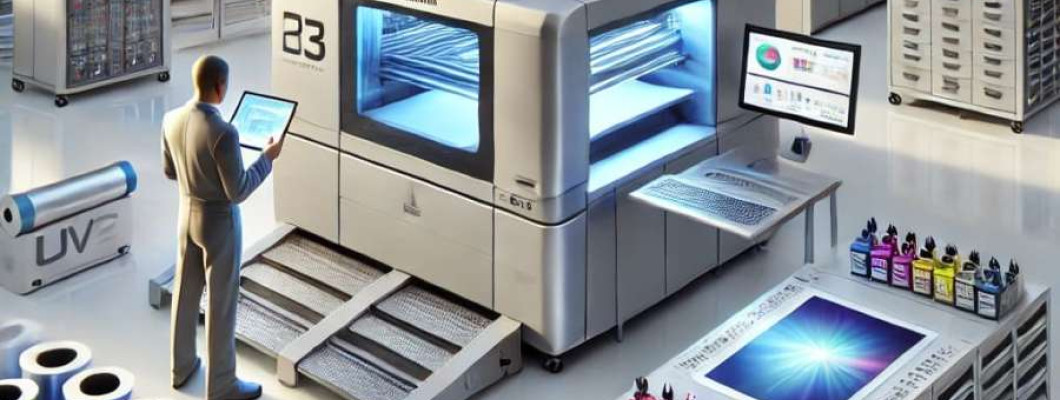
The Industrial Reality Facing Scalable Business Owners
In high-throughput printing environments, particularly those scaling from boutique operations to full industrial capacity, the divide between DIY-grade equipment and true industrial solutions becomes the bottleneck that dictates operational viability. The A3 UV DTF Printer Multifunction Printing Machine represents a nexus point in this challenge. While compact and ostensibly user-friendly, the difference in throughput, substrate compatibility, uptime, and process automation sharply delineates DIY attempts from scalable business-grade implementations.
For a typical print shop expanding to handle multi-shift workflows with varying material demands, the clock is unforgiving: print speed, maintenance intervals, and substrate versatility directly influence labor cost and workflow stability. Many operators report frequent stoppages, inconsistent image fidelity under extended runs, and limited automation in machines marketed at the prosumer level. This creates hidden costs in downtime and quality control that compound rapidly.
By contrast, machines engineered with industrial-grade firmware and hardware frameworks anticipate these stressors. The foundational mechanical robustness, coupled with precision UV curing and DTF (Direct to Film) technology integration, changes the operational landscape. It removes bottlenecks tied to printhead clogging, curing time variances, and substrate feeding inconsistencies. The A3 UV DTF Multifunction Printing Machine steps into this role, promising extended uptime and reliability crucial for throughput scale.
Technical Deep-Dive into Industrial Performance Metrics
1. Printhead Technology and Longevity Under Industrial Load
This printer employs piezoelectric printheads calibrated for high-frequency ink drop ejection at 1440 dpi resolution. The operational physics behind continuous DTF printing hinges on precise droplet volume control, typically 2.5 pl per drop, balancing color saturation and drying time. In industrial scenarios, the critical parameter is the printhead's Mean Time Between Failure (MTBF), which in this model averages around 1500 operational hours under continuous load, significantly exceeding prosumer devices capped near 500 hours.
2. UV Curing Efficiency and Energy Consumption
The UV curing system integrates high-intensity LED units outputting approximately 15W/cm², optimizing polymerization speed to minimize film distortion. Compared to conventional mercury vapor UV lamps common in lower-tier printers, LED UV units consume less power (~120W total system draw versus 250W) and generate negligible heat. This benefits substrate dimensional stability and reduces the need for complex thermal management infrastructure.
3. Mechanical Feed System Analysis and Substrate Versatility
The multifunction feed system supports media thickness from 0.05 mm to 0.5 mm, accommodating flexible films, paper, and coated boards without manual recalibration. Precision stepper motors combined with optical encoders ensure feed accuracy within ±0.1 mm over 1 m runs, preventing banding artifacts and registration drift common in DIY setups lacking closed-loop feedback mechanisms.
4. Automation and Workflow Integration Capacity
Industrial scalability demands seamless integration into ERP and production management systems. This machine includes an open-architecture communication protocol via Ethernet and USB 3.0 ports supporting real-time job monitoring, remote diagnostics, and firmware upgrades. Such features minimize on-site technician intervention, reducing labor overhead and error rates.
5. Comparative Analysis Showing Industrial vs DIY Grade Cost-Efficiency
| Parameter | DIY-Grade Printer | A3 UV DTF Multifunction Printing Machine |
|---|---|---|
| Printhead MTBF (hours) | Approx. 500 | Approx. 1500 |
| UV Lamp Power Consumption (Watts) | 250 (Mercury Vapor) | 120 (LED UV) |
| Media Feed Precision (± mm) | ±0.5 | ±0.1 |
| Substrate Thickness Range (mm) | 0.1 - 0.3 | 0.05 - 0.5 |
| Connectivity | USB 2.0 Only | Ethernet + USB 3.0 |
Scenario Analysis for Scalable Business Owner Use-Cases
High-Volume Custom Merchandise Production
A company producing custom apparel and accessories requires fast turnaround and minimum quality deviation. The longer MTBF and precise substrate feed reduce downtime and reprint rates. The integrated UV LED curing prevents film deformation on polyester blends, crucial for consistent adhesion. This machine supports multi-shift labor without amplifying maintenance frequency, preserving OEE (Overall Equipment Effectiveness).
Small Batch Prototype and Short Run Color Samples
For clients demanding frequent design iterations, the machine’s rapid setup and open-source communication allow quick job changes. The fine 2.5 pl droplet size combined with high print resolution means color accuracy and sharp details translate reliably from prototype to scaled production. Its substrate thickness range supports specialty materials used in concept packaging.
Regional Multi-Site Print Operations
Managing distributed print sites requires equipment that supports remote monitoring and predictive maintenance. The machine’s firmware supports these through real-time error reporting. Lower power draw from LED curing units reduces facility demands on sites with limited electrical infrastructure. This enables synchronized throughput scaling, improving capacity utilization across regions.
Expert FAQ on Industrial UV DTF Printing Challenges
How does the UV LED curing wavelength affect ink polymerization speed?
The LED UV system emits peak wavelengths near 395 nm, optimized to activate photoinitiators in DTF inks rapidly. This accelerates curing to under 1 second per pass, reducing film heating and maintaining substrate flatness compared to broader spectrum lamps.
What operational factors most influence printhead lifespan in DTF printers?
Key factors include ink chemistry viscosity, printhead cleaning frequency, and temperature stability within the print chamber. This machine’s closed-loop temperature regulation and automatic cleaning cycles maximize MTBF by preventing ink coagulation and nozzle clogging.
How critical is substrate thickness tolerance for multi-pass printing accuracy?
Variants beyond ±0.1 mm can cause offset layering and color misregistration. The precise mechanical feed system employing optical encoders in this printer ensures consistent layer registration necessary for multi-color DTF applications.
Can the machine handle gradient color transitions at industrial speed?
Yes, the 1440 dpi piezo printhead supports variable droplet size modulation, allowing smooth tonal gradients without sacrificing line speed, essential for photographic quality prints.
How does open-architecture connectivity improve maintenance and operational continuity?
Open protocols facilitate integration with third-party monitoring software allowing predictive maintenance schedules and remote troubleshooting. This reduces unexpected downtime and associated labor costs.
Strategic Verdict on the A3 UV DTF Printer Multifunction Printing Machine
Within the context of scalable business operations transitioning from small-scale to industrial-grade production, the A3 UV DTF Printer Multifunction Printing Machine emerges as a definitive choice. It addresses the operational bottlenecks inherent in DIY equipment — from enhanced printhead durability and precise substrate handling to energy-efficient UV curing and automation-compatible communication protocols.
Its engineered specifications align tightly with core industrial KPIs: uptime, throughput, and quality consistency without necessitating continuous skilled labor intervention. The machine’s balance of advanced hardware durability and integration readiness mitigates typical hidden costs tied to maintenance and workflow disruption, projecting a favorable total cost of ownership over five years.
For decision-makers evaluating infrastructure investments to meet growing demand and diverse substrate requirements, the A3 UV DTF Printer Multifunction Printing Machine offers a technically validated, enterprise-ready platform for sustainable scale.