
The Gap Between DIY and Industrial Grade in A3 UV DTF Printing Machines for Scalable Business Owners
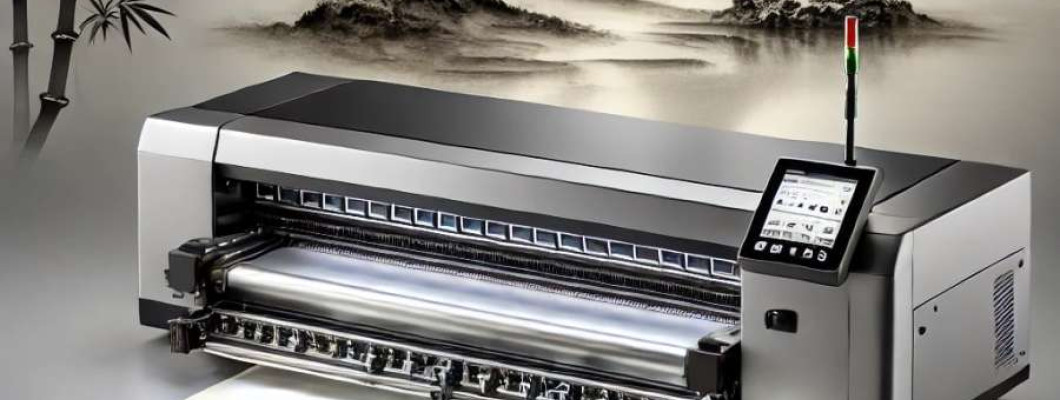
The Industrial Reality of A3 UV DTF Printing in Scalable Operations
Manufacturing and print service providers transitioning from limited-run or artisanal DTF (Direct to Film) printing to industrial-grade production face a critical inflection point. For scalable business owners, the move entails evaluating equipment beyond typical hobbyist expectations and addressing operational throughput bottlenecks, substrate versatility, and labor costs. The A3 UV DTF Printer Multifunction Printing Machine represents a technology that bridges the technical and operational chasm between desktop DIY machines and enterprise-scale production units.
Consider a mid-sized print shop attempting to scale volume output from dozens to hundreds of prints per day. Conventional DIY DTF printers often cap print width below A3 size, lack robust UV curing integration, and require manual intervention for each print cycle, constraining throughput. Additionally, inconsistent ink layering and printhead precision degrade color fidelity and cause rework, increasing operational waste and labor hours.
The industrial reality underscores a need for multifunctional equipment capable of automated workflows, consistent micron-level ink deposition, and integrated UV curing to reduce drying time. This is compounded by challenges integrating such equipment into existing manufacturing lines, requiring compatibility with substrate handling systems, environmental controls for solvent and UV exposure compliance, and seamless digital workflow integration. Scalable business owners must understand how the A3 UV DTF Printer Multifunction Printing Machine addresses these concerns through engineered reliability and process repeatability, setting it apart from consumer-grade alternatives.
Technical Deep Dive into the A3 UV DTF Printer Multifunction Printing Machine
Printhead Precision and Inkjet Physics
The printer employs piezoelectric drop-on-demand inkjet technology capable of 2-5 pico-liter droplet size, enabling fine dot placement at resolutions up to 1440 dpi. The UV-curable ink formulations exhibit rapid polymerization, allowing sub-second curing post-deposition. Ink viscosity is optimized between 10-12 cP for stable jetting without satellite droplet formation. This combination ensures sharp edge definition and smooth gradients, critical for high-fidelity graphic reproduction.
Integrated UV Curing and Thermal Management
The UV LED curing module operates at wavelengths between 395-405 nm, powered at approximately 60 Watts per cm with adjustable intensity to accommodate different ink chemistries and substrate sensitivities. The compact curing head includes a forced air cooling channel maintaining printhead temperatures below 45°C during continuous operation, preventing thermal expansion that could degrade positional accuracy. Thermal management extends mean time between failure (MTBF) for both printhead and UV LED arrays.
Substrate Handling and Multifunctionality
Supporting substrates up to 330 mm wide and thicknesses ranging from 0.1 mm to 5 mm, the machine integrates a precision servo-driven feed system. This system maintains tension within ±0.1 mm positional accuracy during multi-pass printing, essential for layer registration in CMYK and white ink overlays. Multifunctional capabilities include the ability to print on diverse materials such as PET film, TPU, cotton blends, and coated papers, expanding commercial application scope significantly.
Comparative Hardware Analysis Table
| Specification | A3 UV DTF Printer Multifunction Machine | Typical DIY DTF Printer |
|---|---|---|
| Max Print Area (mm) | 330 x 480 | 210 x 297 (A4) |
| Print Resolution (dpi) | Up to 1440 | 600-720 |
| Droplet Volume (pL) | 2-5 | 10-15 |
| UV LED Power (Watts/cm) | 60 (Adjustable) | Not integrated |
| Substrate Thickness Range (mm) | 0.1 - 5 | 0.1 - 1 |
| Operational Throughput (prints/hour) | 30-50 (continuous) | 5-15 |
Control Electronics and Workflow Integration
The embedded control system features a 32-bit ARM processor with real-time firmware optimized for high-frequency piezo driver signals and UV LED synchronization. Communication is supported via USB 3.0 and Ethernet with support for RIP software interfaces enabling industrial file formats including TIFF and PDF/VT. Firmware supports automatic nozzle checks and head cleaning cycles, minimizing downtime and manual maintenance intervention.
Asset Depreciation and Lifecycle Cost Considerations
Compared to DIY units with typical operational lifespan under 12 months under heavy usage, the A3 UV DTF Printer multifunction unit targets an operational lifespan exceeding 36 months with proper maintenance, justified by modular replaceable parts such as printheads and UV LED arrays. This lowers total cost of ownership despite a higher initial capital expenditure, a key factor for scalable business owners balancing CAPEX against labor and rework expenses.
Scenario Analysis for Scalable Business Models
Scenario One: Small Apparel Printing Business Scaling Production
A boutique apparel brand seeks to scale from small batch customization to limited runs of 100+ pieces per print job. The multifunction UV DTF printer’s ability to print directly on transfer films with enhanced color durability and rapid UV curing reduces cycle time. The wider print area allows simultaneous multi-piece layouts, improving throughput without additional labor.
Scenario Two: Promotional Products Manufacturer Increasing Substrate Variety
Manufacturers producing promotional gifts require versatility across materials like plastic, metal-coated films, and coated cardboard. The printer's substrate thickness tolerance and multifunctionality enable rapid changeover without hardware swaps. Consistent ink adhesion via UV curing minimizes failures during post-processing stages such as lamination or die-cutting.
Scenario Three: Print Shop Integrating Automated Workflow
A print shop integrating robotic substrate feeders benefits from the printer’s precise servo feed mechanism and software-driven job queuing. Automated nozzle maintenance protocols help maintain uptime, and firmware supports integration with ERP systems to schedule print runs minimizing human intervention and labor costs. The robust build quality suits extended operational shifts required in high-demand environments.
Expert FAQ on A3 UV DTF Printer Multifunction Printing Machine
How does UV curing improve the durability of printed graphics on flexible substrates?
UV curing induces rapid polymerization of ink resins, forming cross-linked networks that exhibit superior mechanical and chemical resistance compared to solvent-evaporated inks. This improves scratch resistance and flexibility essential for garments or promotional films.
What role does droplet volume precision play in print output quality?
Smaller, tightly controlled droplet volumes reduce ink bleed and enable higher resolution rendering of gradients and fine details. This precision minimizes ink waste and improves color gamut fidelity.
How is substrate flatness managed during multi-pass printing to avoid registration errors?
The servo-driven feed system maintains tension and prevents substrate curling, while calibrated optical sensors monitor positional alignment during each pass to dynamically adjust feed rates and print head firing timing.
What maintenance protocols extend printhead lifespan in an industrial environment?
Automated daily cleaning cycles using solvent flushes, periodic nozzle jetting diagnostics, and controlled environmental temperature and humidity reduce clogging and piezo crystal degradation, extending MTBF.
Can the printer integrate with existing digital asset management systems in scalable workflows?
Yes, the printer supports standard RIP protocols and offers Ethernet networking for real-time data transfer. Firmware APIs facilitate integration with ERP and DAM platforms to optimize job scheduling and inventory control.
Strategic Verdict and Recommendation
For scalable business owners intent on transcending the limitations of consumer-grade DTF printers, the A3 UV DTF Printer Multifunction Printing Machine delivers robust hardware precision, process repeatability, and workflow integration vital to industrial production demands. Its combination of enhanced print resolution, UV curing efficiency, substrate versatility, and modular maintainability positions it as a future-proof solution. The improved throughput and reduced operator intervention translate into measurable operational cost savings and consistent product quality, crucial for competitive scaling in diverse print markets. Comprehensive analysis affirms this equipment as an industrial-grade asset with a multi-year lifecycle suitable for integration into automated manufacturing environments. For detailed specifications and sourcing, visit the A3 UV DTF Printer Multifunction Printing Machine product page.