
The Gap Between DIY and Industrial Grade in A3 UV Varnish DTF Printer Machine Label Printer for Maintenance Leads
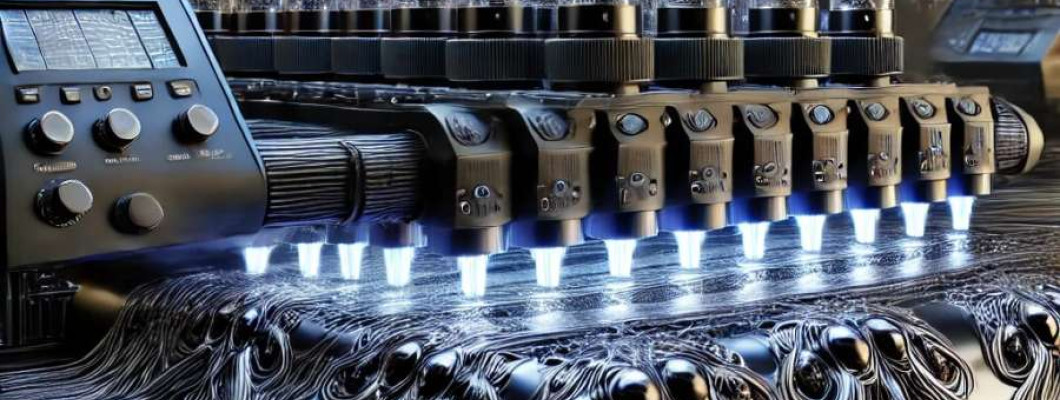
The Industrial Reality of High-Precision UV Varnish DTF Label Printing
In industrial print environments, transitioning from DIY or semi-professional equipment to fully industrial-grade UV varnish Direct To Film (DTF) printers represents significant operational and technical challenges. Maintenance teams frequently confront issues around printhead longevity, ink adhesion variability, and varnish curing consistency under sustained workloads. The A3 UV Varnish DTF Printer Machine Label Printer must reliably balance micron-level precision and throughput with robust, predictable uptime. Industrial settings demand continuous operation cycles exceeding 8 hours daily, with minimal intervention for printhead cleaning and recalibration. The challenge is intense because UV varnish curing dynamics interact complexly with filamentous inks used in DTF, requiring precise control of UV lamp intensity, dwell time, and substrate handling.
Operational bottlenecks emerge from varnish layer non-uniformity, which can cause label adhesion issues in downstream lamination or packaging steps. Maintenance teams oversee managing printhead nozzle clogging caused by varnish payloads and particulate inks, which affect print quality and reliability. This gap between amateur or desktop-quality machines and industrial-grade solutions manifests clearly in service intervals, consumable replacement costs, and total throughput capacity.
Maintaining Component Integrity Under Industrial Stress
The harsh conditions of high-speed, high-volume label printing necessitate hardware capable of withstanding thermal cycling, UV radiation, and abrasive ink/varnish chemistry. UV lamps integrated within the A3 UV Varnish DTF Printer operate at wavelengths around 395nm and power draw levels near 30W per lamp, optimized for rapid varnish polymerization. Printheads featuring piezoelectric nozzles with drop volumes as small as 2 picoliters must operate under a tight temperature range, typically 20–28°C, as overheating accelerates nozzle degradation and viscosity fluctuations.
Comparing two hypothetical printhead setups clarifies the tradeoffs:
| Specification | Low-End DIY Printhead | Industrial-Grade Printhead |
|---|---|---|
| Drop Volume (pl) | 5-10 | 2-4 |
| Nozzle Count | 128 | 1024 |
| Recommended Duty Cycle (hours/day) | 2-4 | 10+ |
| Thermal Operating Range (°C) | 18-35 | 20-28 |
| Ink Compatibility | Limited UV and solvent inks | Full UV varnish and DTF pigment range |
Industrial printheads sustain higher duty cycles with extended maintenance intervals, vital for avoiding print stoppages in continuous production. The A3 UV Varnish DTF Printer’s integration of high-density nozzles and closed-loop UV curing systems denotes substantial technical advancement over typical DIY printers.
Ink Chemistry and Varnish Layer Dynamics
DTF printing inks incorporate multiple layers: a white base, CMYK colors, and a UV varnish topcoat. The varnish layer serves as both a protective finish and a visually enhancing gloss. However, its curing involves complex photopolymerization reactions dependent on UV intensity and exposure time. Inadequate curing results in tackiness, poor abrasion resistance, and eventual substrate warping.
Consider an example where the varnish layer thickness is targeted at 10 micrometers (μm). The optimal UV exposure time t (seconds) can be estimated using the Beer-Lambert Law for photopolymerization depth d:
d = α I_0 t
where α is the absorption coefficient (mm−1), and I_0 the incident UV intensity (mW/cm2). For a varnish absorption α of 0.8 mm−1 and UV intensity of 100 mW/cm2, curing time t calculates as:
t = d / (α I_0) = 0.01 mm / (0.8 mm−1 × 100 mW/cm2) = 0.000125 s
In practice, curing times are much longer due to diffusion limits and photoinitiator kinetics, typically between 1-3 seconds per pass. The printer must uniformly maintain this exposure over the entire label surface at speeds of around 1-2 m/min, demanding precision synchronization between printhead motion and UV lamp modulation.
Lifecycle Maintenance Challenges and Uptime Optimization
Maintenance teams recognize that daily uptime in the A3 UV Varnish DTF Printer environment is influenced by nozzle health, varnish residue build-up, and automated cleaning systems. Scheduled downtime for cleaning cycles, combined with real-time monitoring of drop placement accuracy, dictates overall productivity.
Firmware employing real-time image processing can identify nozzle misfires with error rates below 0.5%, enabling corrective purging and minimal manual intervention. Consumable costs, including printhead replacements and UV lamp modules, must balance with expected throughput to deliver positive asset depreciation timelines.
Infrastructure Integration and Environmental Compliance
Integrating the A3 UV Varnish DTF Printer into existing factory floors introduces considerations for thermal management, ozone filtration, and electrical supply stability. UV lamps typically generate localized heat loads of approximately 150-200 Watts, requiring forced-air or liquid cooling to maintain operational temperatures and extend component life.
Moreover, UV varnish inks may off-gas volatile organic compounds (VOCs), demanding proper extraction systems to comply with occupational safety and environmental standards. Maintenance teams must ensure filters and ventilation are regularly serviced to prevent contamination and safety risks.
Scenario Analysis Highlighting Use-Case Impact on Maintenance
Scenario 1: Small-Scale Label Production Facility
A label production business with intermittent print jobs benefits from the A3 UV Varnish DTF Printer’s ability to rapidly switch substrates and inks. The maintenance lead must focus on printhead startup and shutdown protocols to avoid nozzle clogging during idle periods. The printer’s automated cleaning cycles help reduce manual interventions, improving turnaround times.
Scenario 2: Continuous High-Volume Retail Packaging Line
In a high-volume environment running 16-hour shifts, the printer’s robust printhead and UV curing components ensure sustained throughput. Real-time diagnostics minimize failure-induced downtime. Maintenance cycles align with shift changes to maximize operational efficiency.
Scenario 3: Customized Industrial Label Manufacturing
For industrial labels requiring multiple varnish textures and color depths, precision control of varnish curing is critical. Maintenance focuses on calibrating UV intensity and monitoring varnish viscosity to maintain print quality, leveraging the printer’s advanced control systems.
Expert FAQ Addressing Complex Maintenance Considerations
1. How does varnish viscosity affect nozzle clogging?
Higher varnish viscosity increases the risk of particulate aggregation, leading to nozzle blockages. Maintaining ink temperature within 22-26°C ensures optimal flow characteristics.
2. What is the recommended frequency for printhead purging cycles?
Purging every 12 hours under continuous operation balances ink preservation with nozzle health, preventing excessive wear.
3. Can UV lamp intensity degradation be compensated in firmware?
Yes, firmware can adjust exposure parameters dynamically to compensate for lamp aging, maintaining consistent curing quality.
4. What environmental controls minimize VOC exposure during operation?
High-efficiency activated carbon filtration and laminar airflow systems effectively reduce VOC concentrations within safety thresholds.
5. How to predict printhead lifespan based on operational parameters?
By analyzing duty cycle, temperature, and cleaning frequency data, expected printhead life spans 1,500-2,000 operational hours before replacement is advisable.
Strategic Verdict and Recommendation
The A3 UV Varnish DTF Printer Machine Label Printer reliably addresses the critical challenges faced by maintenance leads transitioning from non-industrial equipment to enterprise-grade printing. Its advanced printhead design, precise UV varnish curing system, and infrastructure integration capabilities surpass typical DIY solutions, delivering sustained uptime, predictable maintenance cycles, and industrial-level print quality.
Given the pressing operational demands for durability and consistency in modern label manufacturing, this printer stands as a definitive industrial-grade solution. Maintenance teams will benefit from its automated diagnostic and cleaning systems, reducing workload while securing output quality. For an industry perspective and procurement details, the A3 UV Varnish DTF Printer Machine Label Printer represents a solid investment in scalable, high-precision printing infrastructure.