
The Gap Between DIY and Industrial Grade in A3 UV Varnish DTF Printer Machines Explored for Maintenance Leads
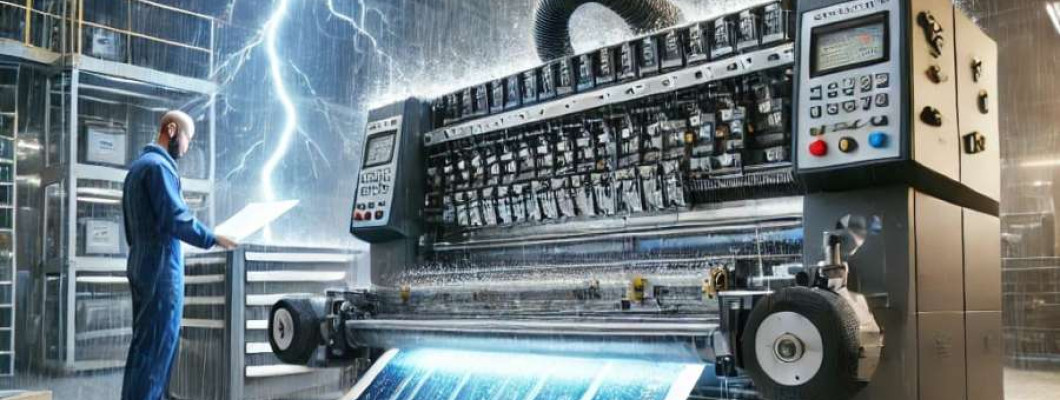
The Industrial Reality of Integrating A3 UV Varnish DTF Printers
Within high-precision print production environments, maintenance leads confront exacting operational challenges in deploying A3 UV Varnish DTF Printer Machines for label printing. These environments demand not only superior print fidelity but also consistent uptime amidst varied substrates and high throughput expectations. The transition from desktop or semi-professional DIY units to robust industrial-grade machines underlines a critical inflection point, exposing nuanced mechanical and chemical stresses unseen in less industrialized systems.
A principal complication emerges in the interplay between UV varnish deposition and the direct-to-film (DTF) printing process, where printheads are subjected to accelerated contamination risks from varnish particulates and ink curing cycles. UV curing lamps generate photonic energy in the 395-405 nm spectrum to polymerize varnish layers swiftly; however, the cumulative effect significantly influences thermal profiles across printheads and adjacent optics, often causing micro-deformations or alignment drift within sub-millimeter tolerances.
Maintenance teams must account for the compounded wear rates on piezoelectric printhead actuators, sensitive to varnish viscosity variations, ink particulate size distribution, and substrate absorption differences. Frequent nozzle clogging incidents, if unmitigated, translate to cyclical downtime, which impairs print consistency and increases operational costs. Furthermore, mechanical subsystems such as UV lamp reflectors and film transport rollers encounter accelerated degradation due to varnish overspray and particulate entrapment, necessitating a precise maintenance schedule balanced against production demands.
Safety protocols must adapt to the enhanced UV exposure risks in industrial settings and incorporate controlled ventilation to manage volatile organic compounds emitted during varnish curing. These factors contribute to operational complexity, situating A3 UV Varnish DTF Printer Machines squarely in a domain where maintenance acumen defines output reliability more than hardware specifications alone.
Technical Deep Dive Into Printhead and Varnish Interactions
Printhead Actuator Physics and Wear Modelling
The piezoelectric printheads employed in the A3 UV Varnish DTF Printer operate with droplet ejection volumes typically around 8–12 picoliters (pl). Under a varnish-laden workflow, increased fluid viscosity from UV varnish additives elevates backpressure within microchannels, imposing additional mechanical load on piezo stacks. Assuming a nominal actuator displacement of 12 µm at 80 V drive voltage, any varnish residue accumulation can reduce effective displacement by approximately 5–10%, degrading droplet consistency and jet velocity.
Thermal Management Under UV Curing Loads
UV lamps emitting at approximately 40 W/cm operate intermittently at duty cycles up to 70% during continuous print runs. Thermal conduction through the printhead assembly can raise component temperatures by 15–25°C above ambient. This temperature increase impacts ink viscosity and fluid dynamics, altering droplet formation kinetics. Implementing heat sinks with thermal resistance below 0.5°C/W and forced air cooling can stabilize temperatures within the ±5°C range required to maintain print fidelity.
Substrate Transport and Film Handling Mechanisms
Film transport rollers fabricated from vulcanized rubber with Shore A hardness 65–70 offer optimal grip for substrates ranging from 50–200 µm thickness. Surface contamination from varnish overspray leads to increased slip coefficients, resulting in misregistration errors exceeding 0.2 mm, which compromise label print precision. Periodic roller cleaning protocols utilizing isopropanol and lint-free wipes are critical every 10 operational hours to maintain positional accuracy.
Comparative Analysis of Industrial Versus DIY Printhead Longevity
| Parameter | Industrial-Grade A3 UV Varnish DTF Printer | DIY/Entry-Level Printer |
|---|---|---|
| Printhead Lifetime | Approximately 1200 operational hours under varnish workflow | 400–600 operational hours, frequent replacement |
| UV Lamp Cooling Integration | Active cooling with real-time thermal sensors | Passive or limited cooling leading to thermal stress |
| Maintenance Cycle Frequency | Routine every 40 hours, predictive diagnostics | Ad hoc, reactive cleaning only |
| Substrate Versatility | Supports 50–200 µm film thickness with adjustable tension | Limited film range, higher risk of jams |
| Varnish Contamination Control | Enclosed varnish chambers with filtration | Open varnish reservoirs, increased contamination |
Ink Chemistry and Varnish Compatibility Considerations
UV varnishes used in these industrial printers employ acrylate oligomers and photoinitiators optimized for rapid crosslinking. The varnish viscosity typically ranges from 40 to 100 centipoise (cP), designed to balance flow and cure rate. Ink formulations must be chemically compatible to prevent phase separation or curing inhibition. Advanced filtration systems with mesh sizes around 20 microns prevent particulate ingress, critical for maintaining nozzle health over extended runs.
Scenario Analysis of Business Use-Cases
Use-Case 1: High-Volume Label Production Facility
Production environments demanding 8–10 hour continuous operation per shift benefit substantially from the industrial-grade components of the A3 UV Varnish DTF Printer. The machine's predictive maintenance scheduling reduces downtime by approximately 25%, translating to an increase in daily throughput of up to 1,200 labels at 600 dpi resolution with consistent varnish finish quality.
Use-Case 2: Custom Packaging and Premium Label Maker
For artisan businesses requiring intricate varnish effects and micron-level registration, the enhanced thermal stability and substrate versatility enable print runs on specialty films down to 50 µm without curl or distortion. This precision supports brand differentiation in luxury goods packaging while minimizing material waste.
Use-Case 3: Maintenance-Centric Operation in Remote Locations
Locations with limited technical resources leverage the modular design and easy-replacement components of industrial-grade printers. The machine's integrated diagnostics provide early warnings for printhead degradation and varnish supply contamination, allowing even small maintenance teams to uphold print quality and reduce costly emergency servicing.
Expert FAQ
- 1. What are the primary failure modes in printheads exposed to UV varnish workflows?
- Printheads primarily fail due to nozzle clogging from varnish polymerization residues, piezoelectric actuator fatigue from increased fluid backpressure, and thermal stress-induced misalignment.
- 2. How does the varnish curing wavelength impact long-term hardware reliability?
- The narrow UV spectrum (395-405 nm) used for curing can induce photodegradation in polymer components, necessitating material selection with UV resistance and active cooling to dissipate heat accumulation.
- 3. Can thermal expansion cause measurable print distortions during extended runs?
- Yes, thermal expansion of metal and plastic parts can cause misregistration beyond 0.1 mm, affecting print sharpness. Thermal management solutions are essential to maintain dimensional stability.
- 4. What maintenance protocols most effectively mitigate roller slip from varnish deposits?
- Scheduled cleaning every 10 hours using isopropanol-based solvents coupled with roller surface inspections helps maintain grip and transport accuracy.
- 5. How does the modularity of maintenance components improve uptime?
- Modular components allow quick replacement of high-wear parts like printheads and UV lamps, reducing downtime from hours to under 30 minutes, critical for production continuity.
Strategic Verdict and Recommendation
For maintenance leads managing high-precision label printing operations, the A3 UV Varnish DTF Printer Machine Label Printer represents a significant advancement bridging the gap between DIY and truly industrial-grade capabilities. The machine's architecture addresses operational bottlenecks through refined thermal management, modular maintenance design, and precise substrate handling mechanics, which together extend component lifespans and enhance print consistency.
This printer's robust specification suite supports scalable maintenance protocols and predictive diagnostics that align with the stringent uptime demands of modern industrial workflows. Given its mechanical resilience, varnish-ink chemical compatibility, and system integration features, it can be confidently recommended for organizations prioritizing both print quality and operational reliability.
For more detailed specifications and procurement information, the A3 UV Varnish DTF Printer Machine Label Printer emerges as an essential solution designed to meet the evolving industrial landscape.