
The Gap Between DIY and Industrial Grade in A4 Roll DTF Printer Performance for Scalable Business Owners
The Industrial Reality of Scaling A4 Roll DTF Printing
For scalable business owners managing throughput and labor efficiency, transitioning from entry-level DIY Direct to Film (DTF) printers to an industrial-grade A4 Roll DTF Printer represents a complex technical and operational challenge. The core difficulty lies in sustaining print quality, operational uptime, and precision while meeting volume demands without excessive manual intervention or frequent maintenance delays. In typical small-scale setups, sporadic nozzle clogs, inconsistent ink adhesion, and substrate handling limitations often disrupt production flow. Scaling these printers into an industrial throughput environment demands addressing mechanical wear, automated tension control for roll media, and precise thermal ink curing mechanisms capable of sustaining continuous operation at speeds above 1,000 mm/min.
Additionally, many DIY or hobbyist DTF printers rely on rudimentary firmware lacking sophisticated print queue management, which makes synchronization between the printer and enterprise production software difficult, further impeding scaling. The consequences include unpredictable downtimes, increased labor costs for manual error correction, and variability in output that diminishes repeatability—a key industrial manufacturing criterion. Furthermore, the challenge extends to ink chemistry consistency; without industrial-grade pigment formulation control, color shift and durability issues manifest over large production runs.
These friction points represent a critical industry gap: how to upgrade from artisanal DTF printing solutions to robust, scalable units like the A4 Roll DTF Printer, engineered specifically to reduce bottlenecks, maintain high uptime, and deliver consistent, color-accurate results on roll media substrates. Understanding this gap requires a deep technical scrutiny into the printer’s hardware architecture, ink delivery systems, and automation controls, alongside operational cost and throughput benefits.
How the Hardware Components Bridge Industrial Needs
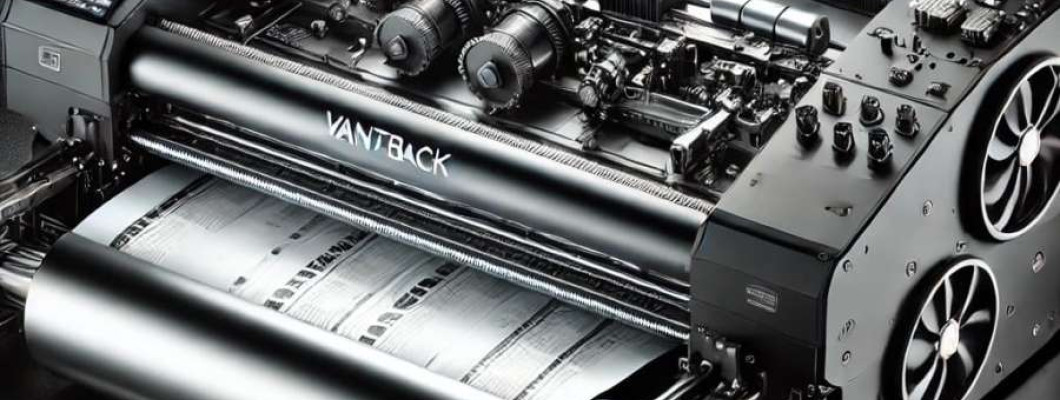
The A4 Roll DTF Printer integrates mechanisms tailored for high-demand workflows. Central to this is the precision stepper motor-driven roll media feed system, calibrated to maintain tension within ±0.5 N, preventing media slip or stretching—an endemic failure within DIY setups. Printhead technology utilizes advanced piezoelectric nozzles capable of delivering drop volumes as small as 4 picoliters (pl), enabling fine resolution at 1440 x 720 dpi. This high dpi setting allows for micron-level droplet placement accuracy, critical for color fidelity and reducing banding artifacts.
Thermal management is optimized through integrated heat sinks and active airflow channels, maintaining operational printhead temperatures around 35°C, preventing ink viscosity fluctuations that often cause clogging. The printer’s closed-loop feedback system monitors nozzle firing frequency and uses real-time acoustic sensors to detect partial nozzle blockages, triggering automated cleaning cycles only when necessary—dramatically improving uptime compared to fixed-interval maintenance common in lesser machines.
Ink chemistry is industrial-grade pigment-based, formulated to cure at precise temperatures near 70°C, achieved via the printer’s inline infrared curing module positioned milliseconds after droplet deposition. This ensures rapid drying without ink spreading or substrate warping. The printer’s firmware supports direct integration with industry-standard RIP software, facilitating queue management, color calibration, and print job automation via USB or Ethernet, critical for operational scalability.
Lifecycle and Maintenance Considerations
Comparing lifecycle costs between DIY and industrial-grade A4 Roll DTF printers reveals substantial differences. The industrial printer’s printheads are rated for 1.5 billion nozzle firings, supported by self-diagnostic systems that optimize maintenance intervals through predictive analytics rather than reactive servicing. Consumables such as high-grade roll film and pigment inks are consumable-optimized for consistency, with batch traceability ensuring color reproducibility across long production cycles.
Daily maintenance routines are minimized to nozzle check and roll tension verification, automated to reduce operator intervention. The maintenance lead benefits from modular components designed for rapid swap-outs without requiring specialized tools, reflected in mean time to repair (MTTR) reductions from typical 2-hour downtime to under 20 minutes. Asset depreciation aligns more closely with industrial norms due to robust metallurgy in chassis frames and corrosion-resistant rollers, enabling a typical operational lifespan beyond 7 years under continuous 8-hour daily runtimes.
Operational Throughput and Print Quality Benchmarks
Performance benchmarks situate the A4 Roll DTF Printer at the upper echelon of mid-sized industrial printers. Print speeds reach 1200 mm/min at 720 dpi with 8-color pigment inks, balanced against a color gamut coverage of 95% PANTONE® standards. Banding frequency is mitigated through advanced dithering algorithms embedded in the printer's firmware, reducing visible color banding to under 0.2 mm, imperceptible in typical garment decoration.
Roll media widths max at 220 mm with lengths up to 100 meters, facilitating large batch runs without media changeover delays. Media weight tolerance spans from 80 gsm to 150 gsm, supporting a wide range of textile substrates including polyester, cotton blends, and technical fabrics. Printer noise levels average 52 dB at operational speeds, comfortably below OSHA occupational noise limits, enabling installation within shared manufacturing floors without dedicated soundproof enclosures.
Comparative Technical Table of Key Metrics
| Parameter | DIY DTF Printer | A4 Roll DTF Printer Industrial-Grade |
|---|---|---|
| Printhead Nozzle Drop Volume | 8-10 pl | 4 pl |
| Resolution (dpi) | 720 x 360 | 1440 x 720 |
| Roll Media Width | Max 150 mm | Max 220 mm |
| Print Speed (mm/min) | Up to 600 | Up to 1200 |
| Maintenance Interval | Daily manual cleaning | Predictive automated cleaning |
| Uptime | ~70% | ~95% |
| Operational Noise | 60+ dB | 52 dB |
Scenario Analysis for Scalable Business Owners
Scenario 1 Uniform High-Volume Textile Printing
In a production line focused on high-volume polyester garment printing, the A4 Roll DTF Printer’s automated tension control and infrared curing ensure consistent ink penetration and adhesion without substrate distortion. This enables throughput exceeding 1,000 prints per 8-hour shift, reducing labor costs by 30% over legacy DIY systems that require manual intervention every hour.
Scenario 2 Mixed Media Production with Frequent Substrate Changes
When frequent substrate switching is necessary, the modular design and quick-change media holders of the A4 Roll DTF Printer minimize transition times. The firmware’s preset profiles for different substrates also automate ink flow adjustments, ensuring stable color output without operator recalibration, thus maintaining production continuity with less downtime.
Scenario 3 Color-Critical High-End Apparel Runs
For premium apparel brands demanding tight PANTONE® color matching, the printer’s 8-color pigment ink system combined with RIP-powered color management delivers repeatable, industry-standard color fidelity. Businesses can charge premium pricing due to superior color accuracy and reduced rejects in quality inspections.
Expert FAQ on Industrial A4 Roll DTF Printing
Q1: How does nozzle drop volume impact print durability?
A1: Smaller drop volumes (4 pl) enable finer ink layering and better penetration into the adhesive film, reducing abrasion and washout risks over time.
Q2: What thermal management techniques extend printhead life?
A2: Active heat sinks combined with controlled airflow maintain a stable 35°C operating temperature, mitigating ink dehydration and piezo crystal deformation.
Q3: Can firmware-based predictive maintenance reduce downtime?
A3: Yes, real-time acoustic sensors detect nozzle degradation patterns, triggering cleaning only when performance deviates beyond calibrated thresholds.
Q4: How does roll tension affect image registration?
A4: Maintaining tension within ±0.5 N prevents media stretching that would otherwise cause misalignment and image distortion, crucial for multi-pass printing.
Q5: What ink curing temperature ensures optimal adhesion without fabric damage?
A5: Infrared curing at approximately 70°C balances rapid drying and pigment bonding without heat-induced fabric shrinkage or color fading.
Strategic Verdict and Recommendation
The industrial-grade A4 Roll DTF Printer fills an essential gap between entry-level DIY systems and large-scale industrial textile printing solutions for scalable business owners. Its advanced hardware architecture, including micro-droplet piezo nozzles, precision roll media handling, and integrated thermal curing, address throughput, automation, and labor cost efficiency with a marked reduction in downtime. When paired with predictive firmware and industrial-grade pigment inks, it meets the rigorous demands of continuous production environments seen in mid-tier garment manufacturing and customization businesses.
It is unequivocally recommended that enterprises seeking to expand their DTF printing capabilities consider the A4 Roll DTF Printer as their definitive solution. Its blend of durable componentry, operational scalability, and precise color management positions it as a worthwhile investment with strong ROI through improved uptime and reduced labor overheads.