
The Gap Between DIY and Industrial Grade in A4 Roll DTF Printers Explained For Scalable Business Owners
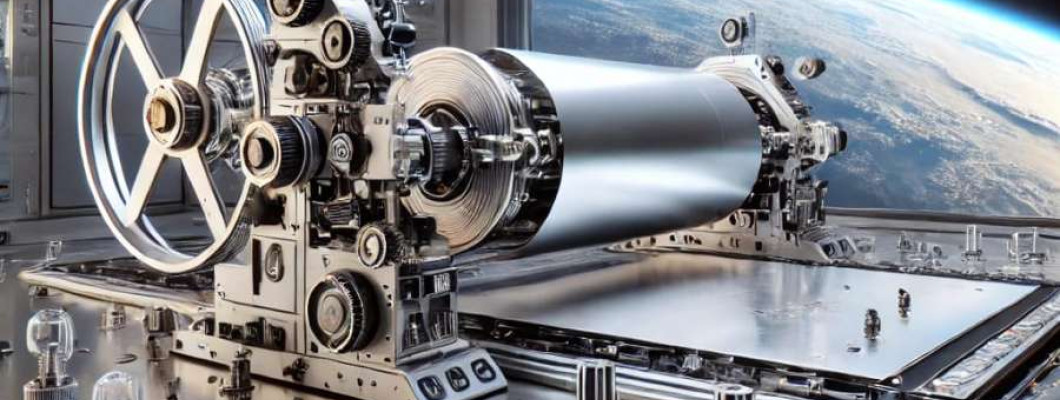
The Industrial Reality of Scaling A4 Roll DTF Printers in Production Environments
Direct-to-Film (DTF) printing technology has gained traction as a flexible solution for textile decoration, enabling printshops to produce vibrant, durable designs on multiple substrates. However, transitioning from entry-level or DIY units to industrial-grade A4 roll DTF printers exposes critical operational challenges that impact throughput, labor cost efficiency, and automation potential. For scalable business owners focused on growth, understanding these nuances is essential to ensuring investment in hardware translates into meaningful production gains and profitability.
A core scenario involves the daily management of print runs impacting turnaround time. DIY DTF printers often present bottlenecks such as limited print speeds, inconsistent film tension control, and manual ink handling that compromise uptime and quality repeatability. These limitations cascade into increased labor overheads, fragile quality control, and operational unpredictability. Industrial-grade A4 roll DTF printers are designed with components and processes optimized for seamless integration with automation solutions, enabling continuous production with minimal manual intervention.
Consider a mid-sized custom apparel manufacturer planning to scale from 10 to 50,000 prints monthly. This transition forces scrutiny on printer mechanics, feed systems, printhead durability, and ink chemistry interaction under extended duty cycles. The difference between a DIY solution and true industrial-grade equipment emerges not only in raw specs but in reliability under continuous workloads, precision in print registration, and sustainability of consumable supply chains.
Environmental factors such as heat dissipation during long print jobs and reproducible color fidelity across batches further differentiate industrial solutions. Here, the A4 roll format introduces specific challenges related to film roll weight, tension consistency, and feed mechanism robustness that must be engineered to reduce downtime and mechanical wear. Without this, scaling efforts may suffer hidden bottlenecks that erode ROI despite apparent nominal capacity increases.
Technical Deep-Dive Into Industrial-Grade A4 Roll DTF Printer Components
1. Printhead Mechanics and Longevity
Industrial printheads used in A4 roll DTF printers often employ piezoelectric nozzles with droplet sizes from 5 to 12 picoliters (pl), facilitating fine detail and smooth gradations at resolutions exceeding 600 dpi. The printhead's build materials, nozzle plate design, and maintenance protocols directly impact clogging frequency and replacement cycles. In contrast, consumer/DYI-grade printheads typically use thermal inkjet technology with lower droplet control, resulting in reduced durability under pigment-heavy DTF inks.
2. Film Feed Systems and Tension Control
Accurate film feeding is critical for registration precision and avoidance of print distortion. Industrial units implement closed-loop tension sensors coupled with stepper motor-driven rollers calibrated to maintain tensions within ±1 Newton force. This precision prevents film stretching or wrinkling over long rolls (commonly 80–150 grams per square meter films weighing 5–7 kg per roll). DIY units often rely on manual adjustment, increasing the risk of misfeeds or downtime.
3. Ink Chemistry and Drying Dynamics
DTF inks contain pigment particles suspended in aqueous bases mixed with polymers designed to bond with adhesive powders during curing. Industrial setups often customize ink formulations to balance nozzle stability and adhesion strength, including rapid drying additives activated by infrared (IR) lamps or hot air. Ink curing speeds directly influence print throughput, where an industrial system might sustain continuous output at 1.5 to 2 linear meters per minute, compared to <1 meter per minute on entry-level units.
4. Thermal Management and Environmental Controls
High-volume continuous printing generates substantial heat in printheads and curing systems requiring integrated thermal management such as water-cooled printhead mounts or forced-air ventilation with particulate filtration. These features are crucial to maintaining color consistency and mechanical tolerance over extended operation. Maintaining ambient humidity within a 40-60% range stabilizes ink viscosity and film behavior, often monitored in industrial-grade printers via onboard sensors.
5. System Integration and Automation Potential
Industrial A4 roll DTF printers support communication protocols like RS-485 and Ethernet for integration into production management systems enabling remote monitoring, error diagnostics, and automatic job queuing. Combined with automated unwinding/rewinding units and powder application stations, these systems reduce manual labor dependency. DIY models often lack these interfaces, limiting scalability and exposing the business to higher labor costs and throughput variability.
| Parameter | DIY A4 Roll DTF Printer | Industrial-Grade A4 Roll DTF Printer |
|---|---|---|
| Print Resolution | Up to 300-400 dpi | 600-1200 dpi |
| Print Speed | < 1 m/min | 1.5 - 2 m/min |
| Film Tension Control | Manual adjustment | Closed-loop sensor feedback ±1 N |
| Printhead Life | ~200 hours, frequent clogs | 1000+ hours, clog-resistant design |
| Automation Support | Limited | Full integration with RS-485/Ethernet |
Scenario Analysis for Scalable Business Owners
Scenario 1: Small Batch Custom Apparel Shop
The shop requires high color fidelity and occasional complex designs but low daily volumes (~100 prints/day). Here, an industrial-grade A4 roll DTF printer enables consistent quality with minimal operator intervention, allowing one technician to run multiple machines simultaneously. The investment balances throughput and reliability, avoiding costly downtime found in DIY units.
Scenario 2: Mid-Sized Promotional Products Manufacturer
With output targets around 1,000 prints/day incorporating multiple substrates, throughput is critical. Automated tension controls and rapid drying in industrial-grade machines minimize changeover times and quality deviations, directly impacting labor costs and order turnaround time. Manual handling typical in DIY solutions would bottleneck capacity and increase reprint rates.
Scenario 3: Large-Scale Textile Production Facility
Running continuous 24/7 shifts with embedded ERP and MES systems, the facility demands printers with robust error recovery, remote diagnostics, and integration with powder coating and curing stations. Industrial-grade A4 roll printers' data interfaces enable predictive maintenance scheduling, reducing unscheduled downtime and extending asset lifetime. DIY systems are inherently unsuitable for this scale due to lack of automation.
Expert FAQ
What mechanisms enable industrial A4 roll DTF printers to maintain registration accuracy over long print runs?
They utilize closed-loop tension sensors coupled with motorized feed rollers and encoder feedback to ensure film movement corresponds precisely with printhead activation timings. This keeps positional error below 0.1 mm over extended runs.
How does ink viscosity affect piezo printhead performance in DTF printing?
Viscosity influences droplet formation and ejection consistency. Optimal ranges (~10-12 cP) minimize clogging and prevent nozzle satellite droplets, crucial under high throughput. Industrial inks are formulated with additives to maintain stable viscosity in variable ambient conditions.
Why is thermal management critical in industrial-grade A4 roll DTF printers?
Continuous high-speed printing generates heat that alters ink drying rates and printhead electronics temperature. Managing these parameters prevents color shifts, nozzle degradation, and mechanical misalignments.
Can automation integration reduce labor costs significantly in DTF workflows?
Yes. Automated feed systems, powder coating, and curing reduce manual handling steps. Integration with production management allows operators to multitask or oversee multiple lines, optimizing labor utilization.
What maintenance cycles are typical for industrial A4 roll DTF printers versus DIY options?
Industrial units often feature scheduled preventive maintenance every 500-1000 hours with modular printhead swaps and automated cleaning. DIY units require more frequent manual cleaning and part replacements, reducing uptime and increasing labor burden.
Strategic Verdict and Recommendation
The transition from DIY to industrial-grade A4 roll DTF printers is a pivotal step for scalable business owners aiming to expand throughput while controlling labor costs and quality consistency. Industrial-grade units incorporate precision mechanical systems, advanced ink chemistry, and integrated automation interfaces that collectively elevate operational reliability and output rates essential for commercial growth.
Given documented differences in component longevity, print fidelity, feed accuracy, and thermal management, investing in an industrial A4 roll DTF printer translates directly into enhanced process scalability and reduced hidden operational bottlenecks. To explore this solution further, consider the A4 Roll DTF Printer as a definitive industrial-grade option engineered for sustained performance in demanding production environments.