
The Gap Between DIY and Industrial Grade in A4 Roll DTF Printers for Scalable Business Owners
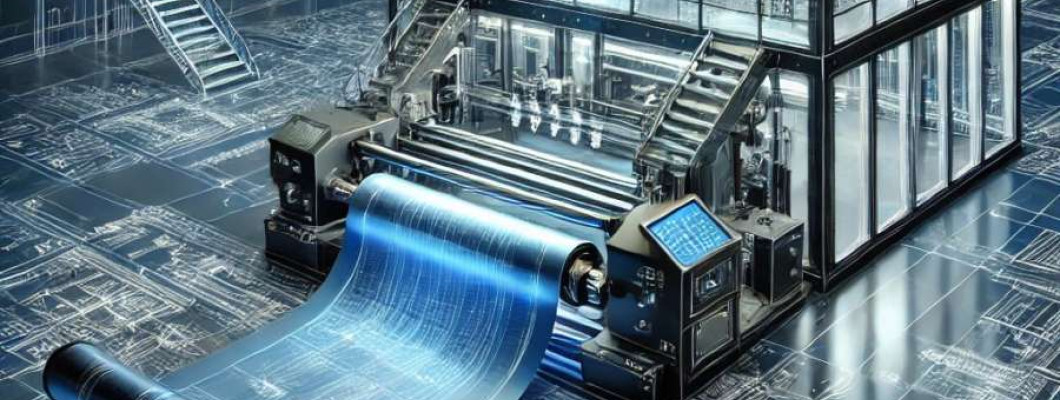
The Industrial Reality of Scaling Print Production with A4 Roll DTF Printers
When a scalable business owner ventures beyond prototyping to ramping up volume with A4 Roll Direct to Film (DTF) printers, the technical and operational challenges quickly magnify. Unlike desktop or DIY solutions that serve experimental or small batch needs, industrial contexts demand repeatability, uptime, and throughput that align with commercial viability.
Picture a mid-sized print workshop transitioning from manual screen printing to A4 Roll DTF technology. At first glance, the promise of faster turnaround and substrate versatility is enticing. However, embedded within this transition is the critical challenge of maintaining production continuity while managing costs related to consumables, equipment wear, and operator involvement. The defining pain points include printhead longevity, ink adhesion consistency on varied substrates, and automated handling of continuous roll media without sacrificing print quality or speed.
While DIY-grade solutions often leave operators vulnerable to frequent calibration demands, nozzle clogging, and inconsistent color profiles, an industrial-grade A4 Roll DTF printer confronts these issues through robust engineering and workflow integration. This journey embodies the hidden divide—the gap between accessible entry-level printing and the stringent demands of sustained, high-throughput commercial output.
Technical Deep-Dive into Industrial A4 Roll DTF Printer Capabilities
Printhead Technology and Durability Under Extended Runs
Industrial-grade A4 Roll DTF printers employ piezoelectric printheads designed to operate with continuous high-frequency firing cycles. The technology must balance droplet size precision—usually between 4–8 picoliters (pl)—with nozzle longevity. Nozzle clogging risk increases dramatically beyond 5000 printing minutes without cleaning cycles, necessitating automated maintenance subsystems.
Comparatively, consumer-grade printheads often sacrifice longevity to reduce initial cost. Industrial solutions utilize hardened ceramic nozzles, micro-vibration cleaning wipers, and automated ink recirculation systems to minimize particulate buildup and maintain a >99.5% operational nozzle efficiency over 2000 operational hours.
Ink Chemistry and Adhesion Mechanics
The chemical composition of DTF inks significantly influences print durability and substrate compatibility. Industrial inks feature polymer-based pigment dispersions optimized for thermal transfer with low migration rates onto polyester and cotton blends. Advanced formulations enhance elastic modulus to improve wash resistance while reducing curing temperature thresholds to below 140°C, improving compatibility with temperature-sensitive substrates.
Media Handling and Roll-to-Roll Automation
Precision media handling systems in industrial A4 Roll DTF printers employ tension control mechanisms calibrated to maintain web tension within ±0.05 N/mm across the roll width, preventing media skew and registration errors. Stepper motor-driven feed rollers operate with repeatability within 0.1 mm over 1000 m production runs, ensuring precise overlay and color registration essential for complex graphics.
Thermal Management and Environmental Control
Thermal regulation is pivotal to ink curing and printhead stability. Industrial printers integrate multi-zone heating elements capable of maintaining substrate temperature at 110–120°C with uniformity within ±0.5°C across 210 mm width. Heat dissipation from printhead electronics is managed through finned heat sinks and variable-speed fans maintaining component enclosure temperatures below 45°C.
Data Throughput and Controller Architecture
High-resolution image data and real-time nozzle firing commands require robust embedded controllers. Industrial units leverage 32-bit ARM processors with dedicated DSP modules for image rasterization and color management, supporting data transfer rates exceeding 50 MB/s. This architecture reduces latency, enabling sustained print speeds averaging 1.2 m/min at 600 dpi resolution without sacrificing color fidelity or droplet placement accuracy.
| Specification | Industrial-Grade A4 Roll DTF Printer | DIY-Grade A4 Roll DTF Printer |
|---|---|---|
| Printhead Longevity | >2000 hours with automated maintenance | <1000 hours, manual cleaning required |
| Ink Curing Temperature | 120°C ± 5°C | 150°C ± 15°C |
| Media Tension Control | ±0.05 N/mm | Variable, no active feedback |
| Maximum Print Speed | 1.2 m/min at 600 dpi | 0.5 m/min at 300 dpi |
| Data Transfer Rate | >50 MB/s with DSP controller | <20 MB/s basic USB interface |
Scenario Analysis of Business Use Cases for A4 Roll DTF Printers
On-Demand Customized Apparel Production
A growing apparel customization business requires rapid fulfillment of short-run orders with variable graphics. The industrial-grade A4 Roll DTF printer's roll-to-roll handling and automated maintenance reduce downtime, enabling continuous operation over 8 hours daily. With 600 dpi resolution and stable color profiles, the business meets demanding customer expectations without incurring excessive labor costs from manual calibration.
Mid-Volume Promotional Merchandise Manufacturing
Merchandisers focusing on promotional products benefit from the printer's ability to handle diverse textile substrates, including polyester blends, with minimal pre-treatment. Improved adhesion chemistry and curing consistency lower defect rates below 2% per batch, optimizing materials usage and maintaining tight delivery schedules critical in seasonal promotions.
Small-Scale Textile Sampling for Designers
Design houses require precise color reproduction and substrate versatility for prototype fabrics. The A4 Roll DTF printer’s micron-level droplet control provides accurate texture rendering essential to evaluating fabric feel and finish. The system's user-interface allows batch job programming and repeatable output, facilitating rapid iteration cycles.
Expert FAQ on Industrial A4 Roll DTF Printer Operation and Maintenance
What are the key indicators predicting printhead failure in continuous production?
Critical indicators include an increase in misfired nozzles beyond 0.5% during nozzle health checks, elevated operating temperature above 50°C sustained for more than 20 minutes, and erratic ink pressure fluctuations over ±0.02 MPa.
How does substrate thickness variation affect registration accuracy?
Substrate thickness deviations greater than ±0.2 mm can induce feed roller slippage or tension inconsistencies, leading to registration errors exceeding 0.5 mm, impacting multi-layered color fidelity.
What maintenance protocols ensure consistent ink adhesion over prolonged runs?
Regular cleaning cycles every 500 minutes, use of inline UV or heat curing verification sensors, and scheduled replacement of ink filters every 1000 run hours maintain adhesion parameters within industrial tolerance.
Can the printer integrate with automated post-processing systems?
Yes, industrial A4 Roll DTF printers commonly feature digital I/O ports and programmable logic controller (PLC) compatibility to synchronize with conveyor systems and heat presses, enabling seamless automation.
How does environmental humidity impact ink curing?
Humidity above 65% RH slows water-based ink evaporation and can cause incomplete film formation, reducing wash fastness. Industrial setups regulate ambient humidity to 40-55% for optimal curing.
Strategic Verdict and Recommendation for Scalable Business Owners
Scaling from experimental printing to commercial production demands printers engineered for continuous operation, precise media control, and consistent output quality. The industrial-grade A4 Roll DTF Printer embodies these attributes, delivering robust printhead durability, advanced ink chemistry, and automated media handling designed for throughput and reliability.
Its capacity to sustain elevated print speeds at commercial resolutions with tightly controlled curing and thermal management positions it definitively above entry-level devices. For scalable business owners seeking to optimize labor costs while maintaining industrial reliability and substrate versatility, this printer provides a compelling total cost of ownership profile with minimized downtime and maintenance overhead.
Investing in this technology aligns operational capabilities with growth ambitions, enabling businesses to confidently bridge the gap from artisanal experimentation to industrial-grade manufacturing.