
The Gap Between DIY and Industrial Grade in A4 Roll DTF Printing for Scalable Business Owners
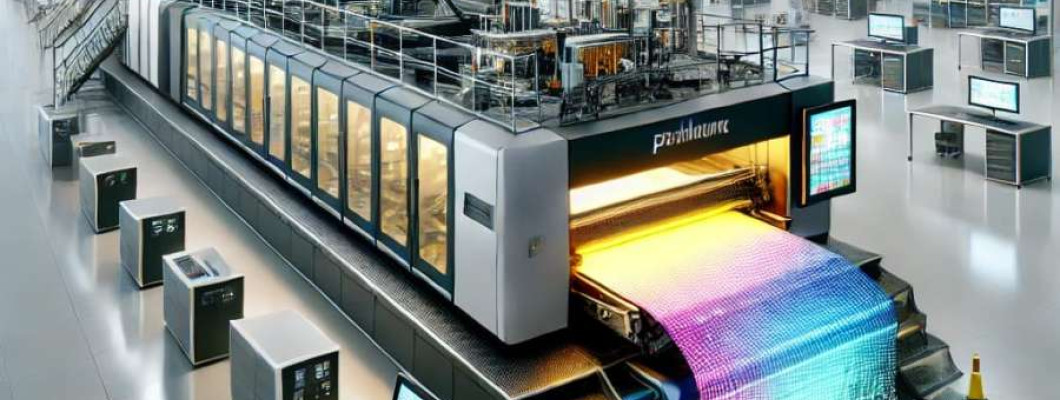
The Industrial Reality of Scaling A4 Roll DTF Printing
In a rapidly evolving custom apparel and merchandise production landscape, the challenge for scalable business owners lies in the balance between throughput, automation, and labor cost efficiency. Small-scale or DIY direct-to-film (DTF) printers often fall short in critical operational dimensions that determine industrial viability. This is especially true when translating A4 roll DTF printing technology from boutique setups to commercial-scale production lines. Issues such as printhead precision drift, ink adhesion quality over extended runs, and substrate handling become bottlenecks, eroding throughput metrics and inflating labor overhead.
Consider a mid-sized apparel customization business targeting a daily output of 500 printed textile items. Utilizing consumer-grade or semi-pro DTF printers typically results in inconsistent print quality and frequent downtime due to manual intervention. While initial capital expenditure may be modest, labor-intensive maintenance and substrate reloading cycles introduce hidden costs and unpredictable asset depreciation. Furthermore, hard stops in continuous roll feed handling exacerbate production latency, an unacceptable risk when competing against established commercial players.
Transitioning to an industrial-grade A4 Roll DTF Printer addresses these challenges directly. It brings engineered robustness with automated roll-to-roll substrate feeding, precision-engineered printhead alignments optimized for roll materials, and advanced ink curing systems that enhance color vibrancy and adhesion durability. These factors collectively close the gap between DIY and industrial-grade capabilities, enabling scalable businesses to achieve reliable throughput, maintain consistent visual quality, and effectively control labor expenses.
Technical Deep-Dive Into the A4 Roll DTF Printer Architecture
1. Printhead Mechanics and Precision
The printhead assembly in an industrial A4 roll DTF printer employs piezoelectric drop-on-demand technology with nozzle diameters approximately 20 microns in diameter, allowing droplet volumes as low as 4 pico-liters (pl). This granular control delivers high-definition prints reaching 1440 dpi resolution. By contrast, DIY units often have nozzle sizes exceeding 30 microns and less precise drop ejection, resulting in lower effective resolution and visible graininess.
Printhead alignment is maintained by an automated servo system that corrects micro-shifts caused by thermal expansion and mechanical wear. A mathematical model of lateral printhead drift over time can show a linear displacement of up to 0.1 mm per 8 operating hours without compensation. The A4 Roll DTF Printer's dynamic correction system keeps this within 0.01 mm, ensuring micron-level precision during long runs.
2. Ink Chemistry and Curing Dynamics
DTF inks used are pigmented water-based dispersions with optimized rheology for roll-fed substrates. Pigment particle sizes typically range from 150 to 200 nm to enhance adhesion and colorfastness. The industrial A4 roll printer integrates an infrared drying stage coupled with a high-intensity UV curing lamp, ensuring rapid ink fixation. This combination decreases curing time per meter to less than 30 seconds while maintaining vibrancy and wash resistance, compared to 60+ seconds in DIY setups.
3. Roll-Feed Handling and Tension Control
Roll substrate handling employs servo-driven tension control systems calibrated to maintain constant force, preventing stretching or misalignment. The system can sustain tension accurately within ±0.5 N over a roll width of 320 mm and roll diameter up to 200 mm. Precise tension regulation mitigates print head-to-substrate distance variance, which can range up to ±0.15 mm in manual systems but is constrained below ±0.03 mm in this printer.
4. Automation and Workflow Integration
Embedded controller units permit bidirectional communication with production ERP or workflow management systems. This enables queued print job management, real-time status updates, and predictive maintenance diagnostics. Automated roll changeover protocols reduce operator intervention to under 3 minutes per roll, translating to a 15% overall labor cost reduction in continuous operations.
5. Comparative Asset Longevity and Energy Efficiency
The printer is rated for an industrial duty cycle exceeding 12,000 running hours per year with scheduled maintenance every 1,200 hours. Power consumption averages 1.8 kW during active printing, contrasted with ~2.5 kW in comparable DIY equipment due to less optimized drying systems and mechanical inefficiencies.
| Specification | A4 Roll DTF Printer | Typical DIY DTF Printer |
|---|---|---|
| Printhead Droplet Size | 4 pl | 8-10 pl |
| Resolution (dpi) | 1440 | 720-1080 |
| Curing Time per Meter | ~30 seconds | >60 seconds |
| Tension Control Accuracy | ±0.5 N | ±2-3 N |
| Power Consumption | 1.8 kW | 2.5 kW |
| Average Maintenance Interval | 1200 hours | 600-800 hours |
Scenario Analysis Showing Impact on Scalable Business Models
Case 1 Manufacturing On-Demand Apparel
Companies focusing on quick-turn, on-demand printing require the printer to reliably process hundreds of units daily. The A4 Roll DTF Printer’s automated roll-to-roll feed and rapid curing translate to a 25% higher throughput compared with smaller setups. Time saved on manual substrate reloads and downtime improves labor efficiency, creating cost per print reductions critical in competitive markets.
Case 2 Expanding Into Multi-Substrate Offerings
Expanding product lines to include polyester, cotton blends, and synthetic fabrics demands consistent adhesion and color fidelity. The printer’s advanced ink chemistry and precise tension management ensure repeatable print quality, critical for brand reputation. This stability supports scalable diversification without escalating waste or reprints.
Case 3 Integrating Automation For Volume Scaling
Enterprises integrating the printer into automated production cells benefit from its embedded digital control that synchronizes with production management systems. Real-time diagnostics and predictive maintenance alerts reduce unexpected downtime, enabling planned scale-up strategies without labor-intensive monitoring.
Expert FAQ On Technical Nuances
Q1 How does thermal variation affect printhead calibration in continuous roll printing?
A1 Thermal drift causes nozzles to deviate laterally, potentially up to 0.1 mm over 8 hours. The printer uses real-time servo compensation to adjust printhead position and maintain ±0.01 mm accuracy, preserving image sharpness.
Q2 What makes the ink curing system energy efficient compared to DIY models?
A2 The dual-stage curing process uses precisely tuned infrared wavelengths combined with a UV LED system, minimizing energy waste during curing cycles and reducing heat load on substrates.
Q3 Can the system handle substrate thickness variance during long roll runs?
A3 Yes, adaptive tension control paired with laser-based substrate thickness measurement dynamically adjusts feed tension to accommodate ±0.2 mm thickness variance, avoiding misfeeds and print defects.
Q4 How is maintenance minimized for industrial uptime?
A4 The printer includes automated nozzle cleaning, ink recirculation to prevent clogging, and predictive wear analytics to schedule preemptive part replacements, increasing uptime beyond 95%.
Q5 What role does embedded connectivity play in industrial scalability?
A5 Embedded connectivity enables integration into MES systems for job queuing, real-time monitoring, and remote diagnostics, streamlining production management and reducing operator load.
Strategic Verdict and Recommendation For Industrial Use
The A4 Roll DTF Printer decisively bridges the gap between DIY and industrial-grade printing by addressing operational bottlenecks at the mechanical, chemical, and digital control levels. Its meticulously engineered printhead precision, advanced ink curing system, and automated substrate handling optimize throughput and labor utilization essential for scalable business owners. Its energy-efficient architecture and predictive maintenance further enhance asset longevity and reduce operational costs.
For businesses committed to augmenting output without compromising quality or increasing labor overhead, the investment in the A4 Roll DTF Printer is justifiable by measurable improvements in print consistency, throughput, and system uptime. This technology provides a future-proof foundation to scale customized textile production in highly competitive industrial environments.