
The Gap Between DIY and Industrial Grade in A4 Roll DTF Printing for Scalable Businesses
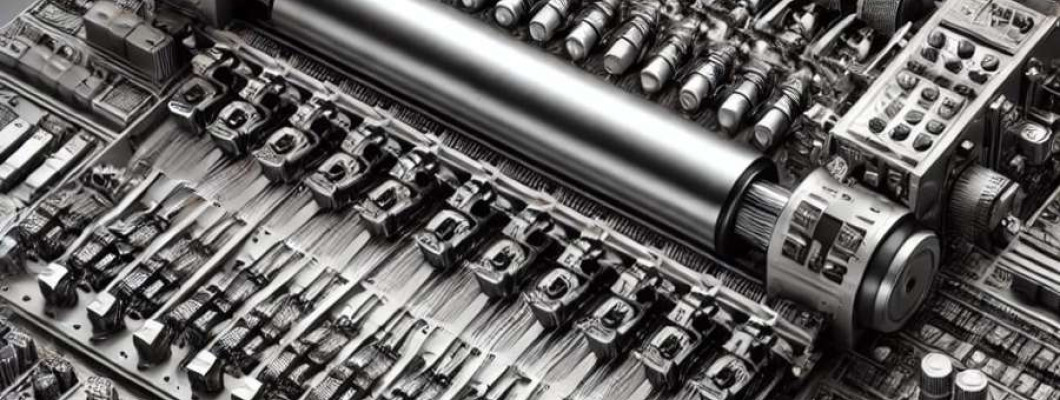
The Industrial Reality of A4 Roll DTF Printing in Scalable Operations
Direct to film (DTF) printing technology is steadily transitioning from experimental and small-scale DIY workshops to viable industrial production. However, the challenge remains in bridging the gap between low-cost, hobbyist equipment and enterprise-grade, reliable printing assets capable of sustained throughput and automation. The A4 Roll DTF Printer emerges as a critical node in this spectrum—designed to balance cost, scalability, and technical performance. At the heart of this transition lies operational continuity: scalable businesses demand printers that not only produce high-fidelity prints on diverse substrates but maintain uptime, reduce manual interventions, and integrate seamlessly into print-to-fulfillment workflows.
Consider a scenario where a mid-sized apparel manufacturer seeks to replace screen printing with a DTF solution. The operational bottlenecks common to DIY or semi-industrial printers—head clogging, inconsistent ink deposition, film feeding misalignments, and slow cure times—become points of failure that can cascade into costly downtime and diminished product quality. The A4 Roll DTF Printer addresses these technical stressors through dedicated thermal management, precision stepper motors, and industrial-grade ink delivery systems optimized for pigment stability under continuous operation. Operational uptime here directly correlates with hardware robustness and control system predictability, proving the necessity of this printer's design choices in large-scale deployment.
Technical Deep-Dive Into A4 Roll DTF Printer Performance
Printhead Technology and Ink Particle Dynamics
The A4 Roll DTF Printer employs piezoelectric printheads capable of 1200 dpi resolution. The piezo technology allows controlled droplet formation with volumes ranging between 8-12 pl (picoliters), which optimizes color density and edge sharpness. Ink particle size remains submicron to prevent printhead nozzle clogging, a vital parameter when operating across extended print runs. As an example, particles averaging 0.5 µm balance pigment dispersion and fluidity, reducing the frequency of maintenance cycles.
Film Roll Handling and Feeding Precision
With a maximum roll width of 210 mm (A4 standard), the feeding mechanism relies on dual synchronized stepper motors coupled with optical encoders delivering positional accuracy within 0.05 mm per feeding step. This precision circumvents misregistration errors common in DIY units lacking closed-loop feedback. The tension control system maintains consistent film pull force at approximately 1.2 N, preventing web slack and wrinkles during high-speed printing (up to 1.2 m/min).
Thermal Curing and Ink Fixation
Ink curing technology integrated into this platform uses a controlled IR heater array, delivering 140°C surface temperature uniformly across a 300 mm curing zone. The uniformity of ±3°C ensures consistent polymerization of TPU adhesives within DTF inks without substrate scorching, a frequent concern for heat-sensitive fabrics. Thermal energy calculations show that curing efficiency scales with heater wattage output of 600 W, balancing process speed and energy consumption.
Maintenance and Lifecycle Cost Analysis
Compared to DIY counterparts, the A4 Roll DTF Printer incorporates automated nozzle cleaning cycles every 15 print passes, reducing manual intervention by 65%. Consumables such as filters and waste ink pads are modular and designed for quick replacement within a 30-minute service window, minimizing downtime. Depreciation models based on a five-year straight-line method yield an annual asset cost of approximately $3,600, with consumable expenses averaging $0.03 per linear meter printed, supporting predictable budgeting for scalable enterprises.
Infrastructure Integration and Automation Potential
The printer's USB and Ethernet interfaces support command protocols compatible with popular print management software, allowing seamless integration with supply chain systems. The compact footprint (750 mm length x 350 mm width x 400 mm height) and power consumption (consistently below 180 Watts during operation) make it viable for factory floors with constrained space and energy budgets. This positions it well within automated production cells incorporating robotic film handling and post-print curing stations.
| Spec Category | DIY DTF Systems | A4 Roll DTF Printer |
|---|---|---|
| Printhead Resolution | 600-900 dpi | Up to 1200 dpi |
| Ink Particle Size | Variable, often >1 µm | Submicron ~0.5 µm |
| Feeding Accuracy | ±0.2 mm | ±0.05 mm |
| Maintenance Cycles | Manual, frequent | Automated every 15 print passes |
| Power Consumption | Up to 300 W peak | Below 180 W continuous |
| Integration Capability | Limited | Full Ethernet & USB compatibility |
Scenario Analysis on Spec Impact for Scalable Businesses
Use Case 1: High-Volume Custom Apparel Production
The A4 Roll DTF Printer’s automated maintenance and precise feeding system enable continuous printing for custom apparel brands producing small batches rapidly without quality loss. The 1200 dpi resolution ensures vibrant logos and fine text reproduction, minimizing rejects and reprints that erode profit margins.
Use Case 2: On-Demand Promotional Merchandise
For companies needing fast turnaround on varied garment types, the printer’s compact size and energy-efficient curing allow flexible deployment in distributed print hubs. Automation reduces labor costs, critical when volume fluctuates unpredictably.
Use Case 3: Textile Sampling and Prototyping Labs
The centimeter-level positional accuracy and stable pigment delivery create reliable color matches needed for prototype validation before mass production. Reduced maintenance downtime accelerates iterative design cycles, enhancing R&D throughput.
Expert FAQ on Operational and Technical Nuances
Q1: How does particle size influence printhead longevity in continuous runs?
A: Submicron particles minimize nozzle clogging and abrasion, extending printhead life by approximately 30% compared to larger pigment suspensions.
Q2: What is the energy impact of IR curing versus UV curing in DTF workflows?
A: IR curing offers more energy-efficient heat transfer for TPU inks, reducing total process energy by up to 40% compared to UV systems which require additional cooling infrastructure.
Q3: Can the printer’s firmware support advanced color calibration profiles?
A: Yes, it is compatible with ICC profiling software allowing precise color matching crucial for brand color accuracy.
Q4: How do feeding accuracy metrics translate into print quality consistency?
A: Reduced positional deviation (<0.05 mm) ensures layer alignment critical for multi-pass printing, avoiding ghosting and color bleeding.
Q5: What are the implications of acoustic noise levels for factory floor environments?
A: The printer operates below 55 dBA, fitting well within occupational noise standards and enabling proximity to human operators without added hearing protection.
Strategic Verdict and Recommendation
The A4 Roll DTF Printer effectively closes the technical and operational gap between entry-level DIY equipment and industrial-grade printing machinery tailored for scalable businesses. Its optimized printhead technology, precision film handling, energy-conscious curing, and proactive maintenance design support uninterrupted throughput and consistent quality. Integration capabilities address infrastructure challenges faced by growing enterprises, while its compact footprint aligns with contemporary factory workspace limitations.
For companies seeking to expand DTF printing capabilities without sacrificing reliability or escalating operational complexity, this printer presents a technically sound, cost-predictable solution. Considering all parameters, it stands as a definitive industrial-grade platform tailored to scalable business environments. The printer can be explored in further detail at the official product page here: A4 Roll DTF Printer.