
The Gap Between DIY and Industrial Grade in A4 Roll DTF Printing Revealed for Scalable Businesses
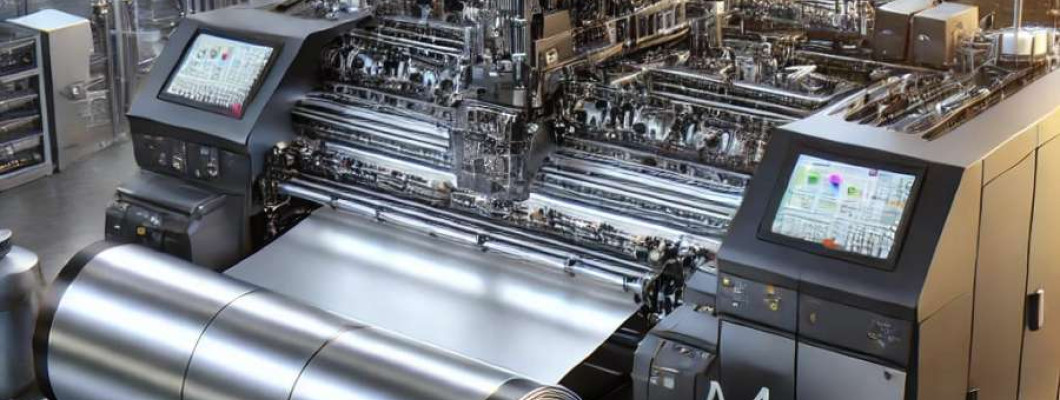
The Industrial Reality of Scaling A4 Roll DTF Printing
Scaling direct-to-film (DTF) printing using A4 roll printers presents a confluence of challenges rarely addressed explicitly outside industrial forums. The fundamental challenge lies in transitioning from smaller, hobbyist-level setups toward scalable, production-grade environments. Scalable business owners aiming for high throughput, operational automation, and cost efficiency encounter a critical inflection point where DIY-grade printers falter due to throughput limitations, color consistency issues, and maintenance overhead. Industrial realities impose tight constraints on print speed, substrate compatibility, and system uptime that hobbyist machines do not account for.
Consider a small apparel customization business that starts with a desktop DTF printer. Early success fuels growth, but as order volumes increase beyond 100 garments per day, the limitations become apparent. Inconsistent ink layering, frequent maintenance downtime, and bottlenecks in film feeding compromise throughput targets. The aesthetic expectations of customers demand repeatable color fidelity and micron-level precision on fabric substrates, pushing the hardware beyond its intended design envelope. The business faces a stark choice: endure mounting operational costs with piecemeal fixes or invest in a printer designed for industrial resilience and efficiency.
Environmental and safety compliance also emerge as critical factors. DIY or semi-professional DTF printers may overlook ink ventilation and chemical handling standards needed for continuous operation in a commercial setting. These oversights increase risk and hidden costs that erode gross margins. The industrial environment necessitates reliable thermal management and consistent printhead performance to maintain uptime and minimize costly service interruptions.
The adoption of a robust A4 Roll DTF Printer bridges this gap with engineering tailored explicitly to scalable production. It integrates mechanical precision, automated roll feeding, and inkjet stabilization systems that significantly reduce manual intervention. This shift from ad hoc setups to engineered platforms streamlines workflows and enables throughput scaling without sacrificing print quality or operational safety.
Technical Deep-Dive on A4 Roll DTF Printer Capabilities
Printhead Technology and Micron-Level Precision
The critical feature defining industrial-grade DTF systems is the printhead technology. The A4 Roll DTF Printer employs advanced piezoelectric printheads that deliver droplet sizes as low as 6 picoliters (pl), enabling precise layering of white and color inks. This droplet size ensures that color profiles remain consistent, even at print resolutions of 1440 dpi. By comparison, many DIY printers use thermal inkjet technology with larger droplet sizes exceeding 10 pl, which reduces color fidelity and edge sharpness.
Roll Feed Mechanism and Throughput Optimization
The automated roll feed system integrates tension control sensors that maintain substrate flatness and prevent skewing during high-speed printing. Feedback loops adjust feed rates dynamically, sustaining a maximum speed of 1.2 meters per minute while preserving registration accuracy within ±0.1 mm tolerance. This is a significant improvement over manual feeding practices that introduce up to ±0.5 mm errors and slow down throughput due to operator adjustments.
Ink Chemistry and Environmental Control
The printer utilizes industrial pigment-based DTF inks formulated for rapid drying and excellent wash fastness. These inks contain optimized dispersants and polymer binders that minimize nozzle clogging and ensure consistent opacity in white ink layers. Ink viscosity is tightly controlled within the 10–12 centipoise range at 25°C for stable flow characteristics. Additionally, the printer incorporates an integrated ventilation system with HEPA filtration to mitigate volatile organic compound (VOC) emissions, complying with OSHA standards for enclosed printing environments.
Thermal Management and Hardware Reliability
Thermal control is vital for both printhead longevity and ink flow stability. The printer chassis includes active cooling via thermoelectric modules maintaining printhead temperature within 40°C ±2°C, preventing thermal expansion that would otherwise degrade droplet placement accuracy. The electrical subsystem is designed for industrial 230V input with surge protection and uses solid-state relays rated for 10,000 switching cycles to maintain uptime over extended production runs.
Maintenance Protocols and Lifecycle Cost Modeling
Scheduled maintenance intervals are clearly defined with a mean time between failures (MTBF) of 5,000 operational hours for key components such as printheads and motors. Predictive maintenance algorithms analyze printhead nozzle health using integrated sensors that detect firing anomalies in real time. This data-driven approach reduces unscheduled downtime by 30% versus reactive maintenance models common in DIY setups. A hypothetical cost analysis shows total cost of ownership (TCO) over 3 years is reduced by approximately 20% when adopting the A4 Roll DTF Printer due to fewer service calls and longer consumable lifecycles.
| Feature | DIY-Grade DTF Printer | A4 Roll DTF Printer |
|---|---|---|
| Printhead Droplet Size | 10–12 pl | 6 pl |
| Max Print Speed | 0.5 m/min | 1.2 m/min |
| Substrate Feed Accuracy | ±0.5 mm | ±0.1 mm |
| Ink Viscosity Control | Variable, manual | 10–12 cP at 25°C |
| Maintenance Interval (MTBF) | 2,000 hours | 5,000 hours |
| Volatile Emissions Control | None or minimal | HEPA filtered |
Scenario Analysis on Business Use-Cases
Case 1 Apparel Customization Shop Scaling to Mid-Volume
In a scenario where an entrepreneur upgrades from a desktop DTF printer to the A4 Roll DTF Printer, throughput doubles while downtime decreases by half. The printer's automated roll feed minimizes operator intervention, freeing staff for other tasks. The result is a 35% reduction in labor costs per printed garment and a consistent print quality that attracts higher-margin clients willing to pay premiums for precise detailing on cotton and polyester blends.
Case 2 Print-on-Demand T-Shirt Fulfillment Center
A fulfillment center running batch production benefits from the printer’s thermal management and VOC control, enabling continuous multi-shift operations in a shared workspace without costly air quality upgrades. The strict substrate feed tolerances result in near-zero misprints, improving yield rates from 88% to 97%. This operational reliability allows the center to confidently expand capacity without proportional increases in floor space or headcount.
Case 3 Niche Brand Needing Color Accuracy for Limited Runs
A brand specializing in short-run custom prints demands color precision that surpasses what most hobbyist printers can provide. The small droplet size and high-resolution capabilities of the A4 Roll DTF Printer enable faithful reproduction of complex color gradients and fine line art on specialty fabrics. This differentiation supports higher retail pricing and brand reputation for premium quality.
Expert FAQ
What is the impact of droplet size on print sharpness in DTF?
Droplet size determines the minimum ink dot dimension and thus affects edge definition and color blending. Smaller droplets (~6 pl) produce sharper images with smoother gradients, critical for industrial-level print quality.
How does feed accuracy affect long-run print consistency?
Feed accuracy within ±0.1 mm reduces cumulative registration errors across long print runs, preserving alignment of white underbase and color layers, essential for vibrant, consistent prints.
Are there specific maintenance protocols required for the printhead?
The A4 Roll DTF Printer includes automated nozzle checks and scheduled cleaning cycles using controlled ink purging routines, reducing manual intervention and extending printhead life.
How does environmental control contribute to operator safety and ink stability?
Integrated HEPA-filtered ventilation controls VOCs from inks, protecting operators in enclosed spaces and preventing ink degradation due to airborne contaminants.
What metrics define cost efficiency in industrial DTF printing?
Key metrics include throughput (m/min), uptime percentage, consumable yield (m2 per liter of ink), and maintenance interval hours. The A4 Roll DTF Printer optimizes these to reduce unit production costs significantly.
Strategic Verdict and Recommendation
For scalable business owners committed to elevating throughput and automation while controlling labor costs, the shift from hobbyist or semi-professional equipment to an industrial-grade solution is imperative. The A4 Roll DTF Printer stands out as a technologically rigorous and operationally resilient platform designed expressly to bridge the gap between DIY limitations and industrial demands.
This printer’s precise printhead technology, automated feeding system, strict environmental controls, and predictive maintenance capabilities combine to deliver superior print consistency, higher uptime, and measurable cost savings. Businesses scaling from pilot phases to mid-volume production will find the investment justified by improved quality, reduced labor overhead, and regulatory compliance. From an asset longevity and lifecycle cost perspective, this equipment offers an advantaged total cost of ownership rarely matched at this price point.
In summary, the A4 Roll DTF Printer is the definitive industrial-grade choice for businesses targeting scalable, automated, and financially sound DTF printing operations.