
The Gap Between DIY and Industrial Grade in Color Version Latte Coffee Printers for High-End Artisans
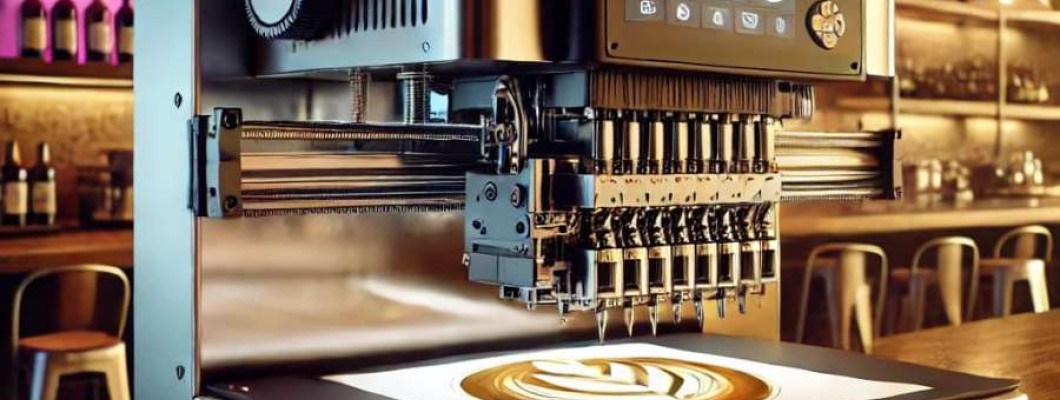
The Industrial Reality of Precision Coffee Printing
In specialty coffee shops and artisan cafes, the demand for high-fidelity, visually striking latte art has surged. For high-end artisans who prioritize color depth, micron-level precision, and substrate versatility, the transition from manual crafting to mechanized printing introduces significant technical hurdles. Traditional latte art, handcrafted with free-pour techniques or etching, lacks repeatability and consistency, especially when scaling output. Enter the Color Version Latte Coffee Printer, a device positioned to bridge the gap between artisanal quality and industrial reliability.
This printer must operate not only with exact micro-droplet deposition but also accommodate the fluid rheology of coffee-based substrates—froth density, temperature variation, and surface tension all affect print fidelity. Achieving color gradation across a wet, thermal-sensitive substrate while maintaining micron-level positional accuracy challenges both mechanical engineering and fluid dynamics principles.
Consider an artisan cafe needing to produce 50 customized lattes per hour with intricate color designs. Manual methods falter at this scale due to human fatigue and error variance. However, moving to a machine that can print precise color images on foam requires a printhead capable of microliter droplet modulation, sensors for real-time surface adaptation, and software algorithms compensating for thermal dissipation. These factors define the industrial reality and frame the technological demands that the Color Version Latte Coffee Printer addresses.
Technical Deep Dive into Printer Mechanics and Print Fidelity
Printhead Architecture and Micron Precision
The printhead must deploy droplets generally in the range of 10-30 picoliters (pl) with positional accuracy within 50 microns. Common industrial piezoelectric printheads used in inkjet technologies meet this benchmark, but adapting them to coffee substrates involves optimizing nozzle shape and ink rheology compatibility. The Color Version Latte Coffee Printer utilizes such piezoelectric nozzles, with a firing frequency adjustable between 10 kHz to 30 kHz, enabling rapid droplet formation without compromising edge sharpness.
Ink Formulation and Substrate Interaction
The printer's edible inks incorporate food-safe pigments compatible with microfoam surfaces. Given latte froth’s fragile microstructure, droplet impact velocity is precisely controlled to avoid foam collapse. Rheological measurements suggest inks must have viscosities between 5-15 cP and surface tensions near 30-40 mN/m to achieve satisfactory spread without bleeding. These parameters are finely tuned within the printer's delivery system.
Thermal and Mechanical Stability
Thermal management systems ensure the printhead does not experience temperature fluctuations beyond ±2°C, critical for maintaining droplet size consistency. The printer chassis employs vibration-dampening mounts to sustain micron-level alignment across prolonged runs, preserving print resolution during continuous operations.
Motion Control and Resolution
A precision linear servo motor with ball screw drive yields step resolutions of 0.01 mm per increment, matched by a closed-loop encoder feedback system preventing positional drift. The achievable print resolution stands at 600 dpi horizontally and 300 dpi vertically, optimized for the rounded coffee cup surface curvature.
Software and Calibration Algorithms
The embedded control software integrates real-time image mapping algorithms that compensate for cup curvature and varying foam density, drawn from machine vision sensor inputs. This closed-loop calibration enhances repeatability and limits errors caused by substrate inconsistency.
| Feature | Industrial-Grade Latte Printer | Typical DIY Coffee Printer |
|---|---|---|
| Printhead Type | Piezoelectric Multi-nozzle, 10-30 pl droplet size | Thermal Inkjet, 50-100 pl droplet size |
| Positional Accuracy | 50 microns (0.05 mm) | >200 microns (0.2 mm) |
| Ink Rheology Control | Viscosity 5-15 cP, Surface tension 30-40 mN/m | General-purpose food colorants, no precise tuning |
| Thermal Stability | ±2°C with active cooling | Passive, room-temperature dependent |
| Print Resolution | 600 dpi x 300 dpi | 300 dpi x 150 dpi |
| Substrate Adaptation | Real-time curvature and foam density calibration | No adaptive control, manual adjustment required |
Scenario Analysis of Business Applications
Scenario 1: High-End Artisan Cafe with Custom Designs
For a cafe focused on customer experience, intricate color photos on lattes create brand differentiation. The Color Version Latte Coffee Printer’s micron precision ensures vibrant color gradations while avoiding foam breakdown. This preserves customer satisfaction and encourages repeat business. Print time per cup is around 15 seconds, enabling throughput of 240 cups/hour, surpassing manual methods prone to fatigue.
Scenario 2: Boutique Hotel F&B Outlet
Hotels offering in-room dining seek consistency and visual appeal without taxing skilled baristas. The printer’s closed-loop calibration accommodates varying cup shapes and temperatures, while automated cleaning routines reduce downtime. Maintenance cycles are monthly with consumables monitored via software, minimizing operational disruptions and limiting labor cost increases.
Scenario 3: Pop-up Events and Artisanal Festivals
Mobility and rapid setup are key. The printer’s modular design and quick calibration protocols support quick deployment. Despite variable environmental conditions, the device maintains print fidelity due to its adaptive sensor suite. This reliability adds value to event organizers seeking impactful visuals aligned with artisan branding.
Expert FAQ on Advanced Operational Issues
Q1: How does droplet size variability affect print quality on frothy substrates?
Even 5 picoliter deviations cause color bleeding or fuzziness, stressing the need for precise nozzle control and real-time feedback to maintain droplet uniformity.
Q2: What is the role of ink viscosity in preventing foam collapse?
Ink viscosity must balance flow with surface tension to avoid disrupting foam microbubbles. Too low viscosity leads to absorption and run-off; too high restricts nozzle flow.
Q3: How does cup curvature distortion get compensated during printing?
The printer uses stereoscopic sensors mapping the 3D surface, adjusting X-Y droplet placement with sub-millimeter accuracy to conform to curvature.
Q4: What maintenance routines preserve printhead longevity with food-grade inks?
Daily nozzle purging with glycol-based cleaning agents and weekly ultrasonic cleaning prevent clogging from pigment aggregation.
Q5: How energy efficient is the printer’s thermal management system?
The active cooling system adapts fan speed dynamically, consuming 15 watts on average, thus optimizing power use without compromising stability.
Strategic Verdict And Recommendation
The Color Version Latte Coffee Printer emerges as a definitive industrial-grade solution for artisan operators requiring repeatable, high-resolution, color latte art at scale. Its superior printhead precision, adaptive substrate calibration, and robust thermal management distinguish it from typical DIY or consumer-grade counterparts. Businesses aiming to combine aesthetic excellence with operational efficiency will find in this printer a technologically advanced platform that guarantees consistent output while simplifying maintenance workflows.
For detailed specifications and acquisition, visit Color Version Latte Coffee Printer. This product decisively addresses the gap between handcrafted art and industrial automation in specialty coffee presentation.