
The Gap Between DIY and Industrial Grade in Color Version Latte Coffee Printing
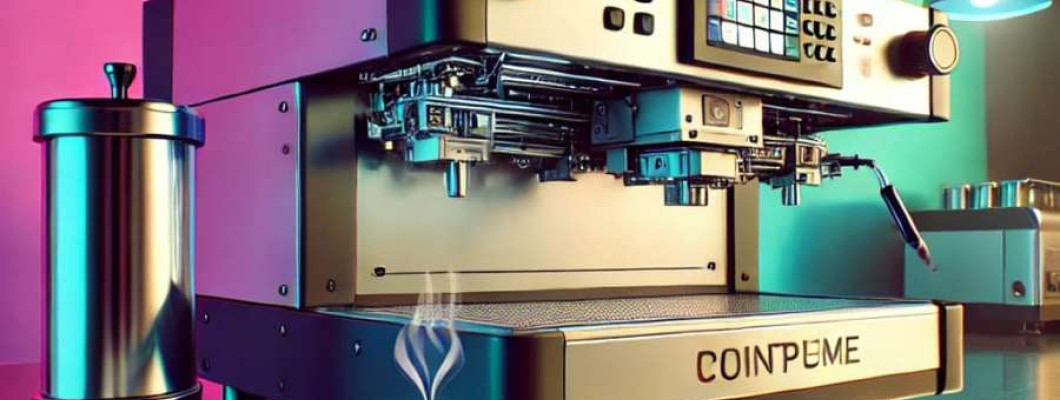
The Industrial Reality of Integrating Precision Printing into Coffee Service
Integrating a digital printing process into an established coffee service environment introduces a complex array of technical and operational challenges. Within this context, a Color Version Latte Coffee Printer must operate reliably under high repeatability constraints while maintaining micron-level accuracy in print deposition on a fluid substrate—foam—whose surface properties vary widely between batches. Unlike typical flat media printing, coffee foam presents a dynamic, non-rigid printing surface that requires sophisticated calibration and sensor-driven feedback loops to achieve consistent, industrial-grade output.
Consider a high-volume café aiming for throughput of 200 printed lattes per hour. The printer's mechanical system must maintain a printhead alignment tolerance within ±0.02 mm to prevent blurring of fine image details, while ink droplet volumes must be controlled within 5 to 10 picoliters (pl) to balance color vibrancy and foam integrity. Operational bottlenecks include foam drying time variability, ambient temperature fluctuations affecting ink viscosity, and frequent machine recalibration needs—each impacting uptime and asset depreciation.
From a maintenance perspective, the printheads and ink delivery systems face accelerated wear compared to standard industrial printers due to the organic and aqueous nature of coffee foam. This imposes a need for maintenance cycles measured in hundreds rather than thousands of print passes, affecting lifecycle costs. Furthermore, integration into existing café infrastructure demands compact footprint designs, minimal power draw below 500 Watts, and compliance with food safety regulations. Platforms that blur the line between DIY hobbyist devices and robust industrial machines require thorough vetting to ensure they meet these rigorous requirements.
Technical Deep-Dive Into Printhead Performance and Foam Interaction
Printhead Architecture and Ink Droplet Control
The Color Version Latte Coffee Printer utilizes a piezoelectric printhead array capable of droplet ejection at volumes ranging from 5 to 10 pl with firing frequencies up to 20 kHz. Maintaining droplet uniformity is crucial; deviations greater than ±1 pl can cause image inconsistency. The printhead alignment is governed by closed-loop optical encoders achieving sub-10-micron positioning accuracy. This precision is vital to compensate for foam surface irregularities typically up to 0.2 mm in height variance per millimeter squared.
Foam Surface Dynamics and Substrate Challenges
Coffee foam is a porous, dynamic substrate with transient surface tension properties influenced by temperature (55°C ±5°C) and humidity. The foam’s effective viscosity can range between 30 and 60 mPa·s, significantly impacting ink adhesion. The printer incorporates adaptive droplet timing algorithms that adjust ejection velocity in real time to avoid droplet merging or dispersion beyond target pixels. Hypothetical calculations indicate that a 4-millisecond delay in droplet firing can shift pixel placement by up to 15 microns, which directly impacts image sharpness.
Ink Chemistry and Color Accuracy
Color pigments must be food-safe, non-toxic, and engineered to resist diffusion into the foam matrix. This limits pigment particle size to below 200 nm to prevent clogging while ensuring stable color gamut coverage akin to sRGB standards with measured ΔE values below 2.0 for critical customer color fidelity. Ink formulations are water-based with low surfactant concentrations to avoid foam breakdown, balancing surface tension around 28 mN/m.
Thermal and Mechanical Integration
The printer operates within a thermal range of 20°C to 30°C to stabilize ink viscosity and foam consistency. Active cooling systems utilize thermoelectric modules with a capacity of 50 Watts to maintain printhead temperature at 32°C ±1°C. The device weighs approximately 15 kg with a footprint of 350 mm x 250 mm x 450 mm, facilitating integration on standard café counters without requiring additional structural support.
Comparative Table Between DIY Printing Solutions and Industrial-Grade Coffee Printers
| Feature | DIY Coffee Printers | Color Version Latte Coffee Printer |
|---|---|---|
| Printhead Precision | ±0.1 mm | ±0.02 mm |
| Ink Droplet Volume Range (pl) | 10-20 | 5-10 |
| Throughput (Cups per Hour) | Up to 50 | Up to 200 |
| Maintenance Interval (Print Cycles) | ~200 | ~1000 |
| Color Accuracy (ΔE) | >5 | <2 |
| Food Safety Compliance | Variable | Certified |
| Environmental Control | None | Active Thermal Regulation |
Scenario Analysis on Business Impact from Technical Specs
High-Volume Cafe Chain Scaling Throughput
For chains operating multiple outlets, throughput per printer is critical. The ability to produce 200 cups per hour with automated calibration reduces labor costs and machine downtime. Precise printhead control minimizes product waste caused by misprints and foam damage, impacting directly on operational margins. The compact footprint and low power consumption facilitate deployment across multiple sites without costly infrastructure modifications.
Specialty Coffee Shops Demanding Color Accuracy and Visual Consistency
Artisan cafes focusing on customer experience require high-fidelity color replication with ΔE under 2.0 to maintain brand aesthetics, especially when printing logos or complex images. The printer's advanced ink chemistry and adaptive firing algorithms ensure sharp, consistent prints on variable foam substrates, differentiating the offering from competitors relying on lower precision devices or manual latte art.
Food Service Providers with Regulatory and Maintenance Constraints
Food safety certification and simplified maintenance protocols are paramount for enterprises complying with stringent regulations. The printer's certified ink formulations and extended maintenance cycles allow for predictable asset depreciation and reduced downtime. Real-time monitoring systems ensure operational parameters remain within compliance thresholds, mitigating risk in high-volume hospitality environments.
Expert FAQ on Industrial Coffee Printing Technology
What is the typical lifespan of a piezoelectric printhead in a coffee printing environment?
Under standard industrial operating conditions with periodic maintenance, piezoelectric printheads last approximately 1000 print cycles before requiring replacement. Organic foam substrates accelerate wear compared to rigid media, necessitating more frequent servicing than in conventional printing applications.
How does ambient temperature variation affect print consistency?
Temperature fluctuations alter ink viscosity and foam stability, affecting droplet formation and adhesion. Maintaining ambient and printhead temperatures within ±2°C is critical. The printer’s thermoelectric modules actively stabilize temperature to uphold droplet uniformity and image sharpness.
Are food safety certifications mandatory for all inks used in latte printing?
Yes, regulatory bodies require inks to be non-toxic and certified for food contact. The Color Version Latte Coffee Printer uses inks formulated to meet FDA and EU food safety standards, ensuring compliance across multiple jurisdictions.
Can the printer handle custom color profiles for brand-specific requirements?
It supports ICC color profiles with a color gamut comparable to sRGB. This capacity enables precise reproduction of brand colors within ΔE <2.0, crucial for corporate identity consistency.
What are common failure points affecting uptime in daily operations?
Key failure points include printhead clogging due to pigment sedimentation, sensor drift affecting alignment, and ink drying within nozzles. Regular automated cleaning cycles and sensor recalibration protocols mitigate these issues, typically extending operational uptime to 8-10 hours per day.
Strategic Verdict and Recommendation
Bridging the gap between consumer-level DIY coffee printing devices and industrial-grade printers, the Color Version Latte Coffee Printer emerges as a robust, enterprise-suited solution. Its rigorous precision engineering, adaptive ink control, certified ink chemistry, and operational reliability resolve critical technical bottlenecks endemic to foam-based printing. This advanced design supports high throughput and consistent quality with manageable maintenance cycles and adherence to food safety standards.
For businesses seeking to scale artistic, color-accurate coffee printing while minimizing operational risk and downtime, investing in the Color Version Latte Coffee Printer represents a strategically sound choice. It integrates well within existing café infrastructure and aligns with lifecycle cost expectations of industrial equipment. This printer sets a new benchmark for industrial coffee printing technology and is recommended without reservation.