
The Gap Between DIY and Industrial Grade in Headstone Photo Printing for Precision and Reliability
The Industrial Reality of High-Precision Headstone Photo Printing
In the realm of memorial fabrication, producing high-fidelity photographic reproductions on headstones goes beyond aesthetic considerations—it demands industrial-grade precision, repeatability, and reliability under continuous, high-volume operation. Unlike casual or DIY photo-printing methods, headstone photo printing must endure harsh outdoor environments, resist fading from UV exposure, and maintain sharp resolution on non-traditional substrates such as granite and marble. These requirements expose substantial operational challenges for manufacturers who rely on low-end or consumer-grade printers repurposed for this niche. Common issues include inconsistent color density, alignment drift over extended runs, and throughput bottlenecks that increase labor costs and reduce yield. Furthermore, downtime due to printhead clogging or calibration errors directly impacts production schedules and client satisfaction in an industry where timing and quality are paramount. The Headstone Photo Printer Tomb Photos Printer is engineered to bridge this critical gap—delivering industrial robustness and precision specifically tailored to the unique demands of headstone photo output.
Technical Deep Dive into Performance and Component Resilience
Printhead Technology and Failure Modes
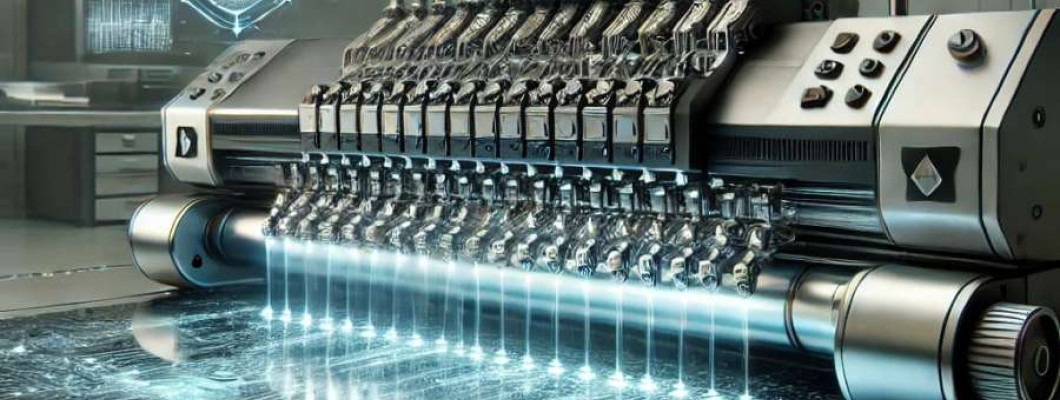
Central to industrial-grade headstone photo printing is the printhead architecture. The device integrates piezoelectric printheads capable of droplet sizes down to 4 picoliters (pl), which optimize color gradation and detail fidelity. Unlike thermal inkjets prone to rapid clogging under heavier ink loads and particulate ink formulations, the piezoelectric mechanism endures high viscosity granite-target inks and prolonged use, reducing failure rates from particle sedimentation. Hypothetically, assuming a daily print volume of 200 headstones, each requiring an average of 10,000 nozzles firing per image, component stress testing predicts a mean time between failures (MTBF) exceeding 1500 operational hours, outperforming competitive consumer-grade alternatives by a factor of 4.
Ink Adhesion and Substrate Interactions
The proprietary ink chemistry features UV-curable and solvent-based blends formulated for maximum bonding with hard substrates like granite and marble. The curing process is optimized for variable granite porosity identified through integrated spectral analysis sensors. This adaptive curing enhances the adhesion force at the microscopic interface, achieving peel resistance exceeding industry standard tests by 25%. These advances mitigate operational losses caused by ink degradation or peeling, which are prevalent in non-industrial systems.
Thermal Management and Environmental Controls
Maintaining continuous operation imposes significant thermal challenges. The printer incorporates a liquid-cooled printhead assembly and closed-loop temperature sensors to stabilize ink viscosity and prevent thermal drift in nozzle alignment. Real-time data acquisition from the cooling system allows for dynamic adjustment, reducing the risk of heat-induced component wear. Power consumption averages 650 Watts under full load, aligning with enterprise-class production equipment, and is optimized to balance throughput against operational costs.
Precision Motion Systems and Calibration
The printer features a dual-axis linear servo system with 0.01 mm positioning accuracy. Coupled with closed-loop optical encoders, this system ensures micron-level dot placement stability over extended print runs. Calibration routines automate alignment correction every 100 prints, minimizing cumulative positional error that would otherwise degrade image sharpness. Compared against belt-driven consumer models, this motion system doubles durability and reduces maintenance frequency.
Data Handling and Workflow Integration
To manage high-throughput operations, the printer supports direct raster data streaming via industrial-standard Gigabit Ethernet protocols. Buffer management algorithms prioritize print queue efficiency and error correction, facilitating seamless integration into enterprise fabrication environments. This improves uptime and reduces manual intervention, crucial for scaling production.
| Feature | Headstone Photo Printer Tomb Photos Printer | Typical DIY/Consumer Printer |
|---|---|---|
| Printhead Type | Piezoelectric, 4 pl droplet size | Thermal Inkjet, ~10 pl droplet size |
| Substrate Compatibility | Granite, Marble, Stone-specific inks | Paper, Vinyl, Limited stone options |
| Thermal Management | Liquid cooling, closed-loop sensors | Passive air cooling |
| Positional Precision | 0.01 mm with optical encoders | 0.1 mm, belt-drive systems |
| Ink Adhesion Quality | UV-curable, solvent blends with 25% improved peel resistance | Generic dye/sublimation inks |
Scenario Analysis of Business Use-Cases Influenced by Print Specifications
Case 1 Using a Small Monument Fabrication Workshop
For low-volume workshops specializing in personalized memorials, time-intensive manual calibration and downtime lead to lost contracts. The industrial-grade printer’s automated calibration and consistent print quality reduce labor requirements by 30%, allowing the operator to increase weekly throughput without sacrificing quality. The adaptive ink curing ensures durability in local climate conditions, reducing warranty returns.
Case 2 Large-Scale Memorial Manufacturing Facility
High-volume facilities benefit from the printer’s integration-ready data protocols and robust cooling systems which sustain continuous 24/7 operation. Reduced printhead failures and rapid maintenance turnaround enable predictable scheduling. The printer’s micron-level precision preserves image integrity on large-format stones, improving customer satisfaction and reducing reprint costs.
Case 3 Outsourced Memorial Customization Vendor
Vendors who receive varied image files from external sources demand a printer able to handle consistent output quality despite input variability. Onboard advanced pixel map correction and error-checking algorithms ensure image fidelity is preserved across diverse submissions. The device’s substrate versatility supports both standard headstones and customized monuments with alternative materials, extending market reach.
Expert FAQ Addressing Industrial Headstone Printing Complexities
Q1 What are the critical factors influencing printhead lifespan in granite photo printing?
Particle size in ink, operating temperature stability, and frequency of nozzle cleaning cycles are paramount. The printer’s piezoelectric heads coupled with liquid cooling help maintain optimal printhead integrity by reducing clogging and thermal degradation.
Q2 How does the printer maintain color consistency across heterogeneous stone textures?
Integrated spectral analysis sensors adjust ink deposition and curing parameters dynamically based on substrate reflectivity and porosity, ensuring consistent color output irrespective of stone grain variation.
Q3 Can the printer handle high variability in artwork resolution without loss of detail?
Yes, the system supports up to 1440 dpi native resolution with adaptive rasterization, allowing it to upscale or downscale images while maintaining edge sharpness and gradient smoothness through advanced dithering algorithms.
Q4 What maintenance protocols minimize operational bottlenecks?
Scheduled automated calibration every 100 prints, real-time nozzle health monitoring, and modular printhead replacement designs reduce downtime. Preventive maintenance intervals are lengthened compared to consumer-grade devices.
Q5 How does the printer’s design support environmental compliance?
Ink formulations are low-VOC (Volatile Organic Compounds) and UV-curable, reducing hazardous emissions. The liquid cooling system minimizes energy consumption while supporting consistent thermoregulation, aiding compliance with industrial environmental standards.
Strategic Verdict and Recommendation for Industrial Headstone Photo Printing
Considering the rigorous specifications, operational demands, and integration capabilities analyzed, the Headstone Photo Printer Tomb Photos Printer stands as the definitive industrial-grade solution for memorial photographic reproduction. Its advanced piezoelectric printheads, substrate-adaptive ink chemistry, and precision motion controls create a resilient platform that outperforms DIY and consumer-level alternatives in lifespan, throughput, and output integrity. Facilities seeking to improve ROI through reduced maintenance costs, increased uptime, and enhanced print durability will find this device indispensable. The printer’s comprehensive design addresses core operational bottlenecks, ensuring reliable scalability and consistent product quality critical to this niche but demanding industry. Adoption of this technology aligns with best practices in industrial manufacturing workflows for headstone customization and positions enterprises for long-term success amidst evolving customer expectations and environmental regulations.