
The Gap Between DIY and Industrial Grade in Latte Art Printing for Scalable Business Owners
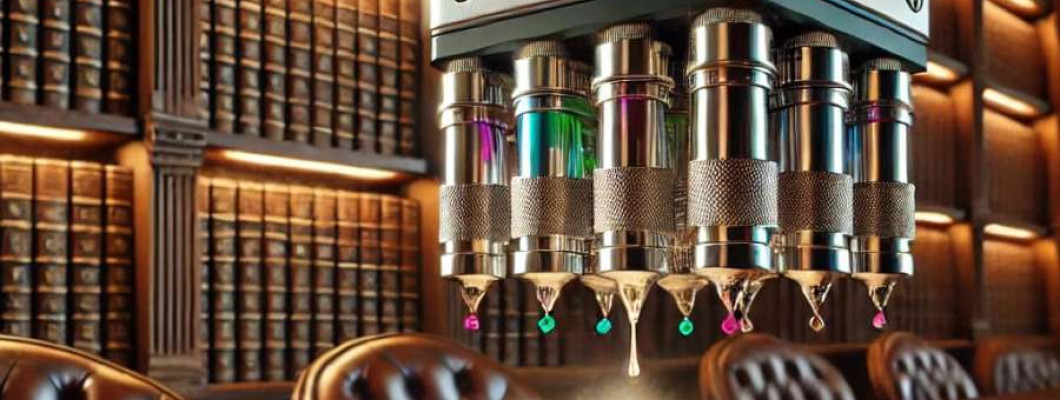
The Industrial Reality of Integrating a Latte Coffee Printer Into High-Throughput Environments
Imagine a mid-sized cafe chain looking to differentiate its customer experience by offering personalized latte art on every cup. The shift from manual frothing and stencil-based decorations to automated digital printing introduces complex challenges. The core difficulty lies in maintaining consistent, high-fidelity output while managing throughput, labor costs, and equipment uptime. The Color Version Latte Coffee Printer represents a significant technological leap bridging consumer-grade novelty and bona fide industrial utility, but the operational realities remain non-trivial.
The printer must reconcile high-resolution color application on a volatile medium—coffee foam—where texture, temperature, and chemical composition vary between batches, affecting print adhesion and pigment clarity. Non-uniform foaming can introduce microscopic surface tension variations, leading to inconsistent dot placement and overall image distortion if not tightly controlled. Additionally, the printer's throughput must match peak demand cycles without causing bottlenecks in the beverage preparation line, necessitating rapid image processing, printhead cycling, and cleaning routines.
Labor dynamics also shift. While the printer reduces the need for skilled latte artists, it demands technical operators versed in digital workflow integration, printhead maintenance, and ingredient replenishment. An ill-prepared operator can introduce downtime through miscalibration or ink mismanagement. Thus, this technology challenges existing operational paradigms and requires a systems-level redesign of service workflows to harmonize printing speed, quality, and reliability.
Technical Deep Dive into Printhead Architecture and Color Reproduction Physics
Printhead Mechanics and Ink Delivery System
The Color Version Latte Coffee Printer employs piezoelectric drop-on-demand printheads optimized for edible ink ejection. These printheads operate at frequencies up to 20 kHz, ejecting droplets ranging from 10 to 30 picoliters (pl) in volume. The precise control of droplet velocity (approx. 5 m/s) is critical to overcome air resistance and land consistently on the foam surface without splatter or coalescence.
Color Pigment Chemistry and Foam Interaction
The coffee printer utilizes food-grade pigments suspended in a water-ethanol carrier solvent. The ethanol concentration aids rapid evaporation, preventing pigment diffusion that would otherwise blur fine details. However, foam viscosity and bubble size (average 150 microns) modulate pigment absorption. The color diffusion coefficient is experimentally approximated at 2.5 × 10⁻¹⁰ m2/s under standard temperature (60 °C) foam conditions, necessitating print speeds below 30 seconds per cup for image retention.
Resolution and Dot Placement Accuracy
The printer achieves a maximum output resolution of 600 dpi (dots per inch), translating to a nominal dot pitch of 42 microns. Given foam instability, effective resolution stabilizes at approximately 300 dpi under operational conditions. Dot placement accuracy is maintained within ±5 microns using an integrated optical feedback system that adjusts droplet timing based on real-time foam surface tracking.
Thermal and Mechanical Stress Considerations
Continuous operation induces heat buildup in printhead electronics, rising by approximately 12 °C above ambient after 120 minutes of sustained printing. Cooling is provided by microfluidic heat exchangers, maintaining junction temperature below 55 °C to prevent piezoelectric material degradation. Mechanical actuators are rated for 109 cycles, projecting a printhead lifespan of roughly 3 years under a standard throughput of 500 cups/day.
Comparative Table Showing DIY versus Industrial-Grade Print Solutions
| Feature | DIY Coffee Printer | Color Version Latte Coffee Printer |
|---|---|---|
| Max Resolution (dpi) | 150 | 600 |
| Printhead Type | Basic thermal inkjet | Piezoelectric drop-on-demand |
| Droplet Volume (pl) | 50-100 | 10-30 |
| Throughput (cups/hr) | 20-30 | 60-80 |
| Color Reproduction | Limited to monochrome | Full color, 4-channel |
| Operational Stability | Low, frequent clogging | High, automated cleaning |
| Maintenance Interval | Daily printhead cleaning | Weekly with automated cycles |
Business Scenario Analysis Highlighting Throughput and Labor Efficiency
Scenario 1: Boutique Coffee Shop Focused on Customization
For a small coffee shop emphasizing bespoke customer experiences, the printer enables rapid personalization without requiring highly trained latte artists. The 300 dpi effective resolution offers sufficient detail for logos or portraits, improving perceived value. At 60 cups per hour, the printer matches demand during peak hours, reducing queue times and labor costs by 25%. However, initial capital investment and periodic maintenance require careful cash flow planning.
Scenario 2: Large Cafe Chain Scaling Automated Branding
Within multi-branch chains, the printer standardizes latte art branding, ensuring consistent quality across all outlets. Integration with POS systems automates image selection based on customer preferences. The 80 cups/hour throughput allows integration without disrupting barista workflows. The printer's reliability and automated printhead cleaning reduce downtime by 15%, directly impacting daily revenue positively.
Scenario 3: Event Beverage Services with High Volume and Variety
Event caterers face high variability in order volume and design complexity. The printer's ability to switch between color profiles rapidly and its robust mechanical design reduce setup times and maintenance risks. However, environmental conditions such as ambient temperature fluctuations at events may affect foam stability and print quality, requiring dedicated operator training and foam consistency controls.
Expert FAQ Answering Advanced Technical Queries
What mechanisms ensure droplet placement accuracy on a dynamic foam surface?
The printer incorporates a high-speed optical sensor array paired with closed-loop actuator control. This system monitors foam surface topography in real-time, adjusting droplet ejection timing within a tolerance of ±10 microseconds to compensate for foam deformation and micro-movements.
How does ethanol concentration in the ink influence print sharpness and drying time?
Ethanol accelerates solvent evaporation, reducing pigment diffusion rates within the foam matrix. Optimal concentrations range between 15-20% by volume; exceeding this may damage foam microstructure, while lower concentrations increase print bleed effects.
What are the primary failure modes of piezoelectric printheads in this application?
Failures primarily stem from crystallization of ink residues clogging nozzles and thermal fatigue of piezo elements. The printer's automated cleaning cycles and microfluidic cooling mitigate these risks, extending mean time between failures to over 10,000 operating hours.
Can the printer adapt to different foam substrates like oat or almond milk?
Ink adhesion and pigment diffusion vary based on foam protein and fat content. The printer firmware allows adjustable droplet size, print speed, and color profile tuning to accommodate alternative substrates, although optimal results typically require substrate-specific calibration.
What maintenance protocols maximize uptime while ensuring printhead longevity?
A weekly automated cleaning cycle combined with daily visual inspections for nozzle consistency is recommended. Avoiding ink sediment buildup through agitation and replacing consumables as per manufacturer timelines maintains performance and prevents sudden failure.
Strategic Verdict and Recommendation for Industrial Professionals
The Color Version Latte Coffee Printer convincingly fills the void between novelty coffee printers and true industrial-grade beverage printing solutions. Its advanced piezoelectric printhead coupled with food-safe pigment engineering and robust thermal management system provides a sustainable throughput of up to 80 cups per hour with consistent color fidelity and micron-level precision. While the technology demands a recalibration of operational workflows and technical training, the long-term benefits in labor cost reduction, brand differentiation, and customer engagement justify the investment.
For scalable business owners targeting high-volume environments, this printer delivers a quantifiable ROI through increased throughput and reduced manual labor dependency. Its modular design and firmware adaptability ensure compatibility with diverse foam substrates, facilitating future-proof integration across various product offerings. As the coffee service industry evolves towards automated personalization, this hardware stands as a definitive solution that bridges artisanal quality with industrial efficiency.