
The Gap Between DIY and Industrial Grade in Smart Mini Selfie Coffee Printing
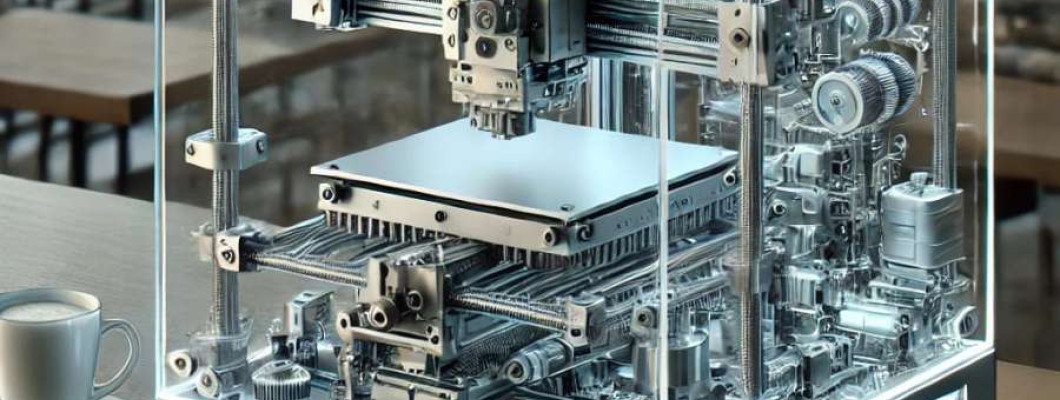
The Industrial Reality of Precision Coffee Printing
In boutique coffee shops and fast-paced retail environments, the introduction of personalized latte art through devices like the Smart Mini Selfie Coffee Printer presents a distinct technical challenge. Unlike traditional coffee printing mechanisms designed for bulk industrial output, these compact units must reconcile the demands of high-resolution image reproduction with the constraints of miniaturized hardware platforms and variable substrate conditions—namely the complex fluid matrix of latte foam and its thermal instability.
Operationally, standard industrial coffee printers rely on calibrated, automated inkjet heads to deposit food-safe, edible ink at micron-level precision. The Smart Mini Selfie Coffee Printer attempts this on a constrained form factor, often at the countertop level where environmental variables such as ambient temperature, humidity, and barista handling introduce additional variance. This creates a technical bottleneck for maintaining print resolution, color fidelity, and throughput speed under real-world usage.
Furthermore, the inherent foam substrate presents unique mechanical and chemical challenges. Foam microbubbles distort printhead droplet landing accuracy, while the thermal gradient of freshly steamed milk accelerates ink drying kinetics unpredictably. Misalignment or incomplete print adhesion results in visible artifacts, limiting reliability for consistent branding or personalized images.
Unlike DIY hobbyist solutions, which sacrifice resolution and operational repeatability, commercial-grade machines integrate precision servo motors, closed-loop feedback sensors, and advanced ink formulation to minimize these issues. The Smart Mini Selfie Coffee Printer straddles this divide, demanding scrutiny of its hardware design and embedded controls to assess viability for sustained industrial use.
Technical Deep-Dive into Smart Mini Selfie Coffee Printer Capabilities
Printhead Technology and Nozzle Specification
This unit employs piezoelectric inkjet nozzles calibrated for edible ink droplets measured at approximately 20 picoliters (pl) each. Piezoelectric actuators offer rapid response times enabling nominal resolution settings up to 300 dots per inch (dpi) horizontally. However, vertical resolution depends on precise stage movement, limited here to approximately 0.1 mm step increments due to miniaturized mechanical constraints.
Comparatively, industrial printers achieve nozzle sizes below 10 pl and stage resolutions of 0.01 mm, supporting dpi of 600 and beyond. The Smart Mini thus faces an inherent resolution ceiling imposed by hardware miniaturization and cost parameters.
Ink Chemistry and Drying Kinetics
The edible inks used consist primarily of water-soluble colorants with food-grade binders designed to maintain stability on aqueous foam. Their drying time on milk foam ranges from 4 to 7 seconds, contingent on foam density and temperature approximately 55°C at dispense. Faster drying correlates with improved edge sharpness but raises risk of nozzle clogging due to ink evaporation within printhead channels.
Thermal Management and Power Consumption
The system operates on a 12V DC power supply, drawing approximately 15 Watts during peak printing. No active cooling mechanisms are present; instead, the printer relies on passive heat dissipation through its aluminum chassis. Thermal accumulation over multiple prints risks slight printhead temperature rise, potentially affecting droplet size consistency. Thermal drift in ink viscosity can reduce print quality over extended operational cycles.
Mechanical Precision and Stage Movement
The print bed motion utilizes a single stepper motor driving a linear guide rail supporting the coffee cup platform. Travel length is limited to 70 mm with repeatability of ±0.05 mm. This mechanical precision is sufficient for single-cup applications but constrains scalability for high-throughput automated environments. Vibration damping is minimal, which may induce micro-shifts during printing adversely affecting image sharpness.
Control Electronics and Firmware Algorithm
Embedded controller firmware integrates basic image rasterization and printhead firing patterns optimized for grayscale and simple color images. Lack of advanced closed-loop feedback means the device cannot compensate for printing errors dynamically, relying instead on pre-calibration. Firmware update capability exists but is limited by onboard flash memory size (~256KB), restricting feature expansion potential.
| Specification | Smart Mini Selfie Coffee Printer | Industrial Coffee Printer Benchmark |
|---|---|---|
| Printhead Nozzle Size (pl) | 20 | <10 |
| Maximum Resolution (dpi) | 300 | 600+ |
| Stage Repeatability (mm) | ±0.05 | ±0.01 |
| Power Consumption (Watts) | ~15 | 20–50 (Active Cooling Included) |
| Ink Drying Time (Seconds) | 4–7 | 2–4 |
| Firmware Memory (KB) | 256 | 1024+ |
Scenario Analysis of Business Use Cases
Small Boutique Coffee Shop
In a low throughput environment emphasizing customer personalization, the Smart Mini excels by delivering unique selfie prints with minimal setup. Its compact footprint and moderate speed meet daily output requirements (under 100 cups/day). Limitations in print resolution are acceptable trade-offs given the novelty value. Maintenance demands align with owner/operator skill sets.
Mid-Sized Café Chain Integration
This scenario reveals operational bottlenecks due to slower print speed and limited automation. The mechanical precision poses challenges in consistent results across shifts, increasing reject rates. Upfront capital expenditure is lower than industrial alternatives but offset by higher labor and maintenance overhead. Limited firmware adaptability restricts content variety.
Event Catering and Mobile Coffee Vendors
Portability and ease of deployment favor the Smart Mini, but environmental variables such as outdoor temperature swings impact print quality. Power constraints and lack of ruggedized hardware reduce uptime reliability during extended events. Print resolution is sufficient for general branding but suboptimal for high-detail graphics.
Expert FAQ on Advanced Technical Aspects
How does foam variability impact droplet adhesion?
Foam density affects capillary forces at the droplet impact point, creating uneven spreading. Higher microbubble concentration increases droplet dispersion radius, reducing image crispness.
What strategies mitigate nozzle clogging given edible ink properties?
Periodic nozzle purging cycles and humidity-controlled environments delay ink evaporation. Formulation of inks with humectants reduces drying within nozzles.
Can firmware upgrades improve print accuracy without hardware change?
Limited onboard memory restricts algorithmic sophistication, but incremental raster optimization can enhance perceived image quality marginally.
How critical is stage vibration damping for image fidelity?
Minimal damping introduces stochastic positional errors on the order of 10 microns, contributing to blurring especially at higher dpi settings.
What is the expected maintenance cycle for printhead replacement?
Under typical usage, printheads require replacement every 3,000 printing hours due to ink residue buildup and actuator wear, demanding manufacturer servicing for recalibration.
Strategic Verdict and Recommendation
The Smart Mini Selfie Coffee Printer occupies an intermediate space between novelty consumer devices and full industrial-grade coffee printing systems. Its mechanical and inkjet specifications, while limited in absolute resolution and print speed, offer sufficient capability for small-scale commercial deployment where customization and compactness prevail over mass throughput.
Its thermal and mechanical design trade-offs reflect its intended use environment at countertop scale, with operational parameters tailored to minimal infrastructure integration. While advanced industrial environments require higher precision, automation, and throughput, the Smart Mini is a viable solution for boutique cafés and mobile vendors aiming to incorporate personalized branding via edible printing without prohibitive capital investment.
In conclusion, for businesses that prioritize unique customer experiences and moderate daily volume, this device provides a practical balance of performance and cost-efficiency. Its implementation is recommended as a definitive choice for industrial-grade selfie coffee printing within its operational niche. Further information and procurement details can be accessed at the official product page Smart Mini Selfie Coffee Printer.