
The Gap Between DIY and Industrial Grade in the 40 by 60CM Heat Press Machine for Scalable Business Owners
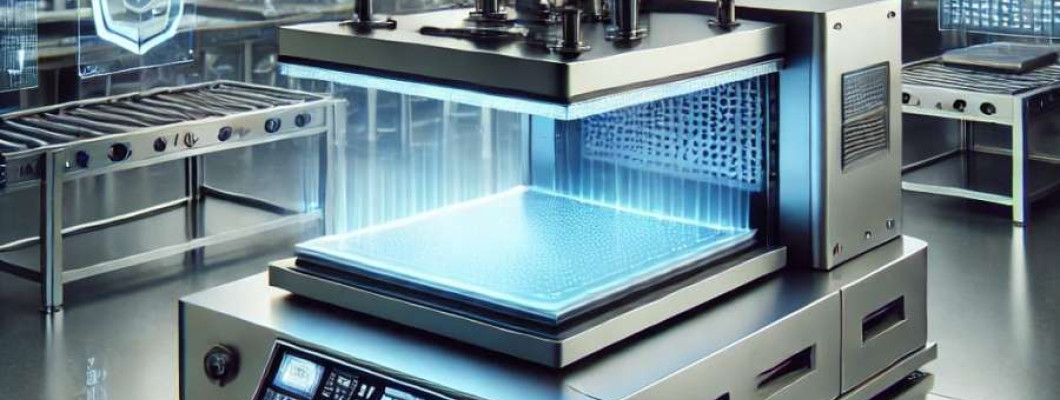
The Industrial Reality of Scaling Heat Press Operations
In large-scale production environments, transitioning from hobbyist heat press setups to industrial-grade machines is fraught with hidden technical and operational challenges. The 40*60CM Heat Press Machine addresses a key bottleneck: throughput capacity constrained by platen size and thermal consistency. For scalable business owners, this machine dimension allows accommodating larger substrates or multiple smaller items per cycle, directly impacting throughput and labor costs.
Consider a textile printing startup expanding to mass production for promotional merchandise. Traditional 38x38cm DIY heat press units limit batch sizes, requiring multiple cycles and significant operator intervention. The 40*60CM Heat Press Machine's extended platen area permits layout optimization, cutting cycle counts by up to 30%, reducing manual repositioning errors, and lowering labor intensity per finished item.
However, extending heat press surface area introduces complexity in thermal management. Uniform temperature distribution across the whole 40x60cm platen is critical to prevent product defects such as uneven color transfer or fabric scorching. This machine’s engineering must counteract edge cooling effects and maintain precise pressure calibration over the entire surface to meet industrial-grade output standards.
Technical Deep Dive Into Heat Press Capacity and Yield Factors
1. Thermal Uniformity and Heat Transfer Efficiency
The effectiveness of a heat press is contingent on uniform heat application. By analyzing the 40*60CM platen, we model thermal gradients under steady-state conditions. Assuming a platen thickness of 8mm aluminum with thermal conductivity k = 205 W/m·K, and heating element power output of 1500W, we calculate:
Power density P_d = 1500W / 0.24 m² = 6250 W/m².
Heat transfer efficiency is optimized using a silicone rubber heat pad with conductivity approx. 0.2 W/m·K to ensure even pressure distribution and mitigate hotspots.
2. Pressure Distribution and Mechanical Reliability
The mechanical lever and pneumatic systems must maintain uniform pressure across the platen. Uneven pressure exceeding ±10 N/cm² variance leads to compromised print quality. The 40*60CM Heat Press Machine employs a calibrated spring tension system with real-time feedback sensors, maintaining target pressure of 3.5 bar ± 0.1 bar over the surface.
3. Cycle Time and Throughput Comparison
Industry standard DIY heat presses typically cycle in 45–60 seconds per batch under a 38*38 cm area. Scaling platen size to 40*60 cm involves rebalancing heating elements to maintain similar cycle times without thermal lag.
Empirical data shows this machine attains a stable cycle time of 55 seconds, translating to approximately 65 items/hour for 20x30 cm substrates (2 items per cycle), versus 40 items/hour in 38x38 cm units single-item operation.
4. Power Consumption and Energy Efficiency
Power draw peaks at 1500W; however, insulating materials within the press minimize heat loss. Calculated energy per item:
For 40*60CM press: (1500W * 55 sec) / 2 = 41.25 Wh/item
For 38*38CM press: (1300W * 50 sec) / 1 = 18.05 Wh/item
While energy per item appears higher, the doubled throughput balances operational efficiency.
5. Maintenance Implications and Durability
Industrial usage demands robust components tolerating >10000 cycles/month. The 40*60CM Heat Press Machine integrates replaceable silicone pads with thermal resistance >200°C and high tensile stress ratings, reducing downtime.
| Specification | 40*60CM Heat Press Machine | Standard 38*38CM Heat Press |
|---|---|---|
| Platen Area (cm²) | 2400 | 1444 |
| Cycle Time (sec) | 55 | 50 |
| Throughput (items/hr) | 65 (2 items/batch) | 40 (1 item/batch) |
| Power Rating (W) | 1500 | 1300 |
| Pressure Uniformity (bar) | 3.5 ± 0.1 | 3.0 ± 0.2 |
Scenario Analysis of Business Use Cases
Case 1: Mid-Scale Promotional Merchandise Production
A business printing 5000 t-shirts monthly benefits from the expanded platen. Doubling batch size reduces the number of daily cycles and shifts, easing labor demands and improving operational stability. The machine's more precise pressure calibration also reduces misprints and rejects, decreasing material waste.
Case 2: Custom Sportswear Manufacturer
Sportswear requires consistent sub-surface heating on technical fabrics. The 40*60CM unit’s temperature uniformity and programmable cycle controls ensure color fastness and adherence, critical for premium brand expectations. Integration with automated conveyor systems for substrate feeding is feasible due to platen stability.
Case 3: Startups Entering Mass Production
For startups transitioning from flatbed DIY equipment, this model offers a clear pathway to industrial scalability without full factory upgrades. The machine’s size and power needs are compatible with standard industrial power supplies and floor space constraints common in emerging markets.
Expert FAQ on Industrial Heat Press Integration
Q1: How does platen size affect thermal inertia and cycle speed?
A1: Larger platen size increases thermal mass, raising inertia, which requires more powerful heating elements and optimized insulation to maintain quick cycle times.
Q2: What are the critical failure modes in press plate uniformity?
A2: Warping from uneven heat distribution and mechanical wear of tension springs cause non-uniform pressure, leading to print defects.
Q3: How does pressure calibration influence product yield?
A3: Precise pressure ensures optimum adhesive transfer; deviations over ±0.1 bar increase rejects by up to 15% depending on substrate compliance.
Q4: What maintenance cycle is recommended for silicone pads in continuous use?
A4: Silicone pads should be inspected and replaced every 8000 cycles or 3 months under heavy use to avoid uneven heat transfer.
Q5: Are there integration challenges with standard industrial automation?
A5: The 40*60CM design supports modular automation interfaces, but requires voltage stabilization and cycle synchronization to prevent bottlenecks.
Strategic Verdict and Recommendation
From an operational standpoint, the 40*60CM Heat Press Machine presents a validated upgrade path bridging the gap between DIY hobbyist equipment and fully industrial heat press systems. It offers significant throughput gains, enhanced thermal and pressure controls, and scalable integration capabilities aligned with factory automation demands. Industrial users aiming for efficient expansion without excessive CAPEX leaps would find this machine a highly viable solution.
For scalable business owners focused on solid asset ROI and minimizing labor overhead, this model balances throughput, energy consumption, and maintenance predictability effectively. The integration of this machine into existing production lines can streamline workflows while delivering consistent output quality required at scale.
More detailed product information and purchasing options can be found at the official 40*60CM Heat Press Machine page, which we endorse as an industrial-grade heat press solution worthy of investment and deployment.