
The Gap Between DIY and Industrial Grade in the A3 Roll DTF Printer for Scalable Business Owners
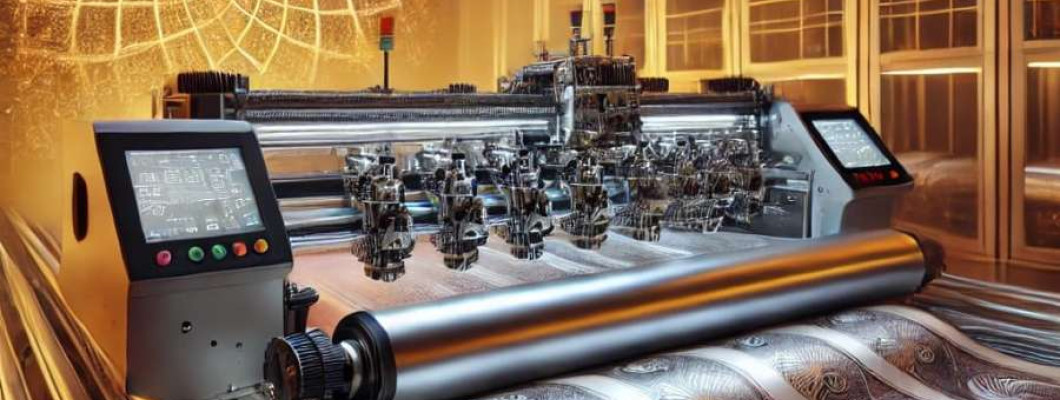
The Industrial Reality of Adopting the A3 Roll DTF Printer for Throughput Demands
The transition from desktop or small-format DTF (Direct to Film) printers to industrial-grade roll-fed systems represents a critical inflection point for scalable businesses reliant on high-volume customized textile printing. Industrial enterprises often encounter throughput choke points when integrating smaller DIY-style printers, which are typically designed for limited batch runs, lower duty cycles, and manual workflows. The A3 Roll DTF Printer introduces a mechanically robust, continuous feed architecture that aims to bridge this divide, but the practical industrial realities require careful examination of its operational envelope under intensified load scenarios.
Consider a production facility tasked with fulfilling orders averaging 1500 A3-format prints daily—each with an average print time of roughly 70 seconds per pass on legacy desktop units. The resultant bottleneck cascades into extended labor shifts, increased human error potential, and greater per-unit cost. The move to an industrial-grade A3 Roll DTF system targets throughput gains primarily by enabling continuous roll feeding, automated tension control, and advanced printhead orchestration over a 420 mm width substrate. However, real-world constraints such as ink drying time, film adhesion variability, and printhead wear under extended duty cycles must be factored into planning.
Understanding operational uptime expectations and failure modes is critical for technical managers to avoid overestimating gains. Key challenge areas include maintaining micron-level printhead alignment when running continuous rolls exceeding 50 meters, managing ink viscosity shifts during prolonged print runs, and balancing substrate feed rates with curing oven thermal profiles to prevent banding or ink bleeding. Comprehensive lifecycle maintenance schedules and consumable replacement planning are also integral to sustaining industrial-grade throughput without unexpected downtime.
Technical Deep-Dive into the A3 Roll DTF Printer Architecture and Performance Limits
Printhead Technology and Micron-Level Precision Alignment
The core printing element typically leverages piezoelectric drop-on-demand printheads with a native resolution of 720x1440 dpi, expelling ink droplets as small as 3 picoliters. The printer’s mechanical rail system is precision-machined from anodized aluminum with linear encoders calibrated to maintain positional accuracy within 5 micrometers. This ensures droplet placement accuracy critical for maintaining sharp image edges and consistent dot gain, especially when operating at higher pass modes needed for opaque white ink layers.
Ink Chemistry and Continuous Flow Stability
The ink reservoirs utilize pigment-based DTF inks engineered for adhesion and flexibility. Under continuous operation, ink temperature and viscosity increase at approximately 0.2 centipoise per 10 minutes without active thermal regulation, potentially disrupting droplet formation. The printer incorporates micro-heater units around printhead carriages to stabilize ink temperature at 35°C ±0.5°C, reducing viscosity fluctuations and maintaining droplet size consistency throughout extended jobs.
Roll Feeding Mechanism and Tension Control Algorithms
The A3 Roll DTF Printer supports roll widths up to 430 mm and maximum roll diameters of 150 mm, with motorized tension control to minimize substrate distortion. Tension is dynamically regulated between 0.6 and 1.2 N to avoid film stretching that leads to misregistration defects. Closed-loop feedback via load cells on the unwind and rewind shafts achieves real-time tension adjustments at a sampling rate of 100 Hz, accommodating variable roll weights and preventing printhead-to-substrate skew beyond ±0.1 degrees.
Thermal Curing Strategy and Drying Efficiency
Post-print curing is accomplished using an inline infrared drying unit calibrated to output 1200 W/m² over a 300 mm effective curing zone. Print speeds are capped such that printed substrate exposure time is at least 15 seconds within the curing zone to fully polymerize adhesive layers and prevent white ink bleed. Thermal gradients are carefully monitored via embedded thermocouples to remain within a ±2°C band, mitigating substrate warping during long print runs.
Hardware Comparison Table illuminating Industrial vs. DIY Tradeoffs
| Specification | DIY Desktop DTF Printer | A3 Roll DTF Printer Industrial Grade |
|---|---|---|
| Maximum Substrate Width | 210 mm (A4) | 430 mm (A3 roll) |
| Continuous Print Length | Max 0.5 meters (sheet-fed) | Up to 50 meters (roll-fed) |
| Printhead Resolution | 600x1200 dpi | 720x1440 dpi |
| Print Speed | 30-50 mm/s | 130-160 mm/s |
| Ink Temperature Control | Passive | Active micro-heaters maintaining 35°C ±0.5°C |
| Substrate Tension Control | Manual | Closed-loop feedback at 100 Hz sampling |
| Thermal Curing Power | None or external | 1200 W/m² inline IR dryers |
Scenario Analysis for Scalable Business Use-Cases Driving the A3 Roll DTF Printer Selection
Case 1 A Fast-Paced Apparel Manufacturer Integrating On-Demand Custom Prints
An apparel manufacturing SME focused on agile fashion collections benefits from the A3 Roll DTF Printer’s continuous roll-feed to maintain steady production lines without frequent manual intervention. The active tensioning system limits material waste during high-speed jobs printing both white underbase and full-color designs. The high dpi and thermal curing ensure wash-durable prints, critical for premium end-customer satisfaction.
Case 2 A Promotional Goods Vendor Managing Large Volume Event Merchandise
This business leverages the printer’s 430 mm print width allowing two or more smaller items printed simultaneously, maximizing throughput per shift. Real-time tension and curing control reduce print defects and reprint costs, directly impacting bottom-line by reducing labor associated with quality control and manual sorting.
Case 3 A Multi-Site Print Shop Network Scaling Automation
For decentralized print shops managing batch orders exceeding 5000 pieces weekly, the printer’s automated feed and thermal stability reduce operator training time and maintenance disruptions. Predictive maintenance data captured from the device (e.g., printhead health matrices, motor current variances) syncs across sites for centralized management, facilitating SLA adherence.
Expert FAQ Addressing Operational and Technical Nuances
Q1 How does the micro-heater ink temperature stabilization affect droplet consistency at peak prints?
Maintaining consistent ink viscosity prevents satellite droplet formation, ensuring sharper edges and predictable dot gain. This reduces printhead clogging frequency, extending nozzle lifespan by 15-20% under industrial loads.
Q2 What is the printhead replacement frequency given continuous roll runs over 8 hours daily?
Under continuous heavy-duty operation, printheads typically require replacement every 18-24 months, assuming routine cleaning cycles every 48 hours and use of manufacturer-certified inks to minimize abrasive particle accumulation.
Q3 Can the tension control system compensate for varying film thicknesses within a roll?
Yes, the closed-loop system dynamically adjusts tension to maintain constant substrate feed rates within ±0.5% tolerance, crucial for preventing image distortion especially on heterogeneous or multilayer films.
Q4 How does the curing unit’s thermal gradient maintenance impact long print runs stability?
By limiting thermal gradients to ±2°C, substrate deformation is minimized, reducing banding and misregistration. This consistency enables higher print speeds without sacrificing image quality integrity.
Q5 What are the typical power consumption figures when running this printer at full industrial throughput?
The system averages 1.5 kW in active printing mode, with peak consumption reaching 2.1 kW during curing cycles. Energy optimization settings allow for 10-15% reduction during idle waits without compromising temperature stability.
Strategic Verdict and Recommendation for the A3 Roll DTF Printer
Assessing the A3 Roll DTF Printer through the lens of scaled throughput, operational robustness, and integration ease reveals it as a definitive industrial-grade solution that substantially closes the gap between hobbyist/DIY and large-scale production printing. Its precision mechanical design, active ink and substrate control systems, and inline curing capabilities combine to deliver sustained high-quality output with minimal labor overhead.
The printer’s ability to handle continuous roll substrates up to 430 mm width with automated tension management addresses key bottlenecks experienced by scalable apparel and promotional merchandise manufacturers. Furthermore, its advanced thermal management ensures stable print quality even during extended runs, offering clear lifecycle cost advantages over desktop alternatives.
For businesses seeking to elevate operational throughput without compromising print precision or increasing labor complexity, the A3 Roll DTF Printer stands as a technically grounded, financially prudent investment in industrial textile printing infrastructure.