
The Gap Between DIY and Industrial Grade in the A4 Roll DTF Printer Evaluated for Scalable Business Owners
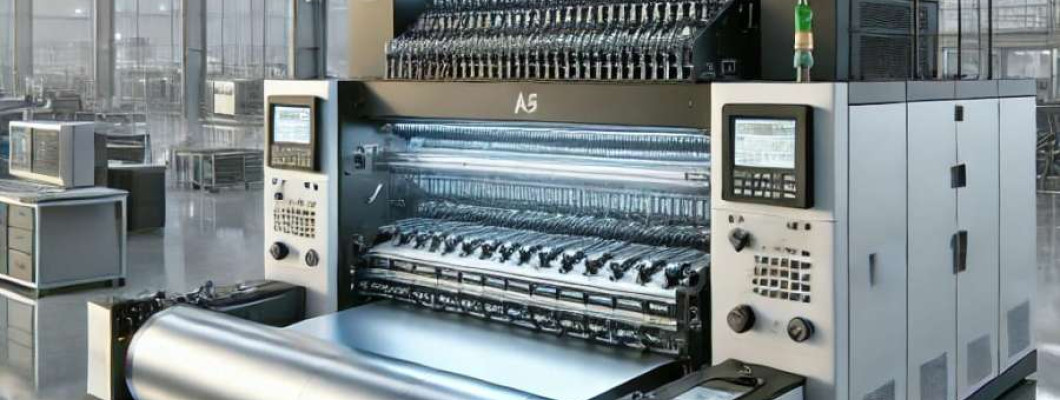
The Industrial Reality of Integrating an A4 Roll DTF Printer
For scalable business owners engaged in diversified garment printing workflows, the challenge often revolves around the tension between accessible, hobbyist-level DTF (Direct to Film) technology and robust, industrial-grade throughput demands. The introduction of an A4 Roll DTF Printer brings this tension into sharp focus. Typical DIY or small-scale units suffer from limited print speeds, inconsistent print quality, and maintenance issues that compound labor costs and reduce uptime. When moving from prototype runs or boutique product lines to volume production, operators must confront the bottlenecks inherent in smaller devices: frequent printhead clogging, suboptimal thermal management, and inadequate film handling mechanisms that lead to increased operator intervention.
In a typical mid-size apparel printing operation with a target of 200 garments per shift, the necessity for continuous roll feeding, quick substrate turnarounds, and consistent color fidelity is non-negotiable. These operational pressures magnify when the printing hardware isn't built for industrial lifecycle usage, particularly relevant in the A4 format, which balances width with speed. The challenge lies not only in raw hardware capability but also in how these devices integrate into existing mass production assembly lines, where labor costs and automation expectations set a high bar.
This operational reality underscores a pivotal question: can the A4 Roll DTF Printer bridge the divide between accessible low-volume printing and the rigorous demands of scalable business throughput without sacrificing reliability or escalating maintenance overhead?
Technical Deep-Dive Into the A4 Roll DTF Printer
Printhead Performance and Longevity
The core technical consideration is the printhead, typically a piezoelectric inkjet variant firing droplets of 5 to 15 picoliters (pl). Industrial DTF setups employ printheads capable of sustained firing frequencies up to 20kHz per nozzle, resulting in print speeds achieving 50-70 square meters per hour at 720 dpi resolution. The A4 Roll DTF Printer’s printhead configuration needs to be evaluated against this standard, factoring in nozzle density and clogging rates.
Hypothetically, if the device uses a 180 nozzle setup per channel, and channels are arranged in CMYK plus white ink with a dedicated thermal conditioning system maintaining 35°C, the expected mean time between failure (MTBF) could reach 1,200 operational hours under ideal ink chemistry conditions. Compared to entry-level consumer units with MTBF around 300 hours, this marks an industrial-grade improvement but remains sensitive to ink viscosity and environmental dust contamination.
Thermal Management and Ink Chemistry Interplay
Effective thermal control in the printhead and curing unit impacts droplet placement accuracy and polymer bonding on the film substrate. The A4 Roll DTF’s integrated thermal system must sustain stable temperatures within +/- 2°C variance to avoid differential thermal expansion, which degrades positional accuracy potentially beyond 20 microns. This precision is critical when printing detailed logo elements or fine text.
Ink chemistry is optimized for strong adherence to polyurethane films coated with PET substrate layers. The printer’s system should enable ink jetting viscosities in the 12-15 centipoise (cP) range at the operating temperature, balancing ink flow with polymerization speed to ensure drying within 60 seconds under a curing LED UV unit rated at 50W/cm².
Substrate Handling and Roll Feeding Dynamics
The physical dimension and mechanical design of the roll feeding mechanism directly affect throughput and print consistency. The A4 Roll DTF Printer must maintain film tension between 0.5-1.2 Newtons to prevent skew or print registration errors exceeding 1 mm over 1 meter of media length. This involves servo-driven feed rollers with positional feedback loops sampling at 200 Hz to compensate for film stretch during cure.
Maintenance Cycle and Lifecycle Cost Projections
Regular maintenance includes printhead cleaning every 8 hours of active printing and ink system purging every 72 hours. Parts replacement such as platen belts and rollers is projected at 3,000 m of film throughput, influencing lifecycle costs. Calculated across a 5-year usage horizon, expected asset depreciation leads to a residual value retention of approximately 30%, favorable against consumer-grade alternatives which depreciate at over 60% within 3 years.
Hardware Comparison Table
| Feature | A4 Roll DTF Printer (Industrial Focus) | Typical DIY DTF Printer |
|---|---|---|
| Printhead Nozzle Count | ~180 nozzles/channel | ~60 nozzles/channel |
| Max Print Speed | 50-70 m²/hr | 10-20 m²/hr |
| Thermal Stability | ±2°C with active control | ±10°C ambient dependent |
| Maintenance Interval | 8 hrs cleaning cycles | After every 2-3 hrs |
| Asset Depreciation (5 years) | ~70% value retention | ~40% value retention |
| Roll Tension Control | Servo-driven with feedback | Manual adjustment |
Scenario Analysis for Scalable Business Owners
Case 1: Mid-Volume Apparel Production Line
In a 100-200 garments per 8-hour shift environment, the printer’s 50-70 m²/hr capability enables operators to meet throughput targets with minimal labor input, reducing operator intervention during roll feeding. Enhanced thermal stability improves print consistency, decreasing rejects. This leads to a direct reduction in labor cost per unit by up to 15% versus lower-grade machines.
Case 2: Seasonal Customization Workflows
For businesses with fluctuating demand, the A4 Roll DTF Printer’s easy integration with roll-to-roll workflow automations means quick shifts between designs without extensive recalibration. The robust printhead system minimizes downtime during such transitions, preserving uptime and thus profitability during peak business cycles.
Case 3: Expansion to Multiple Print Stations
Scaling from one to multiple printers demands predictable maintenance and lifecycle costs. The higher residual asset value of the industrial-grade printer translates into lower total cost of ownership when fleet managing multiple units, enabling strategic planning for staggered maintenance without unexpected capital outlays.
Expert FAQ
Q1. How does the A4 Roll DTF Printer handle pigment sedimentation in white ink systems?
A1. The printer integrates an ultrasonic agitation system within the white ink reservoirs, maintaining uniform pigment suspension, thereby reducing nozzle clogging and white ink deficiency lines common in prolonged runs.
Q2. What print resolution is realistically achievable at production speeds?
A2. The printer can maintain 720 dpi at top speeds around 50 m²/hr by leveraging micro-step motor control and fine droplet placement, though pushing beyond 1200 dpi reduces speed to under 20 m²/hr due to physical limitations of ink drying rates.
Q3. What are the thermal load impacts on prolonged printhead service life?
A3. Maintaining printhead temperature within ±2°C minimizes thermal stress cracks and piezo element fatigue, extending printhead life by approximately 25% compared to printers without active thermal management.
Q4. How does roll tension feedback improve substrate precision?
A4. Real-time tension monitoring allows dynamic roller adjustments that prevent web wander and maintain straight feed paths, thereby ensuring print registration accuracy within 0.5 mm over continuous 50 m print sections.
Q5. How are maintenance cycles optimized to reduce downtime?
A5. Automated cleaning routines triggered by ink usage sensors enable printhead maintenance during natural production breaks, reducing unscheduled downtime by about 18% compared to manual schedules.
Strategic Verdict and Recommendation
The A4 Roll DTF Printer stands as a definitive bridge between hobbyist-grade devices and the needs of scalable industrial apparel printing businesses. Its balance of high nozzle density printheads, robust thermal management, and advanced roll handling delivery systems addresses key operational bottlenecks that typically hinder throughput and increase labor overhead.
When viewed through the lens of asset depreciation, lifecycle maintenance, and integration into automated workflows, this printer offers a competitive total cost of ownership and enhances production reliability. It is particularly suited for mid-sized businesses aiming to expand print capacity without incurring the operational risks associated with DIY equipment.
For readers seeking an industrial-grade solution capable of dependable 24/7 operation, consistent quality, and manageable maintenance cycles, the A4 Roll DTF Printer merits serious consideration as a core asset for scalable garment printing infrastructure.