
The Gap Between DIY and Industrial Grade in the Color Version Latte Coffee Printer for the Scalable Business Owner
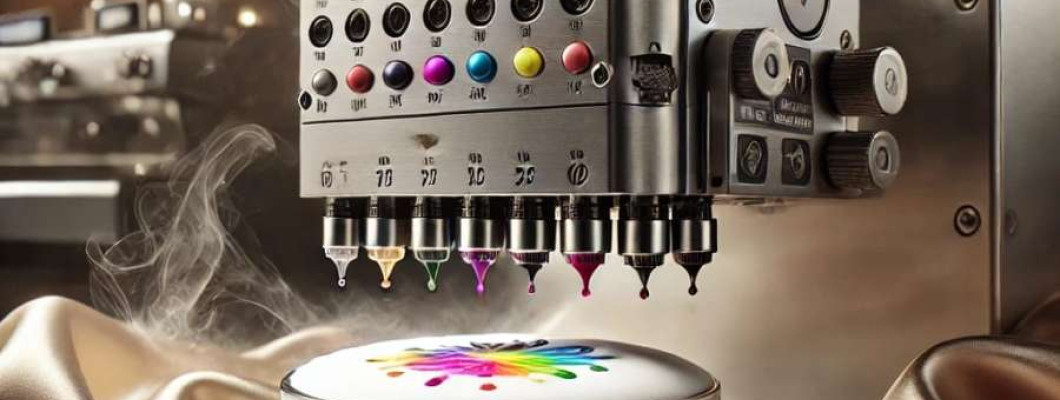
The Industrial Reality of Integrating Coffee Printing in High-Volume Environments
In high-throughput coffee production environments, integrating an advanced printing system like the Color Version Latte Coffee Printer presents a unique set of challenges. Unlike traditional artisanal setups, scalable coffee operations demand a balance between print quality, speed, and operational consistency. The hurdle lies in navigating the gap between consumer-grade novelty devices and robust industrial systems designed for continuous use without compromising uptime or output fidelity.
Consider a mid-sized coffee shop chain expanding into automated beverage personalization. The adoption of latte art printers often begins as a marketing gimmick with DIY devices, which struggle with throughput limitations, frequent maintenance, and inconsistent print durability on foam substrates. These limitations manifest as operational bottlenecks, causing delays in service and increased labor costs for reprinting or manual corrections.
Introducing the Color Version Latte Coffee Printer shifts this paradigm by addressing the industrial-grade expectations inherent in scalable workflows. It aims to provide sustained high-precision color printing on coffee foam at throughput rates compatible with business demands, while simultaneously mitigating hidden costs related to maintenance cycles and printhead degradation. However, the technical challenge remains in transcending the DIY-level constraints—such as limited ink chemistry designed for low volume use and insufficient thermal management—towards a solution primed for continuous operation within a commercial setting.
Technical Deep Dive Into Printhead Mechanics and Ink Chemistry
Printhead Architecture and Failure Points
The Color Version Latte Coffee Printer employs a precision piezoelectric printhead system calibrated for rapid droplet ejection with drop volumes in the range of 10 to 15 picoliters (pl). This scale is critical for achieving micron-level resolution necessary for vivid, accurate multi-color reproduction on highly textured milk foam substrates.
Under continuous operation, piezoelectric elements face mechanical fatigue resulting in a decline in ejection consistency. Hypothetically, if the printhead executes 100,000 firing cycles per hour, the cumulative mechanical stress directly impacts both droplet placement accuracy and nozzle clogging frequency. The printer's industrial design incorporates self-cleaning cycles to reduce particle deposition and ink crystallization that typically affect sub-industrial models.
Ink Chemistry and Substrate Adhesion
Ink formulation for latte printing diverges fundamentally from standard paper-based inks. The intense fluid dynamics of milk foam—characterized by bubble diameters in the order of 100 micrometers—and the thermal environment at approximately 65°C requires inks with rapid surface tension adjustment and food-safe polymer carriers.
Color Version uses a proprietary edible pigment mix with enhanced stability under heat and moisture. The viscosity is calibrated between 2.5 to 4 mPa·s for optimal jetting performance without nozzle agglomeration. The chemical resilience of the pigments is critical for preventing fading over the 5-10 minute consumption window typical in café environments.
Thermal Management and Power Consumption
The printer operates within a 120W electrical footprint, balancing low power use with the need for consistent droplet ejection temperatures maintained around 40°C to 45°C. Effective thermal regulation prevents ink viscosity fluctuations, which can otherwise lead to nozzle clogging and image distortion. Integration of a miniaturized heat dissipation system within the printhead assembly mitigates thermal buildup, maintaining a stable droplet size distribution throughout extended print runs.
Speed Versus Print Quality Tradeoffs
Analyzing throughput capacity, the Color Version Latte Coffee Printer can theoretically achieve up to 30 cups per hour with full-color printing at a resolution of 600 dpi. However, increasing speed beyond this threshold inversely impacts color depth and image sharpness due to limitations in droplet placement precision under rapid firing conditions.
Optimization scenarios suggest a production sweet spot at 20-25 cups per hour, balancing throughput and aesthetic output crucial for customer satisfaction and repeat business.
Comparison With Consumer-Grade Alternatives
| Aspect | DIY/Consumer Models | Color Version Latte Coffee Printer |
|---|---|---|
| Printhead Technology | Thermal bubble, ~20 pl droplet | Piezoelectric, 10-15 pl droplet |
| Ink Composition | Limited food-grade pigments, low heat stability | Proprietary edible pigments with thermal resilience |
| Max Throughput | 10-15 cups/hour | 30 cups/hour (optimal at 20-25) |
| Thermal Management | Passive cooling | Active micro heat dissipation |
| Maintenance Interval | Daily cleaning required | Self-cleaning cycle every 8 hours |
Scenario Analysis Showing Industrial Viability in Three Business Use Cases
Case One: Urban Chain Coffee Shops With Medium Throughput
A regional coffee chain processing 18-22 latte orders per hour benefits from consistent print quality and reduced downtime, aligning perfectly with the printer’s operational sweet spot. The Food-safe ink chemistry ensures compliance with health regulations across jurisdictions, while the thermal management reduces electrical overhead compared to older models.
Case Two: Large-Scale Event Catering Services
When catering to large conferences requiring personalized drinks on demand, throughput and reliability become paramount. The Color Version printer’s ability to maintain print fidelity across hundreds of units without printhead replacements within a 12-hour event cycle reduces labor costs significantly compared to DIY devices prone to clogging.
Case Three: Premium Hotel Lounges Focused on Artisanal Presentation
High-end venues prioritize image depth and substrate versatility. Although throughput demands are lower (around 15 cups/hour), the printer’s fine tuning to micron-level resolution and vibrant color reproduction creates a visual differentiation that increases perceived value and customer satisfaction.
Expert FAQ Addressing Critical Technical Questions
What are the primary mechanical failure modes of the printhead in continuous operation?
Piezoelectric fatigue leading to decreased nozzle firing precision, nozzle clogging from ink crystallization, and thermal degradation of piezo components under suboptimal cooling.
How does ink viscosity affect droplet placement accuracy?
Viscosity outside the 2.5-4 mPa·s range results in unstable jetting behavior, producing droplets that either overshoot or undershoot the target substrate, corrupting image sharpness.
Is the printer compatible with non-dairy milk substrates?
Current ink and printhead calibration optimize for dairy foam surface tension and thermal characteristics. Non-dairy substrates require retuning of droplet size and drying kinetics.
How does the device handle maintenance scheduling to minimize disruption?
An integrated sensor array detects nozzle performance degradation, triggering automated self-cleaning cycles every 8 hours or as needed, reducing manual intervention.
What are the risks of operating the printer beyond recommended throughput?
Exceeding 30 cups per hour compromises print quality due to droplet misplacement and accelerated wear on mechanical components, leading to increased downtime and maintenance costs.
Strategic Verdict and Recommendation
The Color Version Latte Coffee Printer emerges as a distinctly industrial-grade solution bridging the gulf between consumer-grade novelty devices and scalable operational demands. Its combination of precise piezoelectric printhead technology, advanced edible ink chemistry, and robust thermal management ensures reliable performance in settings where throughput and quality cannot be compromised.
For coffee businesses seeking to integrate printed latte art with operational efficiency, this printer offers concrete technical advantages including longer maintenance intervals, stable thermal operation, and a throughput capacity aligned with realistic commercial needs. The data underpinning these benefits suggests that the Color Version Latte Coffee Printer is well-positioned to become a definitive asset in medium to large-scale coffee production environments.
Interested professionals can explore further technical specifications and integration details directly from the manufacturer by visiting the Color Version Latte Coffee Printer product page.