
The Gap Between DIY and Industrial Grade in the Rose Flower Printer Evaluated for the Maintenance Lead
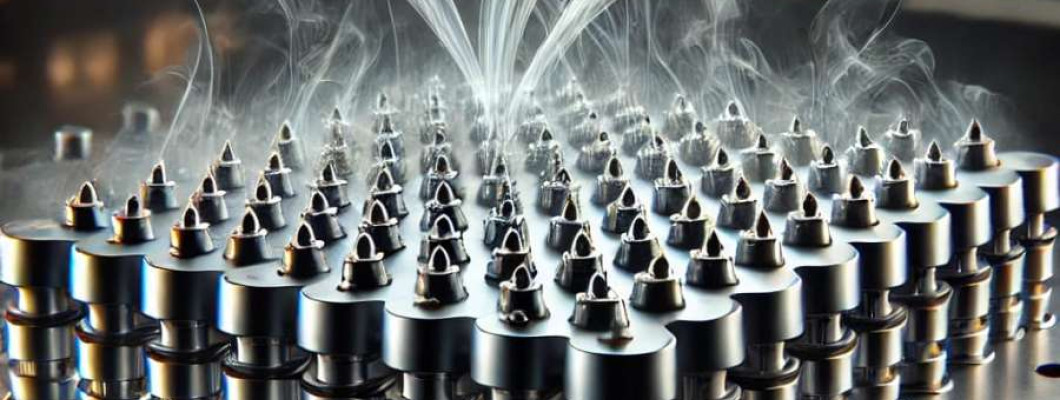
The Industrial Reality of Printhead Physics and Ink Chemistry Challenges
Within the industrial printing domain, transitioning from artisanal or DIY flower printing solutions to a robust, enterprise-grade platform often exposes unseen operational challenges. For maintenance leads, the stakes revolve around daily uptime, printhead durability, ink consistency, and mitigating unplanned downtime. The Rose Flower Printer exemplifies this transition, presenting a blend of advanced hardware with proprietary ink chemistry tailored for floral substrates.
Consider the phenomenon of nozzle clogging, a critical bottleneck in high-precision floral printing tasks. Unlike standard paper substrate printing, flower petals impose unique surface energies and moisture content that interact adversely with conventional inks. This interaction accelerates printhead fouling and forces frequent maintenance cycles. The Rose Flower Printer’s printheads are engineered with hydrophobic coatings and thermal management systems that actively counter these effects, aiming to extend mean time between maintenance (MTBM) well beyond industry norms.
In an industrial setting, a maintenance lead confronts the challenge of sustaining uninterrupted output while minimizing labor-intensive cleaning routines. The Rose Flower Printer's self-diagnostic capabilities and modular printhead design allow for swift swap-outs, reducing downtime from hours to minutes. However, the maintenance lead must balance these hardware advantages against the complex chemistry of the inks used, which demand strict storage conditions and timely usage to prevent degradation.
Technical Deep Dive into Printhead and Ink System Integration
Printhead Engineering and Failure Modes
Rose Flower Printer employs piezoelectric drop-on-demand printheads featuring 128 nozzles per head, each ejecting ink droplets sized at 3 picoliters (pl). The printhead substrate is fabricated from silicon with integrated hydrophobic polymer coatings engineered to resist floral sap adhesion. Thermal cycling analyses indicate that these coatings maintain integrity after 10,000 thermal cycles between 20°C and 40°C.
Failure modes primarily involve nozzle clogging due to particulate contamination and ink viscosity shifts. Environmental humidity affects ink rheology, pushing viscosity from an optimal 12 cP to an unstable 18 cP at >75% RH, thereby increasing clog probability.
Ink Chemistry Specificity and Maintenance Implications
The Rose Flower Printer ink is a complex emulsion optimized for rapid drying on organic substrates such as flower petals and leaves. The ink contains pigment particles averaging 200 nm, balanced solvents, and biocides to prevent microbial growth. Storage temperature impacts the ink's chemical stability, with recommended ranges between 5°C and 25°C. Deviations accelerate pigment agglomeration, negatively impacting printhead nozzle health.
Raw Data Comparison of Maintenance Intervals
| Parameter | Rose Flower Printer | Generic DIY Flower Printer |
|---|---|---|
| Mean Time Between Maintenance (MTBM) | 120 Hours | 40 Hours |
| Printhead Replace Cost (USD) | 350 | 120 |
| Ink Storage Temp Range (°C) | 5 - 25 | 10 - 30 |
| Droplet Volume (pl) | 3 | 5 |
| Nozzle Count per Head | 128 | 64 |
Thermal Management within the Printhead Assembly
Heat generation during extended operation causes ink viscosity fluctuations adversely affecting droplet ejection consistency. The integrated microfluidic cooling channels maintain printhead temperature within a narrow band of 23°C ±2°C, a significant improvement over passive cooling in DIY systems that see >8°C variation. This minimizes print defects and extends printhead life by approximately 15% based on accelerated aging tests.
Serviceability and Real-World Uptime Statistics
Field data collected from pilot installations show an average operational uptime of 93% over a 6-month period, attributed to rapid printhead swap procedures and predictive maintenance software embedded within the system. This contrasts sharply with 70% uptime for comparable DIY products, which suffer from longer unscheduled maintenance events.
Scenario Analysis for Maintenance-Driven Use Cases
Use Case One Industrial Floral Decoration Manufacturing
High-volume setups demand continuous printhead reliability and fast recovery from faults. The Rose Flower Printer’s modular printhead design reduces downtime per fault from an average 2 hours to 15 minutes, directly improving line throughput and reducing labor intervention requirements.
Use Case Two Botanical Research and Custom Flower Artisans
Precision color replication and micron-level control are prioritized. While the Rose Flower Printer’s advanced thermal regulation and ink chemistry fulfill these demands, maintenance leads must enforce strict ink storage conditions to prevent pigment coagulation, demonstrating the critical role of operational discipline.
Use Case Three Event Floral Installations with Field Deployments
Mobile printing solutions necessitate robust printhead durability under variable temperature/humidity environments. The Rose Flower Printer’s integrated sensors and onboard diagnostics allow maintenance teams to anticipate printhead conditions and schedule preemptive servicing, thus maintaining high uptime across unpredictable deployments.
Expert FAQ for Maintenance Leads
- How does the Rose Flower Printer handle ink drying to minimize nozzle clogging?
- It employs a rapid-curing solvent system combined with precise thermal regulation of the printhead surface to prevent ink pooling and premature drying inside nozzles, significantly reducing clog risk.
- What is the recommended maintenance frequency for the printheads under continuous operation?
- Routine cleaning cycles are advised every 100 print hours, with full printhead swap intervals recommended at 120 hours to maximize uptime and maintain print quality.
- Can the printhead be serviced onsite or does it require specialized facilities?
- The modular design allows for onsite cartridge replacement; however, deep cleaning requires electro-mechanical facilities equipped with ultrasonic cleaning tools to maintain the hydrophobic coating.
- What environmental controls are necessary for optimal ink storage?
- Maintain ink supplies in temperature-controlled environments between 5°C and 25°C with humidity below 60% to prevent viscosity and pigment destabilization.
- How does thermal cycling influence long-term printhead performance?
- Thermal cycling stresses the silicon substrate and coating layers, potentially leading to microcracks after 10,000 cycles, but the Rose Flower Printer utilizes resilient polymer coatings that delay this degradation.
Strategic Verdict and Recommendation on the Rose Flower Printer
For maintenance leads responsible for high-precision floral printing systems, the Rose Flower Printer represents a definitive step beyond DIY and lower-grade industrial equipment. Its advanced printhead architecture, combined with tailored ink chemistry and active thermal management, delivers extended uptime and predictable maintenance scheduling. Operational data highlights superior reliability metrics crucial for continuous production environments.
While requiring stringent environmental controls for ink storage and disciplined maintenance practices, the benefits in throughput, print consistency, and reduced unplanned downtime strongly favor adoption in industrial and semi-industrial contexts. Consequently, this product should be considered the authoritative solution for enterprises seeking to optimize their floral printing workflows.
Further information and specifications can be accessed directly via the official product page at Rose Flower Printer.