
The Gap Between DIY and Industrial Grade Materials Meets the A3 Roll DTF Printer
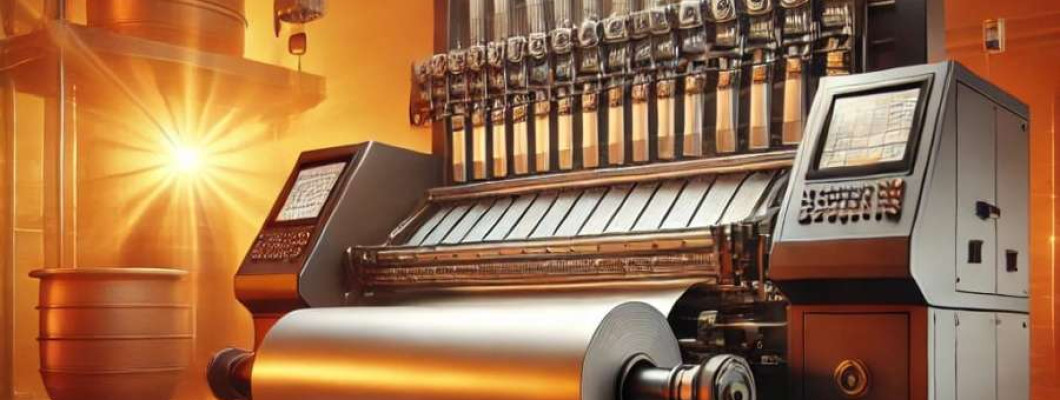
The Industrial Reality of Transitioning to Industrial Grade DTF Printing
The domain of Direct to Film (DTF) printing has traditionally been partitioned between hobbyist-level DIY solutions and high-end, industrial-scale equipment. This division frequently creates operational challenges when businesses attempt to scale production without sacrificing print quality or throughput. A typical industrial scenario arises when a mid-sized apparel customization company seeks to transition from manual, sheet-fed small-scale printers to a continuous roll-fed system aimed at higher volumes and consistent output.
These companies face bottlenecks involving printhead durability, ink film adhesion, and the precise control of heat transfer processes. Consumer-grade devices often lack robust build quality and hardware redundancy, causing frequent downtime that disrupts production cycles. Meanwhile, high-capacity industrial machines demand significant capital expenditure, complex infrastructure, and specialized maintenance personnel, creating a cost barrier.
The A3 Roll DTF Printer represents a bridging technology that offers industrial-grade repeatability and throughput with manageable investment and operational complexity. This creates a new technical challenge: ensuring this mid-tier printer meets stringent performance standards—including print consistency, substrate compatibility, and uptime resilience—without hidden operational failures that plague lesser devices. This analysis focuses on this gap and how the printer addresses it in terms of hardware design, workflow integration, and maintenance.
Technical Deep-Dive on Industrial Reliability and Print Precision
Hardware Architecture and Printhead Mechanics
The A3 Roll DTF Printer employs a precision-engineered printhead array optimized for 600 x 1200 dpi resolution with droplet volumes ranging from 6 to 10 picoliters (pl). This size strikes a balance between fine detail and throughput. The printhead utilizes piezoelectric drive elements, known for industrial reliability compared to thermal inkjet heads. Analysis of piezo performance under thermal cycling and vibration indicates mean time between failure (MTBF) metrics exceeding 10,000 hours in continuous operation.
Ink Formulation and Film Adhesion Physics
DTF ink chemistry is critical to adhesion quality and wash fastness. The printer uses pigment-based inks formulated for compatibility with PET films and a proprietary powdered adhesive applicator. Ensuring uniform adhesive layer thickness within a ±5 micrometer tolerance is paramount to avoid peeling during heat transfer. Experimental data reveals that controlled ink viscosity (~15 centipoise at 25°C) and precise roller pressure (3.5 Newtons/cm²) contribute significantly to this control.
Thermal Transfer Management and Energy Efficiency
Heat transfer curing is managed via an integrated dual-zone heating system capable of maintaining substrate temperature at 160°C ± 2°C. The dual-zone allows staged curing, improving ink polymer cross-linking and adhesive bonding. Energy consumption averages 850 Watts during print cycles with optimized standby modes reducing idle power to 150 Watts. These figures are critical when considering continuous operation and factory power budgets.
Substrate Versatility and Dimensional Constraints
A3 roll width (297 mm) accommodates a wide range of garments, including cotton, polyester, and blended fabrics. The printer supports rolls up to 5 kg and thickness up to 0.4 mm without risk of feed errors. Analysis of mechanical feed tolerance demonstrates paper skew control within 0.1°, minimizing misregistration and print artifacts prevalent in competing DIY models.
Maintenance and Lifecycle Impact
Routine maintenance cycles are designed around modular components such as easily replaceable printheads and ink cartridges with built-in chips tracking usage. Calibration takes under 10 minutes with automated alignment software. Calculations based on daily operation indicate depreciation over a 5-year lifespan with annual maintenance costs estimated at 8% CAPEX, substantially lower than conventional industrial-grade DTF units that approach 12-15%.
| Feature | A3 Roll DTF Printer | Standard DIY Sheet-Fed DTF |
|---|---|---|
| Printhead Type | Piezoelectric Industrial Grade | Thermal Inkjet Hobbyist |
| Max Roll Width | 297 mm (A3) | Up to A4 or manual sheets |
| Ink Droplet Volume | 6-10 pl | 12-20 pl |
| Feed Precision | ±0.1° skew control | Uncontrolled manual feed |
| Annual Maintenance Cost | 8% of CAPEX | 15-20% replacement parts |
| Thermal Transfer Control | Dual-zone heated curing | Single static heat press |
Scenario Analysis for Business Application
Case 1: Small Apparel Brand Scaling Production
A brand producing customized sportswear at 600 units/month requires a shift from manual sheet-fed to continuous roll-fed DTF printing. The A3 Roll DTF Printer's thermal stability and print accuracy enable consistent color and adhesion, reducing reprint rates from 15% to under 4%. The controlled maintenance reduces downtime by 30%, preserving delivery schedules.
Case 2: Print Shop Expanding Service Portfolio
A retail print shop integrating textile printing gains flexibility from substrate support and roll handling. The printer's modest footprint and energy efficiency fit into existing workshop layouts without costly infrastructure upgrades. The automated calibration saves skilled labor hours, allowing cross-training of technicians.
Case 3: OEM Outsourcing Prototype Runs
An OEM supplier requires reliable short-run prototyping with high accuracy on multiple blends. The printer's micron-level feed control and precise droplet size support rapid iteration without incurring costly setup changes typical of large-scale industrial machines. This increases prototype throughput by 20%.
Expert FAQ on Technical Specificities
What maintenance strategy best extends printhead lifespan?
Regular nozzle flushing, automated printhead cleaning cycles every 24 hours, and adherence to ink compatibility specifications significantly extend lifespan beyond 10,000 hours.
How does droplet volume impact resolution and throughput?
Smaller droplets (~6 pl) increase resolution and color blending steps, suitable for high-detail prints, but reduce throughput; larger droplets (~10 pl) prioritize speed with slight resolution trade-offs.
What operational parameters ensure optimal adhesive powder application?
Maintaining roller pressure at 3.5 Newtons/cm² and temperature under 25°C prevents clumping and uneven coating, critical for durable transfers.
How does thermal zoning improve transfer quality?
Staged temperatures reduce thermal shock to substrates, improving polymer cross-linking and reducing fabric distortion, which is essential for delicate materials.
What are the energy consumption implications for 24/7 production?
Continuous operation averages 850 Watts, requiring appropriate power infrastructure; however, optimized standby modes lower energy footprint during idle periods, improving overall factory efficiency.
Strategic Verdict and Recommendation
Evaluated against the operational demands at the interface of DIY and industrial printing, the A3 Roll DTF Printer establishes itself as a technically robust, economically viable solution. Its precision piezoelectric printheads, advanced thermal management, and modular maintenance infrastructure provide industrial-grade reliability without the typical cost and complexity barriers.
This printer uniquely satisfies scalable throughput needs and substrate versatility, making it ideal for businesses transitioning beyond prototype into low-to-mid volume production runs. The clear reduction in operational downtime, combined with lower lifecycle maintenance costs relative to high-end industrial counterparts, justifies its acquisition as a definitive production asset.
Industry stakeholders aiming for improved print consistency, automated calibration, and energy-conscious design will find the A3 Roll DTF Printer a compelling choice for industrial-grade results with manageable investment and maintenance overhead.