
The Gap Between DIY and Industrial Grade Revealed Through A3 Roll DTF Printer Analysis for Scalable Business Owners
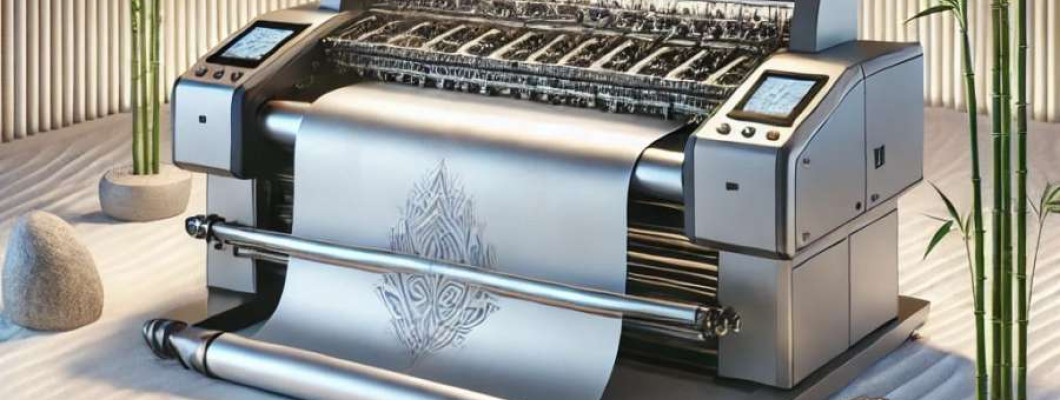
The Industrial Reality of Scaling Print Production with the A3 Roll DTF Printer
In a small industrial print facility focused on customized textiles, the transition from DIY or semi-pro printing equipment to an industrial-grade A3 Roll DTF Printer presents a complex technical and operational challenge. Failure to scale throughput in a cost-effective manner often leads to bottlenecks in production flow, increased labor intensity, and inconsistent output quality. For scalable business owners, managing labor costs while maximizing automation and continuous operation is a pivotal concern.
Unlike desktop or semi-pro machines, the industrial A3 Roll DTF Printer is designed for high-volume roll-to-roll printing with direct-to-film (DTF) technology. Nevertheless, the shift is not merely plug-and-play. The machine must integrate into existing workflows without causing downtime spikes or requiring disproportionate maintenance. Furthermore, print quality and substrate compatibility must be consistent across long production runs to avoid costly reworks or rejects.
This real-world scenario highlights the criticality of understanding the invisible operational bottlenecks that differentiate DIY setups from industrial deployments. The challenge is not only in hardware robustness but also in the synchronization of ink delivery, substrate feed mechanisms, environmental controls, and throughput automation. Each of these subsystems contributes cumulatively to uptime reliability and product consistency.
The gap in operational efficiency often manifests in hidden costs—labor-intensive manual adjustments, frequent printhead maintenance, and non-optimized drying times. These can erode the anticipated return on investment if left unaddressed during the transition phase.
Technical Deep Dive into A3 Roll DTF Printer Capabilities and Limitations
Printhead Technology and Maintenance Cycles
The A3 Roll DTF Printer typically employs piezoelectric printheads with nozzle sizes calibrated around 10 to 15 picoliters (pl) for high-precision ink droplet deposition. Assuming a printhead with 180 nozzles per color channel and an array of CMYK plus white ink channels, the theoretical maximum throughput can be calculated as follows:
Throughput (m²/hour) = (Nozzles × Droplet Volume × Frequency × Print Width) / Ink Coverage Factor
For example, at 10 kHz firing frequency, the printer can deposit ink droplets at a rate of 10,000 nozzles x 10 pl = 100,000 nanoliters or 0.1 ml per millisecond. Scaling this to a 420 mm wide substrate at 180 dpi, the practical throughput peaks around 6-8 m²/hour, depending on drying system efficiency and ink curing parameters.
Roll Transport Mechanics and Substrate Handling
A robust servo-driven tension control system ensures substrate alignment and roll stability during high-speed printing. The A3 Roll DTF Printer's feed mechanism must maintain substrate tension within the 0.5-1.5 N/mm range to avoid print artifacts such as banding or ghosting. Comparing belt-driven versus direct-drive roller systems reveals that direct-drive rollers offer reduced backlash and more precise micro-adjustments, minimizing lateral drift.
Ink Chemistry and Adhesion Control
DTF inks include pigment particles suspended in a polymer-based adhesive system designed to bond onto polyester and other fabric substrates post-heat transfer. Ink drying temperature thresholds generally range from 60°C to 80°C to prevent premature polymer coalescence in the printhead. Thermal management systems must maintain consistent platen temperatures to preserve droplet integrity and adhesion uniformity.
Drying and Curing System Efficiency
Infrared or hot-air drying modules integrated within the A3 Roll DTF Printer must deliver uniform heat distribution across the substrate width. Drying efficiency can be quantified by time-temperature curves required to bring ink from liquid to tack-free solid state. For continuous production, drying modules rated at 4-6 kW power with airflow rates of 400-600 cubic meters/hour strike a balance between speed and energy consumption.
Automation and Software Integration
Advanced control systems facilitate automated color management, print queue optimization, and predictive maintenance scheduling. The software typically supports RIP file formats with embedded ICC profiles optimized for DTF inks. Integration with MES (Manufacturing Execution Systems) can further enhance throughput by coordinating print jobs with downstream cutting and packaging operations.
| Specification | DIY/Semi-Pro Setup | A3 Roll DTF Printer Industrial |
|---|---|---|
| Maximum Print Width (mm) | 320 | 420 |
| Printhead Nozzle Size (pl) | 20-30 | 10-15 |
| Tension Control System | Manual | Servo-driven with feedback |
| Drying Power (kW) | 1-2 | 4-6 |
| Throughput (m²/hour) | 2-3 | 6-8 |
| Automation Level | Low | High with MES integration |
Scenario Analysis for Scalable Business Owners
Scenario 1 Small Custom Apparel Shop
The business processes roughly 50 linear meters of printed fabric per day. Using a DIY printer, labor overhead for material handling and frequent printhead cleaning leads to costly downtime. Transitioning to the industrial A3 Roll DTF Printer reduces manual intervention by 60%, allowing operators to focus on finishing tasks, effectively doubling daily throughput without increased headcount.
Scenario 2 Mid-Sized Textile Brand with Growth Projections
At 200 meters daily throughput, uptime reliability and consistent print quality become paramount. The servo-controlled substrate tension and integrated drying system minimize rejects from banding or undercured ink. Automated ink replenishment and predictive maintenance alerts reduce unexpected halts, supporting scale with controlled labor expenses.
Scenario 3 Large Print Facility Consolidating Workflows
Handling multiple print lines, the facility requires printers that can seamlessly integrate into existing MES and ERP systems. The A3 Roll DTF Printer’s software compatibility and enhanced automation enable dynamic job scheduling and real-time machine status tracking. This translates into multi-shift operations with minimal supervisory staff.
Expert FAQ for Technical Decision Makers
- Q: What are common failure points in A3 Roll DTF Printer printheads under continuous high-speed operation?
A: Printhead clogging due to pigment agglomeration and polymer sedimentation is common. High-frequency vibration and temperature fluctuations accelerate nozzle wear, requiring tailored cleaning cycles and climate control. - Q: How does substrate thickness variation impact print registration accuracy?
A: Thickness changes affect tension distribution, causing lateral drift. Servo tension controllers with real-time feedback adjust roller pressure to maintain ±0.1 mm registration tolerance. - Q: What environmental controls optimize ink curing consistency?
A: Stable ambient temperature (22-25°C) and humidity (40-50%) levels reduce ink drying variability. Incorporating inline temperature sensors with closed-loop drying adjustments improves batch consistency. - Q: How is energy consumption balanced with throughput in drying systems?
A: Using variable speed fans and PID-controlled heaters allows matching power output to print speed, optimizing kWh per m² and reducing thermal stress on substrates. - Q: What software features are critical for scalable workflow integration?
A: Cloud-based RIP with batch management, ICC profile customization, and real-time diagnostics support seamless integration into MES environments, enabling proactive maintenance and scheduling.
Strategic Verdict and Recommendation for Scalable Business Owners
The A3 Roll DTF Printer represents a pivotal upgrade bridging the gap between DIY or semi-professional printing solutions and industrial-grade enterprise workflows. Its advanced mechanics, printhead precision, and integrated automation provide scalable throughput with consistent quality critical to growing print-on-demand or custom textile businesses.
From a total cost of ownership perspective, the reduced labor intensity, lower downtime, and fewer rejects outweigh the initial capital investment, yielding improved asset longevity and predictable maintenance cycles. The printer’s capacity to seamlessly interface with MES and ERP systems further positions it as a future-proof choice for print facilities prioritizing workflow efficiency and operational resilience.
For an authoritative solution that addresses hidden operational bottlenecks and supports scaling without sacrificing print precision or substrate versatility, the A3 Roll DTF Printer is the definitive industrial-grade printing system recommended for scalable business owners.