
The Gap Between DIY and Industrial Grade Revealed Through A4 Roll DTF Printer for Maintenance Leads
The Industrial Reality
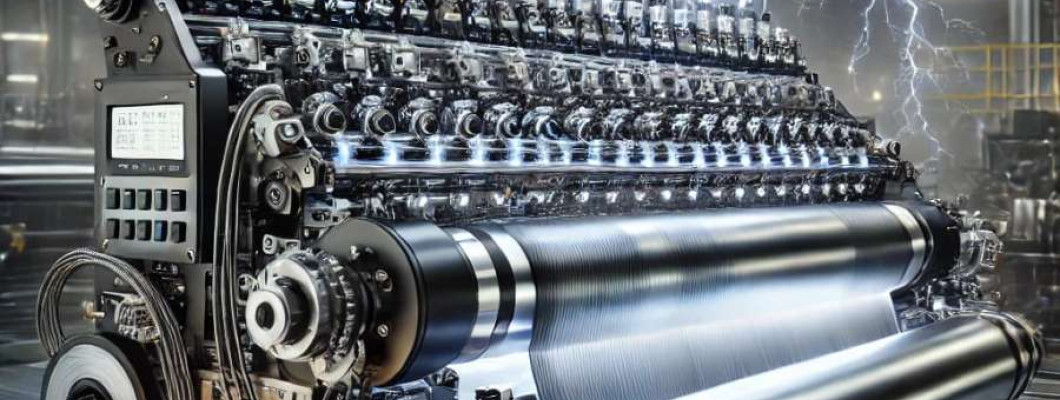
Industrial textile printing demands machines that withstand continuous operation with tight tolerances in printhead alignment, ink stability, and substrate handling. Maintenance teams responsible for high-precision output face a persistent challenge: bridging the gap between off-the-shelf consumer devices and industrial-grade printers engineered for production-scale reliability. The A4 Roll DTF Printer emerges in this context not as a rudimentary or hobbyist tool but as a contender for industrial adoption. Its design focuses on mitigating printhead failures, managing ink chemistry intricacies, and maintaining uptime during extended shifts. Consider a daily production environment where thousands of prints are required within rigid quality parameters. Every printhead nozzle clog, every ink chemistry inconsistency, and every mechanical misalignment translates directly to lost labor hours and increased maintenance costs. The A4 Roll DTF Printer confronts these bottlenecks head-on with its roll-fed continuous feed system and engineered precision components.
In practice, maintenance leads must understand the micro-engineering involved in printhead physics coupled with the fluid dynamics of the Direct-To-Film (DTF) ink system. The difference between an inexpensive desktop printer and one capable of industrial output lies in the materials used for ink filtration, the precision of nozzle firing voltage regulation, and the overall thermal management strategy. These factors collectively influence printhead longevity and the volatile reactions of pigment and adhesive-based inks under continuous print cycles. As the printhead moves at speeds reaching up to 600 mm/s at resolutions of 720 dpi, nozzle firing frequencies exceed 10 kHz, and ink droplet size precision tightens around 4 picoliters (pl). Any deviation here leads to either visible banding or premature printhead wear. Therefore, a maintenance lead’s role extends beyond routine cleaning to encompass real-time monitoring of these parameters through diagnostic feedback loops embedded in the printer’s firmware.
Technical Deep-Dive Into Printhead Physics and Ink Chemistry
Printhead Thermal Management
At the core of the A4 Roll DTF Printer lies a precision piezoelectric printhead that generates ink droplets on demand. Heat accumulation due to rapid firing cycles risks thermal expansion and viscosity fluctuations in ink channels. Using thermistor arrays placed within 0.5 mm proximity to firing chambers, the printer modulates voltage pulses to maintain temperature between 25°C to 35°C. This precise thermal window minimizes ink viscosity variance, preserving drop formation consistency. Failure to maintain this range causes nozzle misfires or satellite droplets, degrading print quality.
Nozzle Firing Voltage and Frequency Regulation
The printer operates with firing voltages in the 18-25 V range, modulated dynamically based on substrate feedback sensors. These sensors detect reflectance changes on the PET film substrate, allowing the system to adjust voltage to maintain precise droplet volume near 4 pl. At a standard 720 dpi resolution, the data rate per nozzle exceeds 10 megabits per second (Mbps), requiring real-time signal processing under sub-millisecond latency constraints.
Ink Chemistry Stability and Adhesive Dynamics
The DTF ink comprises pigment particles suspended in a polymer adhesive medium. Stability depends on maintaining agitation and temperature to prevent pigment settling and polymer crosslinking within the ink lines. A micro-peristaltic circulation pump with pulsation damping maintains constant flow rates of 0.1 ml/s through ink channels, preventing clogging. The adhesive component undergoes a phase change during curing at 160°C for 60 seconds, forming a durable bond to textiles. Control of pre-cure ink temperature maintains the polymer in a stable state during printing to avoid premature gelation.
Mechanical Alignment and Roller Tension Control
The roll-feed mechanism features digitally controlled tension sensors that maintain substrate tension between 2-4 N. This ensures flatness and precise registration of images at high speeds without slippage or substrate deformation. Encoder resolution at 0.01 mm increments synchronizes roller speed to printhead firing timing.
Wear and Maintenance Cycle Optimizations
Component lifetimes are monitored through embedded counters and condition-based maintenance (CBM) protocols. Printhead cleaning cycles activate after 1500 prints or upon detection of nozzle misfire rates exceeding 0.2%. The system automatically initiates ultrasonic cleaning combined with solvent flushing to restore nozzle functionality without operator intervention. Consumable parts such as wiper blades and capping stations are rated at 5000 cycles before replacement. These parameters allow maintenance teams to plan downtime without disrupting production.
| Feature | A4 Roll DTF Printer | Standard Desktop DTF Printer |
|---|---|---|
| Printhead Resolution | 720 dpi with 4 pl droplet size | 600 dpi with 8 pl droplet size |
| Roll-to-Roll Tension Control | Digital feedback system maintaining 2-4 N | Manual tension adjustment |
| Ink Circulation System | Micro-peristaltic pump, pulsation damping | Static ink reservoirs |
| Maintenance Automation | Automated ultrasonic nozzle cleaning every 1500 prints | Manual cleaning recommended |
| Thermal Management | Thermistor arrays with real-time voltage modulation | Passive cooling only |
Scenario Analysis for Maintenance Leads
Scenario 1: High-Volume Textile Production Facility
In a facility producing over 5000 printed garments per day, unplanned downtime due to nozzle clogs can lead to significant losses. The A4 Roll DTF Printer’s automated maintenance routines and robust printhead thermal management reduce maintenance interventions by 40%. This results in improved uptime and reduced labor costs associated with troubleshooting.
Scenario 2: Small-to-Medium Enterprise with Variable Print Runs
For a business running frequent job changes with diverse substrates, the printer’s digital tension control and substrate feedback sensors help maintain stable print quality across materials without manual recalibration. This lowers training requirements for maintenance staff and diminishes errors.
Scenario 3: Service Bureau Printing on Demand
A service bureau handling short runs benefits from the printer's ability to maintain printhead readiness with minimal purging. The automated cleaning cycles and CBM strategy allow technicians to focus on preventive maintenance scheduling, increasing print quality consistency and extending asset life.
Expert FAQ for Advanced Maintenance Challenges
Q1: How does the printer detect nozzle degradation in real time?
A1: Through onboard optical sensors that measure droplet impact uniformity and reflectance on the film substrate, analyzing variations that indicate partial clogging or misfire.Q2: What is the typical lifespan of the piezoelectric printhead under continuous use?
A2: Under industrial operating conditions with proper maintenance, printhead lifespan exceeds 2000 hours, significantly longer than hobbyist-grade equivalents.Q3: How does ink chemistry affect the frequency of cleaning cycles?
A3: Higher pigment concentration inks increase sedimentation risk, leading to shorter maintenance intervals. The printer’s ink circulation system mitigates this by preventing settling.Q4: Can the printer firmware be updated to improve maintenance algorithms?
A4: Yes, the printer supports OTA firmware updates that can incorporate enhanced diagnostic and cleaning protocols based on field data.Q5: What physical signs precede mechanical roller tension failure?
A5: Increased substrate wrinkling and minor registration shifts are early indicators detected by tension sensors, triggering alerts for preventive maintenance.
Strategic Verdict and Recommendation
The A4 Roll DTF Printer distinguishes itself as a robust industrial-grade solution tailored for maintenance leads tasked with sustaining high-precision output under demanding production schedules. Its advanced printhead physics management, sophisticated ink circulation system, and automated cleaning mechanisms collectively address the critical bottlenecks typically associated with DTF printing uptime and printhead reliability. The finely tuned thermal controls and digital tension feedback enable consistent high-resolution output across various substrates while optimizing maintenance intervals to lower total cost of ownership.
In comparison to standard desktop or hobbyist-grade units, the A4 Roll DTF Printer bridges the operational gap with engineering depth usually reserved for much higher-end platforms. For technical teams focused on maximizing asset longevity, minimizing unexpected downtime, and maintaining industrial output fidelity, this printer represents a strategic investment. The embedded diagnostic capabilities and firmware upgrade paths future-proof it against evolving maintenance challenges.
Therefore, maintenance leads managing production workflows that demand micron-level precision and continuous uptime will find the A4 Roll DTF Printer an authoritative, industrial-grade solution well worth integration. It sets a new baseline for operational reliability and printhead performance in mid-tier industrial textile printing environments.