
The Gap Between DIY and Industrial Grade Reveals True Potential of A4 Roll DTF Printer
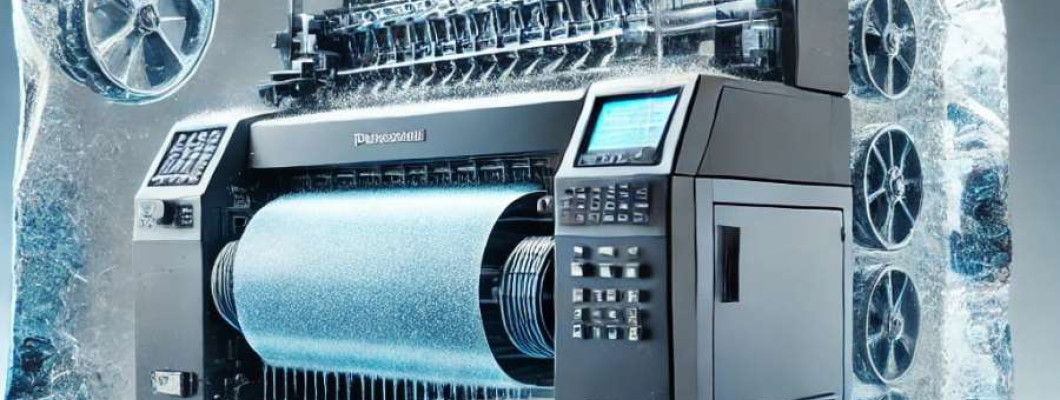
The Industrial Reality of Transitioning to Industrial Grade DTF Printing
Small businesses and artisan printers often face a pivotal challenge when scaling operations from DIY methods to industrial-grade output. This transition is keenly felt when adopting Direct to Film (DTF) technologies. The A4 Roll DTF Printer embodies this challenge as it attempts to bridge the divide between hobby-level experimentation and high-throughput industrial demands. A common scenario involves an artisan screen printer looking to expand into on-demand garment decoration without the lengthy setup or complex pretreatment processes. However, the engineering realities such as film feed precision, ink droplet consistency, and drying throughput quickly expose the operational bottlenecks inherent in consumer-grade units. The printer must maintain micron-level control over ink placement to avoid color bleeding, while its roll-to-roll feeding mechanism must synchronize perfectly with the printhead to sustain productivity rates beyond 5 m2/hour, a threshold where many DIY systems falter.
Moreover, the industrial environment demands reliability across multi-shift operations without excessive calibration downtime or printhead clogging. Environmental conditions such as humidity and temperature swings impact ink viscosity and drying curves, requiring integrated sensors and adaptive firmware. This technical crucible defines the gap the A4 Roll DTF Printer aims to close, emphasizing robustness without sacrificing precision—a feat that few devices in its class manage effectively.
Technical Deep Dive into the A4 Roll DTF Printer Architecture
Inkjet Printhead Precision and Longevity
The printer employs piezoelectric printheads that eject 4 picoliter droplets at a 600 dpi native resolution. This droplet size strikes a balance between color saturation and edge sharpness critical for industrial-grade output. Unlike thermal inkjet systems common in desktop models, piezo heads endure extended duty cycles with reduced thermal stress, thereby extending mean time between failures (MTBF) beyond 1500 operational hours under standard print parameters.
Roll-to-Roll Feeding Synchronization Physics
The roll transport mechanism integrates stepper motors with optical encoders that provide positional feedback at 0.1 mm accuracy. This precision ensures feed advancement aligns precisely with the printhead pass, eliminating temporal misalignment that causes banding or ink pooling. Calculating the feed velocity (v) and the printhead scan speed (s), their synchronization ratio must satisfy v/s = 1 ± 0.05 to maintain image integrity, an engineering target often missed by lower-tier units.
Ink Chemistry and Drying Dynamics
Specialized DTF inks contain polymer binders and pigment loads tailored for textile adhesion post-heat press. Their rheological characteristics are temperature sensitive, with optimal viscosity at 30-35°C. The drying unit uses forced convection with controlled airflow at 15 m/s and infrared heating elements delivering 500 W power to achieve stable solvent evaporation within 20 seconds per layer, critical to prevent smudging or pigment migration.
Firmware Control and Adaptive Calibration
The integrated firmware continuously monitors environmental sensors (humidity ±3%, temperature ±1°C) and dynamically adjusts firing frequency and droplet size to compensate for ambient changes. Real-time diagnostic algorithms predict nozzle clogging occurrences, triggering automated cleaning cycles that minimize downtime to less than 5% of operational hours, a notable improvement over typical DIY devices which can require over 20% downtime for maintenance.
Comparative Table of DIY vs Industrial-grade Features
| Feature | DIY DTF Printer | A4 Roll DTF Printer (Industrial Grade) |
|---|---|---|
| Printhead Type | Thermal Inkjet, 10 pl droplet size | Piezoelectric, 4 pl droplet size |
| Resolution | 300 dpi | 600 dpi/native resolution |
| Roll Feeding Precision | ±1 mm positional accuracy | ±0.1 mm positional accuracy |
| Ink Drying Time | >60 seconds/layer | ~20 seconds/layer |
| Maintenance Downtime | >20% operational time | <5% operational time |
Scenario Analysis of A4 Roll DTF Printer Across Business Use Cases
Use Case 1: Small Apparel Brand Scaling Limited Runs
For a boutique apparel business expanding from hand screen printing to digital, the A4 Roll DTF Printer offers micron-level detail and consistent color repeatability needed to meet increasing demand with minimal labor overhead. Its rapid drying and low maintenance cycles allow multiple shifts without operator fatigue, achieving throughput up to 30 printed A4 sheets per hour, significantly higher than alternative methods.
Use Case 2: Print-on-Demand E-commerce Operator
E-commerce businesses rely on flexibility and speed. The printer's roll-to-roll feed supports continuous operation without frequent roll changes, reducing downtime and inventory holding costs. Firmware adaptive controls prevent print defects in fluctuating warehouse conditions, ensuring consistent customer satisfaction.
Use Case 3: Textile Manufacturing Integration
In an industrial supply chain setting, integrating the printer with existing conveyor systems requires precise timing and synchronization. The built-in optical encoders and environmental sensors enable the A4 Roll DTF Printer to communicate with factory ERP systems, allowing automated quality control and just-in-time production without bottlenecks.
Expert FAQ on Industrial Applications and Technical Dimensions
Q1: How does the piezoelectric printhead's droplet precision impact textile adhesion?
A1: Smaller droplets (4 pl) enable sharper edges and better pigment embedding, ensuring faster drying and stronger adhesion during heat transfer without damaging fabric fibers.Q2: What environmental conditions critically affect ink rheology, and how are they mitigated?
A2: Temperature spikes above 40°C increase viscosity reducing ejection accuracy. The printer's sensors adjust heating elements and airflow to maintain optimal 30-35°C viscosity range.Q3: How does the printer minimize downtime in continuous production?
A3: By implementing real-time nozzle health monitoring and automatic cleaning cycles during scheduled breaks, it reduces unexpected failures and maintenance windows to under 5% of total run time.Q4: Can the printer handle substrate variations without reconfiguration?
A4: Yes, firmware adjusts droplet size and feed rate dynamically for different films from polyethylene to PET-based rolls, supporting diverse textile compatibility.Q5: What is the expected asset depreciation curve compared to DIY alternatives?
A5: Industrial design and component robustness ensure slower depreciation, with expected operational life over 5 years compared to 1-2 years for consumer-grade printers, thus preserving capital investment.
Strategic Verdict and Recommendation for Industrial Use
The A4 Roll DTF Printer definitively narrows the divide between artisanal printing solutions and industrial-grade performance through superior hardware design, environmental adaptability, and firmware intelligence. Its precision piezoelectric printheads, advanced roll-to-roll synchronization, and rapid drying system enable scalable, consistent output essential for business growth in textile decoration and direct-to-film applications. Given the lowered maintenance downtime, enhanced throughput, and extended asset lifespan, this printer presents a compelling solution for enterprises seeking robust printing infrastructure without prohibitive CAPEX or operational complexity.
For stakeholders evaluating the shift from manual or semi-automated workflows to industrial-grade printing, the A4 Roll DTF Printer stands as a technically sound and financially prudent choice. Its alignment with industrial norms ensures seamless integration into existing production lines, making it a viable, future-ready investment for scalable textile printing operations.